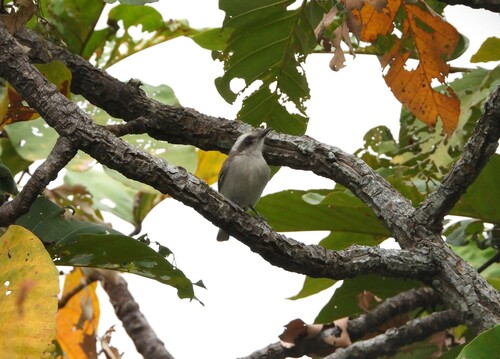
Ashy Woodswallow vs Common Woodshrike
Artamus fuscus versus Tephrodornis pondicerianus
Play a quiz with Ashy Woodswallow and Common Woodshrike
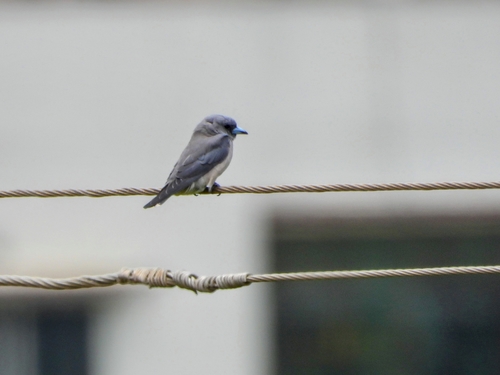
Ashy Woodswallow
Common Woodshrike
In short
The Ashy Woodswallow and the Common Woodshrike can be distinguished by their overall shape and plumage. The Ashy Woodswallow has a more compact body with a short tail and a uniform ashy-grey color, while the Common Woodshrike is more slender with a longer tail and distinct facial markings.
Identification tips
- Shape and posture: Look for the compact, short-tailed shape of the Ashy Woodswallow versus the slender, long-tailed form of the Common Woodshrike.
- Facial markings: Note the absence of facial markings in the Ashy Woodswallow compared to the white supercilium and dark ear coverts of the Common Woodshrike.
- Behavior: Observe social behavior in Ashy Woodswallows versus solitary or paired behavior in Common Woodshrikes.
- Habitat preference: Consider the likelihood of finding Ashy Woodswallows in open areas and near human habitation.
Size
The Ashy Woodswallow is more compact and slightly smaller than the Common Woodshrike, which has a more elongated body and longer tail.
Plumage
The Ashy Woodswallow is uniformly ashy-grey with a slightly paler belly, lacking any distinct facial markings. In contrast, the Common Woodshrike has a greyish-brown body with a prominent white supercilium and darker ear coverts, giving it a more patterned appearance.
Behaviour
Ashy Woodswallows are often seen perched in groups on wires or exposed branches, displaying a more social behavior. Common Woodshrikes are usually seen alone or in pairs, actively foraging through foliage.
Habitat
Both species can be found in open woodlands and edges, but Ashy Woodswallows are more likely to be seen in open areas and near human habitation, while Common Woodshrikes prefer denser foliage and forest edges.
Voice
The Ashy Woodswallow has a soft, twittering call, while the Common Woodshrike produces a more varied series of whistles and harsh notes.