Birdr

Asian Barred Owlet vs Jungle Owlet

Glaucidium cuculoides versus Glaucidium radiatum

Play a quiz with Asian Barred Owlet and Jungle Owlet
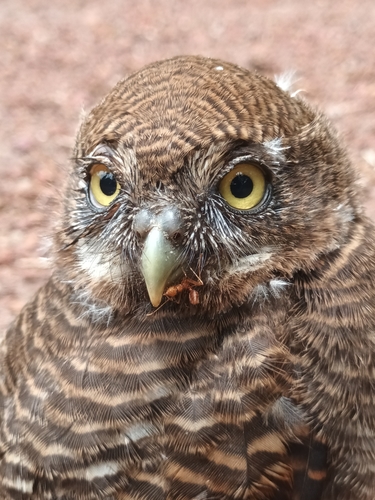
Asian Barred Owlet (Glaucidium cuculoides) Asian Barred Owlet
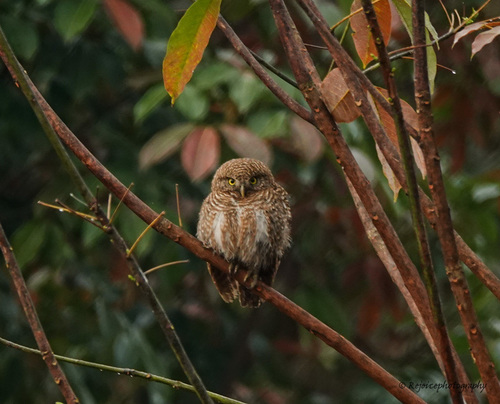
Jungle Owlet (Glaucidium radiatum) Jungle Owlet

Media

Loading…

In short

The Asian Barred Owlet and Jungle Owlet are similar small owls, but they can be distinguished by their plumage and vocalizations. The Asian Barred Owlet has more distinct barring on its underparts, while the Jungle Owlet shows a more uniform pattern. Their calls also differ, with the Asian Barred Owlet having a more complex vocalization.

Identification tips

  1. Look for the distinct barring on the underparts of the Asian Barred Owlet. 2. Note the overall darker and more uniform plumage of the Jungle Owlet. 3. Listen for the more complex vocalizations of the Asian Barred Owlet compared to the simpler calls of the Jungle Owlet. 4. Consider habitat preferences: Asian Barred Owlet in subtropical/temperate forests vs. Jungle Owlet in tropical dry forests.

Size

Both species are small owls with similar size and structure, making size an unreliable distinguishing feature.

Plumage

The Asian Barred Owlet typically has more pronounced barring on the underparts and a slightly paler overall appearance. In contrast, the Jungle Owlet has a more uniform and darker plumage with less distinct barring.

Behaviour

Both species exhibit similar behaviors, often being active during dawn and dusk and perching quietly in dense foliage.

Habitat

Both species inhabit forested areas, but the Asian Barred Owlet is more commonly found in subtropical and temperate forests, while the Jungle Owlet prefers tropical and subtropical dry forests.

Voice

The Asian Barred Owlet has a more complex and varied call compared to the Jungle Owlet, which produces a series of simple, repetitive notes.

Submit a better description

Use the same sections as the comparison. Your text is published immediately.

The Asian Barred Owlet and Jungle Owlet are similar small owls, but they can be distinguished by their plumage and vocalizations. The Asian Barred Owlet has more distinct barring on its underparts, while the Jungle Owlet shows a more uniform pattern. Their calls also differ, with the Asian Barred Owlet having a more complex vocalization.

  1. Look for the distinct barring on the underparts of the Asian Barred Owlet. 2. Note the overall darker and more uniform plumage of the Jungle Owlet. 3. Listen for the more complex vocalizations of the Asian Barred Owlet compared to the simpler calls of the Jungle Owlet. 4. Consider habitat preferences: Asian Barred Owlet in subtropical/temperate forests vs. Jungle Owlet in tropical dry forests.

Both species are small owls with similar size and structure, making size an unreliable distinguishing feature.

The Asian Barred Owlet typically has more pronounced barring on the underparts and a slightly paler overall appearance. In contrast, the Jungle Owlet has a more uniform and darker plumage with less distinct barring.

Both species exhibit similar behaviors, often being active during dawn and dusk and perching quietly in dense foliage.

Both species inhabit forested areas, but the Asian Barred Owlet is more commonly found in subtropical and temperate forests, while the Jungle Owlet prefers tropical and subtropical dry forests.

The Asian Barred Owlet has a more complex and varied call compared to the Jungle Owlet, which produces a series of simple, repetitive notes.

Discard your changes?

You have unsaved edits. If you leave now, those changes will be lost.

Asian Barred Owlet · Jungle Owlet · My Tricky Birds