Birdr

Asian Barred Owlet vs Spotted Wood-Owl

Glaucidium cuculoides versus Strix seloputo

Play a quiz with Asian Barred Owlet and Spotted Wood-Owl
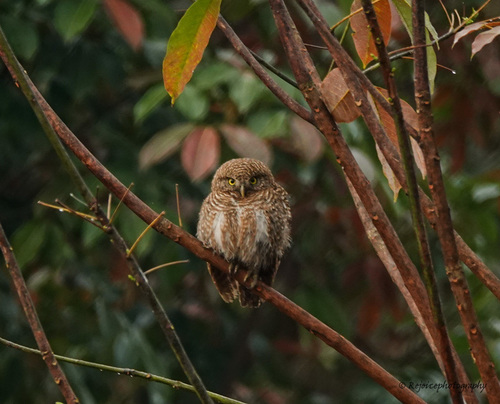
Asian Barred Owlet (Glaucidium cuculoides) Asian Barred Owlet
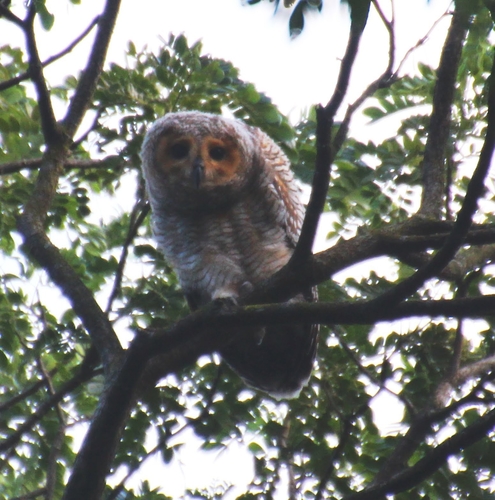
Spotted Wood-Owl (Strix seloputo) Spotted Wood-Owl

Media

Loading…

In short

The Asian Barred Owlet and the Spotted Wood-Owl are both small to medium-sized owls, but they differ significantly in size and plumage patterns. The Asian Barred Owlet is smaller and has a more compact appearance, while the Spotted Wood-Owl is larger with distinctive facial markings. Vocalizations also differ, aiding in identification.

Identification tips

  1. Size: Look for the smaller, more compact Asian Barred Owlet versus the larger Spotted Wood-Owl. 2. Facial Disc: The Spotted Wood-Owl has a more pronounced facial disc with spots. 3. Plumage: Note the barred body of the Asian Barred Owlet compared to the spotted wings of the Spotted Wood-Owl. 4. Vocalizations: Listen for the rapid hoots of the Asian Barred Owlet versus the deep calls of the Spotted Wood-Owl. 5. Activity: The Asian Barred Owlet may be seen during the day more often than the Spotted Wood-Owl.

Size

The Asian Barred Owlet is smaller and more compact compared to the larger Spotted Wood-Owl.

Plumage

The Asian Barred Owlet has a barred pattern across its body, while the Spotted Wood-Owl features a more striking facial disc with a spotted pattern on its wings and back.

Behaviour

Both species are primarily nocturnal, but the Asian Barred Owlet may be more active during the day compared to the Spotted Wood-Owl.

Habitat

The Asian Barred Owlet is often found in forests and wooded areas, while the Spotted Wood-Owl prefers denser forests and sometimes plantations.

Voice

The Asian Barred Owlet has a series of rapid hoots, whereas the Spotted Wood-Owl produces a deeper, more resonant call.

Submit a better description

Use the same sections as the comparison. Your text is published immediately.

The Asian Barred Owlet and the Spotted Wood-Owl are both small to medium-sized owls, but they differ significantly in size and plumage patterns. The Asian Barred Owlet is smaller and has a more compact appearance, while the Spotted Wood-Owl is larger with distinctive facial markings. Vocalizations also differ, aiding in identification.

  1. Size: Look for the smaller, more compact Asian Barred Owlet versus the larger Spotted Wood-Owl. 2. Facial Disc: The Spotted Wood-Owl has a more pronounced facial disc with spots. 3. Plumage: Note the barred body of the Asian Barred Owlet compared to the spotted wings of the Spotted Wood-Owl. 4. Vocalizations: Listen for the rapid hoots of the Asian Barred Owlet versus the deep calls of the Spotted Wood-Owl. 5. Activity: The Asian Barred Owlet may be seen during the day more often than the Spotted Wood-Owl.

The Asian Barred Owlet is smaller and more compact compared to the larger Spotted Wood-Owl.

The Asian Barred Owlet has a barred pattern across its body, while the Spotted Wood-Owl features a more striking facial disc with a spotted pattern on its wings and back.

Both species are primarily nocturnal, but the Asian Barred Owlet may be more active during the day compared to the Spotted Wood-Owl.

The Asian Barred Owlet is often found in forests and wooded areas, while the Spotted Wood-Owl prefers denser forests and sometimes plantations.

The Asian Barred Owlet has a series of rapid hoots, whereas the Spotted Wood-Owl produces a deeper, more resonant call.

Discard your changes?

You have unsaved edits. If you leave now, those changes will be lost.

Asian Barred Owlet · Spotted Wood-Owl · My Tricky Birds