Birdr

Asian Houbara vs Little Bustard

Chlamydotis macqueenii versus Tetrax tetrax

Play a quiz with Asian Houbara and Little Bustard
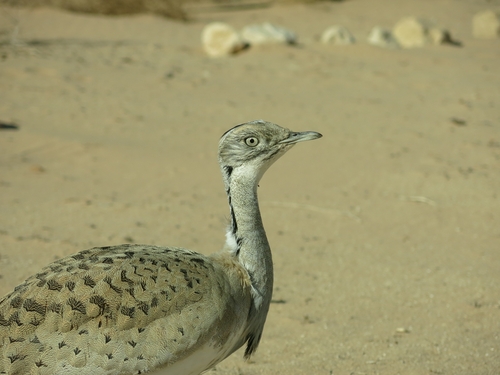
Asian Houbara (Chlamydotis macqueenii) Asian Houbara
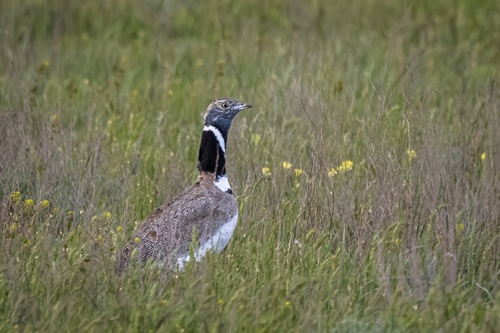
Little Bustard (Tetrax tetrax) Little Bustard

Media

Loading…

In short

The Asian Houbara and Little Bustard are both part of the bustard family, but they can be distinguished by size and habitat preferences. The Asian Houbara is larger and more robust, while the Little Bustard is smaller and more compact. Habitat differences are also notable, with the Asian Houbara favoring arid regions and the Little Bustard preferring grasslands.

Identification tips

  1. Size and Structure: Look for the larger size and more robust build of the Asian Houbara compared to the smaller Little Bustard. 2. Plumage Patterns: Note the more uniform sandy-brown plumage of the Asian Houbara versus the contrasting patterns of the Little Bustard, particularly in breeding males. 3. Habitat: Consider the habitat; Asian Houbara is more likely in arid regions, while Little Bustard prefers grasslands. 4. Behavior: Observe behavior; Asian Houbara is more secretive and elusive.

Size

The Asian Houbara is larger and more robust compared to the smaller, more compact Little Bustard.

Plumage

Asian Houbara has a more uniform sandy-brown plumage with subtle streaking, while the Little Bustard features more contrasting patterns, especially in males during the breeding season with their striking black and white neck markings.

Behaviour

Both species can be elusive, but the Asian Houbara is particularly known for its secretive behavior, often remaining hidden in arid landscapes. The Little Bustard is more likely to be seen in open grasslands.

Habitat

Asian Houbara typically inhabits arid and semi-arid regions, whereas the Little Bustard is found in grasslands and agricultural fields.

Voice

Vocalizations are not a primary distinguishing feature in the field for these species, as both are generally silent, especially outside the breeding season.

Submit a better description

Use the same sections as the comparison. Your text is published immediately.

The Asian Houbara and Little Bustard are both part of the bustard family, but they can be distinguished by size and habitat preferences. The Asian Houbara is larger and more robust, while the Little Bustard is smaller and more compact. Habitat differences are also notable, with the Asian Houbara favoring arid regions and the Little Bustard preferring grasslands.

  1. Size and Structure: Look for the larger size and more robust build of the Asian Houbara compared to the smaller Little Bustard. 2. Plumage Patterns: Note the more uniform sandy-brown plumage of the Asian Houbara versus the contrasting patterns of the Little Bustard, particularly in breeding males. 3. Habitat: Consider the habitat; Asian Houbara is more likely in arid regions, while Little Bustard prefers grasslands. 4. Behavior: Observe behavior; Asian Houbara is more secretive and elusive.

The Asian Houbara is larger and more robust compared to the smaller, more compact Little Bustard.

Asian Houbara has a more uniform sandy-brown plumage with subtle streaking, while the Little Bustard features more contrasting patterns, especially in males during the breeding season with their striking black and white neck markings.

Both species can be elusive, but the Asian Houbara is particularly known for its secretive behavior, often remaining hidden in arid landscapes. The Little Bustard is more likely to be seen in open grasslands.

Asian Houbara typically inhabits arid and semi-arid regions, whereas the Little Bustard is found in grasslands and agricultural fields.

Vocalizations are not a primary distinguishing feature in the field for these species, as both are generally silent, especially outside the breeding season.

Discard your changes?

You have unsaved edits. If you leave now, those changes will be lost.

Asian Houbara · Little Bustard · My Tricky Birds