Birdr

Atlantic Canary vs Eurasian Siskin

Serinus canaria versus Spinus spinus

Play a quiz with Atlantic Canary and Eurasian Siskin
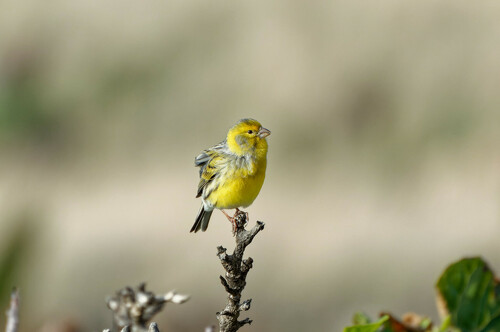
Atlantic Canary (Serinus canaria) Atlantic Canary
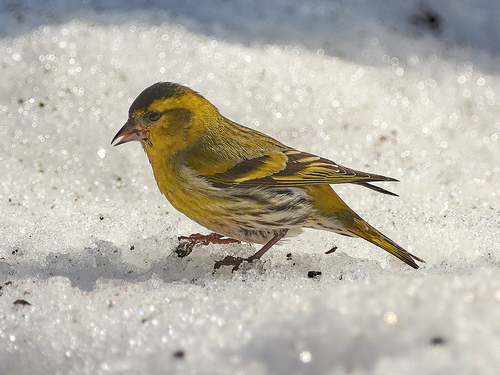
Eurasian Siskin (Spinus spinus) Eurasian Siskin

Media

Loading…

In short

The most reliable field mark to separate Atlantic Canary from Eurasian Siskin is the presence of a bold yellow wingbar and black cap on adult male siskins—features never shown by canaries. Juvenile and female siskins have a broad yellow wingbar and a cleaner, whiter belly, while juvenile canaries are overall browner and more streaked. Canaries are slightly heavier and longer-bodied, with a duller, more greenish-yellow plumage and less contrast overall. Siskins, especially males, are brighter with more sharply defined markings, and their distinctive black-and-yellow wing pattern is visible even in flight. Both species can show yellow and green tones, but careful attention to wing pattern, head markings, and underpart streaking will separate them in all ages.

Identification tips

  1. Yellow wingbar (siskin only): Eurasian Siskin of all ages shows a broad, bright yellow wingbar with white tips on black wings; Atlantic Canary never shows a strong wingbar. This is the single best mark, especially in flight or on perched birds with wings folded.
  2. Black cap and bib (adult male siskin): Adult male siskins have a neat black cap and black chin, sharply contrasting with the yellow face and breast. Canaries never have a black cap or bib.
  3. Underpart streaking: Juvenile and female canaries are heavily streaked below, especially on the flanks and breast, while siskins (especially females and juveniles) have a much cleaner, whiter belly with little or no streaking in the center.
  4. Overall contrast: Siskins are brighter and more sharply marked, with clear black, yellow, and white contrasts. Canaries are duller, with yellow-green and brownish tones and less contrast between head, back, and wings.
  5. Rump color: Siskin shows a bright yellow rump (especially males), while canary's rump is dull yellow and less distinct from the rest of the upperparts.
  6. Head pattern: Siskin males have a yellow face with a black cap; females and juveniles have a greenish head with no cap. Canaries have a yellowish face and supercilium but lack any black on the head.
  7. Wing and tail in flight: Siskin's black wings with a yellow bar and black tail with yellow sides are visible in flight; canary shows no such pattern, with more uniform wings and tail.
  8. Bill shape: Siskin's bill is short, slender, and slightly decurved; canary's bill is more conical and less decurved, but this is subtle and best used as a supporting mark.
  9. Size and structure: Canaries are about 10% larger and bulkier, with a longer body and relatively shorter wings compared to siskin's compact, short-tailed shape. This is best judged with experience or direct comparison.
  10. Behavior: Siskins are highly acrobatic, often feeding upside down and moving rapidly in flocks; canaries are less acrobatic and more often seen singly or in small groups.
  11. Habitat: Siskins are common in coniferous and mixed forests, especially in mainland Europe; canaries are native only to Macaronesia and are rare elsewhere except as escapes.
  12. Juvenile confusion: Juvenile canaries are brown and heavily streaked, lacking any yellow wingbar or clean white belly; juvenile siskins are duller than adults but still show the yellow wingbar and a whiter, less streaked belly.
  13. Song: Both species have musical, twittering songs, but siskin's is more trilled and varied; song is not a primary field mark but may support identification in combination with plumage.
  14. Seasonal variation: Siskins may be more numerous in winter due to irruptive movements, often appearing in large flocks; canaries do not show such seasonal movements in mainland Europe.
  15. Pitfalls: Beware of female and juvenile siskins, which lack the black cap but still show the yellow wingbar and cleaner underparts; canaries never show a wingbar or black on the head in any plumage.

Size

Atlantic Canary averages slightly heavier (15.3g vs. 13.8g) and is about 10% larger and longer than Eurasian Siskin. In the field, this difference is subtle but canaries may appear a bit bulkier and longer-bodied, while siskins are more compact and short-tailed. Both species are small finches, but if seen side by side, the canary should look a touch larger and less dainty.

Plumage

Juvenile and female Eurasian Siskins show a broad, bright yellow wingbar with white tips on otherwise black wings, a feature absent in Atlantic Canary of any age. Juvenile canaries are mostly brown with heavy dark streaks above and below, lacking any strong wingbar or black-and-yellow contrast. Adult male siskins are unmistakable with a black cap, black bib, and a yellow face and breast, plus a yellow rump and sides to the tail. Female siskins are duller but still show the yellow wingbar and a cleaner, whiter belly with little or no streaking. Atlantic Canary males are yellow-green with brownish streaks on the back, a yellower face and supercilium, and a dull yellow rump; females are similar but duller and greyer. Both sexes of canary have streaked upperparts and sides, but lack the siskin's black cap and wingbar. In all plumages, the canary is less contrasted, with more grey and brown tones and a generally streakier, less sharply marked appearance.

Behaviour

Eurasian Siskins are acrobatic feeders, often hanging upside down on cones or catkins, and are highly active and sociable, frequently seen in flocks. Their flight is rapid and bounding, typical of finches. Atlantic Canaries are less acrobatic, feeding more conventionally and often seen singly or in small groups. Both species are active, but siskins are notably more gregarious and agile in their feeding behavior.

Habitat

Eurasian Siskin is widespread and common in Europe and Eurosiberia, favoring coniferous and mixed woodlands, especially where alder and spruce are abundant. They are often seen in flocks, sometimes visiting gardens in winter. Atlantic Canary is native to the Canary Islands, Azores, and Madeira, and is not naturally found in mainland Europe. In their native range, canaries inhabit open woodlands, scrub, and cultivated areas. If seen outside the Macaronesian islands, canaries are likely escapes or feral birds.

Voice

Both species have a twittering, musical song, but the siskin's is described as a mix of tweets and trills, while the canary's is a silvery twittering similar to European serin. In the field, song alone is not always diagnostic, but siskins may call more frequently in flight and in flocks.

Submit a better description

Use the same sections as the comparison. Your text is published immediately.

The most reliable field mark to separate Atlantic Canary from Eurasian Siskin is the presence of a bold yellow wingbar and black cap on adult male siskins—features never shown by canaries. Juvenile and female siskins have a broad yellow wingbar and a cleaner, whiter belly, while juvenile canaries are overall browner and more streaked. Canaries are slightly heavier and longer-bodied, with a duller, more greenish-yellow plumage and less contrast overall. Siskins, especially males, are brighter with more sharply defined markings, and their distinctive black-and-yellow wing pattern is visible even in flight. Both species can show yellow and green tones, but careful attention to wing pattern, head markings, and underpart streaking will separate them in all ages.

  1. Yellow wingbar (siskin only): Eurasian Siskin of all ages shows a broad, bright yellow wingbar with white tips on black wings; Atlantic Canary never shows a strong wingbar. This is the single best mark, especially in flight or on perched birds with wings folded.
  2. Black cap and bib (adult male siskin): Adult male siskins have a neat black cap and black chin, sharply contrasting with the yellow face and breast. Canaries never have a black cap or bib.
  3. Underpart streaking: Juvenile and female canaries are heavily streaked below, especially on the flanks and breast, while siskins (especially females and juveniles) have a much cleaner, whiter belly with little or no streaking in the center.
  4. Overall contrast: Siskins are brighter and more sharply marked, with clear black, yellow, and white contrasts. Canaries are duller, with yellow-green and brownish tones and less contrast between head, back, and wings.
  5. Rump color: Siskin shows a bright yellow rump (especially males), while canary's rump is dull yellow and less distinct from the rest of the upperparts.
  6. Head pattern: Siskin males have a yellow face with a black cap; females and juveniles have a greenish head with no cap. Canaries have a yellowish face and supercilium but lack any black on the head.
  7. Wing and tail in flight: Siskin's black wings with a yellow bar and black tail with yellow sides are visible in flight; canary shows no such pattern, with more uniform wings and tail.
  8. Bill shape: Siskin's bill is short, slender, and slightly decurved; canary's bill is more conical and less decurved, but this is subtle and best used as a supporting mark.
  9. Size and structure: Canaries are about 10% larger and bulkier, with a longer body and relatively shorter wings compared to siskin's compact, short-tailed shape. This is best judged with experience or direct comparison.
  10. Behavior: Siskins are highly acrobatic, often feeding upside down and moving rapidly in flocks; canaries are less acrobatic and more often seen singly or in small groups.
  11. Habitat: Siskins are common in coniferous and mixed forests, especially in mainland Europe; canaries are native only to Macaronesia and are rare elsewhere except as escapes.
  12. Juvenile confusion: Juvenile canaries are brown and heavily streaked, lacking any yellow wingbar or clean white belly; juvenile siskins are duller than adults but still show the yellow wingbar and a whiter, less streaked belly.
  13. Song: Both species have musical, twittering songs, but siskin's is more trilled and varied; song is not a primary field mark but may support identification in combination with plumage.
  14. Seasonal variation: Siskins may be more numerous in winter due to irruptive movements, often appearing in large flocks; canaries do not show such seasonal movements in mainland Europe.
  15. Pitfalls: Beware of female and juvenile siskins, which lack the black cap but still show the yellow wingbar and cleaner underparts; canaries never show a wingbar or black on the head in any plumage.

Atlantic Canary averages slightly heavier (15.3g vs. 13.8g) and is about 10% larger and longer than Eurasian Siskin. In the field, this difference is subtle but canaries may appear a bit bulkier and longer-bodied, while siskins are more compact and short-tailed. Both species are small finches, but if seen side by side, the canary should look a touch larger and less dainty.

Juvenile and female Eurasian Siskins show a broad, bright yellow wingbar with white tips on otherwise black wings, a feature absent in Atlantic Canary of any age. Juvenile canaries are mostly brown with heavy dark streaks above and below, lacking any strong wingbar or black-and-yellow contrast. Adult male siskins are unmistakable with a black cap, black bib, and a yellow face and breast, plus a yellow rump and sides to the tail. Female siskins are duller but still show the yellow wingbar and a cleaner, whiter belly with little or no streaking. Atlantic Canary males are yellow-green with brownish streaks on the back, a yellower face and supercilium, and a dull yellow rump; females are similar but duller and greyer. Both sexes of canary have streaked upperparts and sides, but lack the siskin's black cap and wingbar. In all plumages, the canary is less contrasted, with more grey and brown tones and a generally streakier, less sharply marked appearance.

Eurasian Siskins are acrobatic feeders, often hanging upside down on cones or catkins, and are highly active and sociable, frequently seen in flocks. Their flight is rapid and bounding, typical of finches. Atlantic Canaries are less acrobatic, feeding more conventionally and often seen singly or in small groups. Both species are active, but siskins are notably more gregarious and agile in their feeding behavior.

Eurasian Siskin is widespread and common in Europe and Eurosiberia, favoring coniferous and mixed woodlands, especially where alder and spruce are abundant. They are often seen in flocks, sometimes visiting gardens in winter. Atlantic Canary is native to the Canary Islands, Azores, and Madeira, and is not naturally found in mainland Europe. In their native range, canaries inhabit open woodlands, scrub, and cultivated areas. If seen outside the Macaronesian islands, canaries are likely escapes or feral birds.

Both species have a twittering, musical song, but the siskin's is described as a mix of tweets and trills, while the canary's is a silvery twittering similar to European serin. In the field, song alone is not always diagnostic, but siskins may call more frequently in flight and in flocks.

Discard your changes?

You have unsaved edits. If you leave now, those changes will be lost.

Atlantic Canary · Eurasian Siskin · My Tricky Birds