
Atlas Wheatear vs Western Black-eared Wheatear
Oenanthe seebohmi versus Oenanthe hispanica
Play a quiz with Atlas Wheatear and Western Black-eared Wheatear
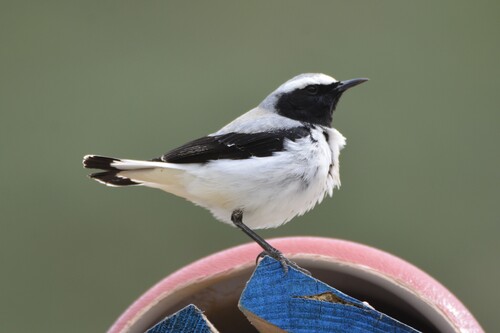
Atlas Wheatear
Western Black-eared Wheatear
In short
The Atlas Wheatear and Western Black-eared Wheatear are similar in size and structure, but differ in plumage and habitat preferences. The most reliable field mark is the extensive black face and throat of the male Atlas Wheatear, contrasting with the Western Black-eared Wheatear's more limited black mask.
Identification tips
- Look for the extensive black face and throat in male Atlas Wheatears. 2. Note the habitat: Atlas Wheatears are typically found at higher elevations. 3. Be cautious with females and immatures as they are harder to distinguish. 4. Use binoculars to observe subtle plumage differences, especially in non-breeding plumage.
Size
Both species are similar in size, typical of wheatears, with no significant differences in structure.
Plumage
Male Atlas Wheatears have a distinctive black face and throat, pale ash-gray upperparts, and black underwing coverts. In contrast, male Western Black-eared Wheatears have a black mask that does not extend as extensively over the throat and face. Females and immatures of both species can be more challenging to distinguish, often requiring close observation of subtle plumage differences.
Behaviour
Both species exhibit typical wheatear behavior, such as perching on rocks and making short flights to catch insects.
Habitat
Atlas Wheatears are found in montane meadows and stony plateaus above 1,500 meters, while Western Black-eared Wheatears prefer more open and lower elevation habitats.
Voice
Vocalizations are not well-documented for field differentiation between these two species.
Atlas Wheatear · Western Black-eared Wheatear · My Tricky Birds