Birdr

Austral Negrito vs Blue-billed Black-Tyrant

Lessonia rufa versus Knipolegus cyanirostris

Play a quiz with Austral Negrito and Blue-billed Black-Tyrant
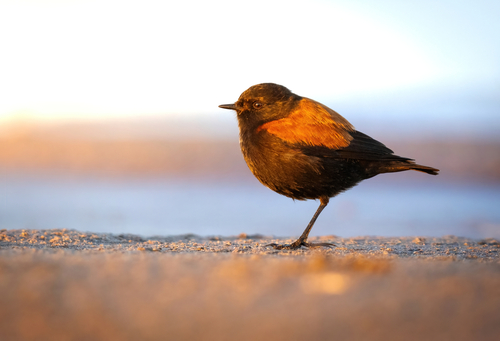
Austral Negrito (Lessonia rufa) Austral Negrito
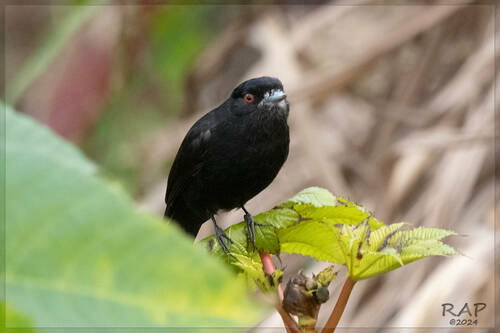
Blue-billed Black-Tyrant (Knipolegus cyanirostris) Blue-billed Black-Tyrant

Media

Loading…

In short

Austral Negrito and Blue-billed Black-Tyrant are both small, short-tailed passerines from the Tyrant Flycatcher family, but they differ in plumage and habitat preferences. The Austral Negrito is more rufous and found in open areas, while the Blue-billed Black-Tyrant has a distinctive blue bill and prefers forested environments.

Identification tips

  1. Bill Color: Look for the blue bill of the Blue-billed Black-Tyrant. 2. Plumage: Note the rufous back of the male Austral Negrito. 3. Habitat: Consider the environment; open areas suggest Austral Negrito, while forested areas suggest Blue-billed Black-Tyrant.

Size

Both species are small passerines with similar overall size, but the Austral Negrito may appear slightly more compact due to its shorter tail.

Plumage

Male Austral Negritos are black with a rufous back, while females are dull grayish brown. The Blue-billed Black-Tyrant is uniformly dark with a notable blue bill, which is a key distinguishing feature.

Behaviour

Austral Negritos often forage on the ground in open areas, while Blue-billed Black-Tyrants are more likely to be seen perched in trees or shrubs.

Habitat

Austral Negritos are typically found in open, grassy or shrubby areas, especially in southern regions. In contrast, Blue-billed Black-Tyrants prefer forested or wooded habitats.

Submit a better description

Use the same sections as the comparison. Your text is published immediately.

Austral Negrito and Blue-billed Black-Tyrant are both small, short-tailed passerines from the Tyrant Flycatcher family, but they differ in plumage and habitat preferences. The Austral Negrito is more rufous and found in open areas, while the Blue-billed Black-Tyrant has a distinctive blue bill and prefers forested environments.

  1. Bill Color: Look for the blue bill of the Blue-billed Black-Tyrant. 2. Plumage: Note the rufous back of the male Austral Negrito. 3. Habitat: Consider the environment; open areas suggest Austral Negrito, while forested areas suggest Blue-billed Black-Tyrant.

Both species are small passerines with similar overall size, but the Austral Negrito may appear slightly more compact due to its shorter tail.

Male Austral Negritos are black with a rufous back, while females are dull grayish brown. The Blue-billed Black-Tyrant is uniformly dark with a notable blue bill, which is a key distinguishing feature.

Austral Negritos often forage on the ground in open areas, while Blue-billed Black-Tyrants are more likely to be seen perched in trees or shrubs.

Austral Negritos are typically found in open, grassy or shrubby areas, especially in southern regions. In contrast, Blue-billed Black-Tyrants prefer forested or wooded habitats.

Discard your changes?

You have unsaved edits. If you leave now, those changes will be lost.

Austral Negrito · Blue-billed Black-Tyrant · My Tricky Birds