Birdr

Australasian Grass-Owl vs American Barn Owl

Tyto longimembris versus Tyto furcata

Play a quiz with Australasian Grass-Owl and American Barn Owl
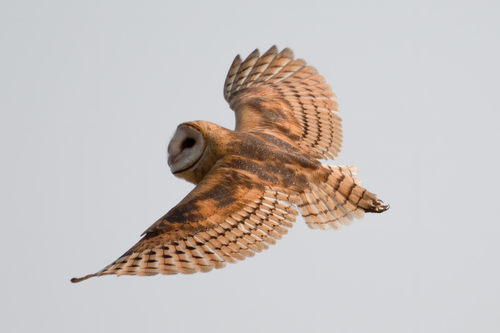
Australasian Grass-Owl (Tyto longimembris) Australasian Grass-Owl
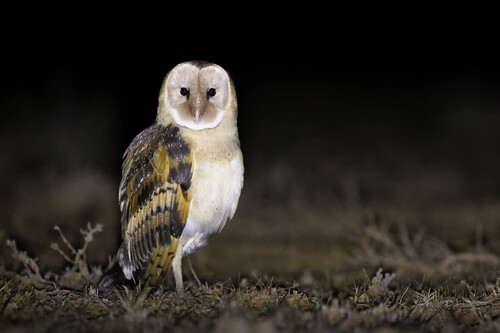
American Barn Owl (Tyto furcata) American Barn Owl

Media

Loading…

In short

The Australasian Grass-Owl and the American Barn Owl are both medium-sized owls with heart-shaped facial discs, but they differ in habitat preferences and some plumage details. The Grass-Owl is more associated with open grasslands, while the Barn Owl is found in a variety of open habitats, including urban areas. Key identification features include the Grass-Owl's longer legs and more slender appearance.

Identification tips

  1. Look for the Australasian Grass-Owl's longer legs and more slender body. 2. Note the paler facial disc and more pronounced dark spots on the wings of the Grass-Owl. 3. Observe habitat: Grass-Owls prefer open grasslands, while Barn Owls are more versatile in habitat choice. 4. Both species are active at night, so listen for screeches, although vocal differences are subtle.

Size

Both species are similar in size, but the Australasian Grass-Owl tends to have longer legs, giving it a more elongated appearance compared to the American Barn Owl.

Plumage

The Australasian Grass-Owl typically has a paler facial disc and more pronounced dark spots on its wings compared to the American Barn Owl. The Barn Owl generally has a more uniform, golden-buff coloration on its upperparts.

Behaviour

Both species are nocturnal and hunt primarily at night. The Australasian Grass-Owl is more likely to be seen flying low over grasslands, while the American Barn Owl can be found in a wider range of open habitats.

Habitat

The Australasian Grass-Owl is primarily found in open grasslands and marshes, whereas the American Barn Owl occupies a broader range of open habitats, including urban areas, rural landscapes, and even high elevations in the Andes.

Voice

Both species have similar vocalizations, consisting of harsh screeches, but specific differences in calls are not well-documented.

Submit a better description

Use the same sections as the comparison. Your text is published immediately.

The Australasian Grass-Owl and the American Barn Owl are both medium-sized owls with heart-shaped facial discs, but they differ in habitat preferences and some plumage details. The Grass-Owl is more associated with open grasslands, while the Barn Owl is found in a variety of open habitats, including urban areas. Key identification features include the Grass-Owl's longer legs and more slender appearance.

  1. Look for the Australasian Grass-Owl's longer legs and more slender body. 2. Note the paler facial disc and more pronounced dark spots on the wings of the Grass-Owl. 3. Observe habitat: Grass-Owls prefer open grasslands, while Barn Owls are more versatile in habitat choice. 4. Both species are active at night, so listen for screeches, although vocal differences are subtle.

Both species are similar in size, but the Australasian Grass-Owl tends to have longer legs, giving it a more elongated appearance compared to the American Barn Owl.

The Australasian Grass-Owl typically has a paler facial disc and more pronounced dark spots on its wings compared to the American Barn Owl. The Barn Owl generally has a more uniform, golden-buff coloration on its upperparts.

Both species are nocturnal and hunt primarily at night. The Australasian Grass-Owl is more likely to be seen flying low over grasslands, while the American Barn Owl can be found in a wider range of open habitats.

The Australasian Grass-Owl is primarily found in open grasslands and marshes, whereas the American Barn Owl occupies a broader range of open habitats, including urban areas, rural landscapes, and even high elevations in the Andes.

Both species have similar vocalizations, consisting of harsh screeches, but specific differences in calls are not well-documented.

Discard your changes?

You have unsaved edits. If you leave now, those changes will be lost.

Australasian Grass-Owl · American Barn Owl · My Tricky Birds