Birdr

Bahama Woodstar vs Costa's Hummingbird

Nesophlox evelynae versus Calypte costae

Play a quiz with Bahama Woodstar and Costa's Hummingbird
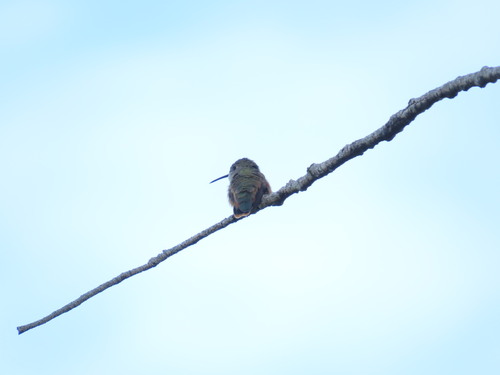
Bahama Woodstar (Nesophlox evelynae) Bahama Woodstar
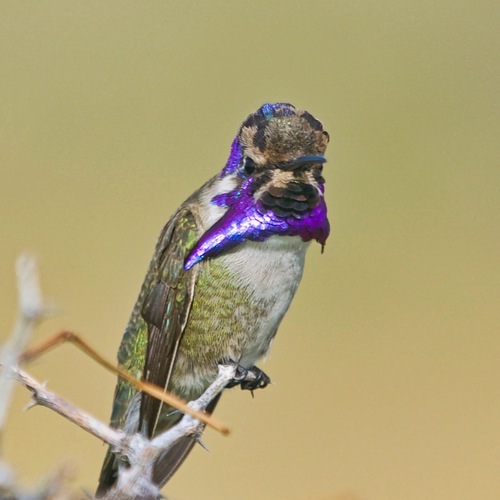
Costa's Hummingbird (Calypte costae) Costa's Hummingbird

Media

Loading…

In short

The Bahama Woodstar and Costa's Hummingbird can be distinguished by their geographic range and plumage details. The Bahama Woodstar is primarily found in the Bahamas, while Costa's Hummingbird is native to the deserts of the southwestern United States. Key plumage differences include the Bahama Woodstar's more muted coloration compared to the vibrant purple gorget of the male Costa's Hummingbird.

Identification tips

  1. Location: Bahama Woodstar is found in the Bahamas; Costa's Hummingbird is in southwestern U.S. deserts. 2. Male Gorget: Look for the vibrant purple gorget on male Costa's Hummingbird. 3. Tail Length: Costa's Hummingbird has a shorter tail than Bahama Woodstar. 4. Courtship Displays: Listen for the whistled vocalizations of Costa's Hummingbird during displays.

Size

Both species are small hummingbirds, but Costa's Hummingbird is slightly more compact with a shorter tail.

Plumage

Male Bahama Woodstars have a subtle iridescent throat patch, while male Costa's Hummingbirds have a striking purple gorget that extends to the sides of the neck. Female and juvenile plumages are more similar, with both being generally duller and less distinctive.

Behaviour

Both species exhibit typical hummingbird behavior, including hovering and rapid flight. Costa's Hummingbird males are known for their spectacular courtship dives.

Habitat

Bahama Woodstars are found in the Bahamas, often in gardens and coastal areas. Costa's Hummingbirds prefer arid desert habitats in the southwestern United States, particularly the Sonoran Desert.

Voice

Costa's Hummingbirds are noted for their distinctive whistled vocalizations during courtship displays, while Bahama Woodstars have less documented vocal behavior.

Submit a better description

Use the same sections as the comparison. Your text is published immediately.

The Bahama Woodstar and Costa's Hummingbird can be distinguished by their geographic range and plumage details. The Bahama Woodstar is primarily found in the Bahamas, while Costa's Hummingbird is native to the deserts of the southwestern United States. Key plumage differences include the Bahama Woodstar's more muted coloration compared to the vibrant purple gorget of the male Costa's Hummingbird.

  1. Location: Bahama Woodstar is found in the Bahamas; Costa's Hummingbird is in southwestern U.S. deserts. 2. Male Gorget: Look for the vibrant purple gorget on male Costa's Hummingbird. 3. Tail Length: Costa's Hummingbird has a shorter tail than Bahama Woodstar. 4. Courtship Displays: Listen for the whistled vocalizations of Costa's Hummingbird during displays.

Both species are small hummingbirds, but Costa's Hummingbird is slightly more compact with a shorter tail.

Male Bahama Woodstars have a subtle iridescent throat patch, while male Costa's Hummingbirds have a striking purple gorget that extends to the sides of the neck. Female and juvenile plumages are more similar, with both being generally duller and less distinctive.

Both species exhibit typical hummingbird behavior, including hovering and rapid flight. Costa's Hummingbird males are known for their spectacular courtship dives.

Bahama Woodstars are found in the Bahamas, often in gardens and coastal areas. Costa's Hummingbirds prefer arid desert habitats in the southwestern United States, particularly the Sonoran Desert.

Costa's Hummingbirds are noted for their distinctive whistled vocalizations during courtship displays, while Bahama Woodstars have less documented vocal behavior.

Discard your changes?

You have unsaved edits. If you leave now, those changes will be lost.

Bahama Woodstar · Costa's Hummingbird · My Tricky Birds