Birdr

Bahama Woodstar vs Rufous Hummingbird

Nesophlox evelynae versus Selasphorus rufus

Play a quiz with Bahama Woodstar and Rufous Hummingbird
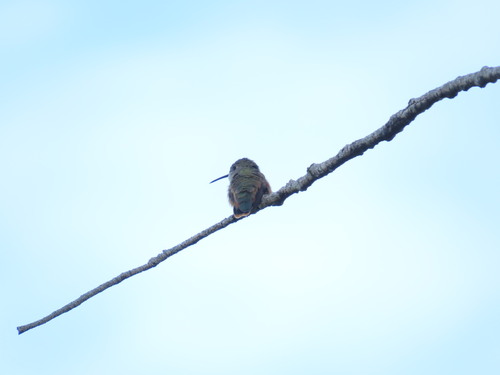
Bahama Woodstar (Nesophlox evelynae) Bahama Woodstar
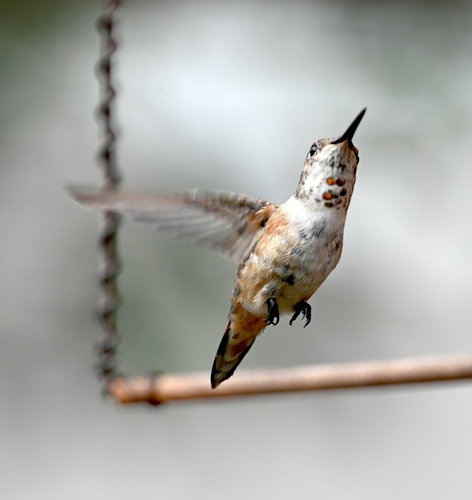
Rufous Hummingbird (Selasphorus rufus) Rufous Hummingbird

Media

Loading…

In short

The Bahama Woodstar and Rufous Hummingbird can be distinguished by their tail and plumage characteristics. The Bahama Woodstar has a distinctive tail shape and coloration, while the Rufous Hummingbird is known for its rufous body plumage. Observing these features closely will help in accurate identification.

Identification tips

1. Tail Shape and Color: Look for the Bahama Woodstar's forked tail with dark tips versus the Rufous Hummingbird's more uniformly colored tail. 2. Body Plumage: Note the Bahama Woodstar's green back and white underbelly compared to the Rufous Hummingbird's rufous-orange body. 3. Location and Season: Consider geographic location and time of year, as the Bahama Woodstar is restricted to the Bahamas, while the Rufous Hummingbird is migratory in North America. 4. Behavior: Observe any aggressive behavior, which is more typical of the Rufous Hummingbird.

Size

Both species are small hummingbirds, but the Bahama Woodstar is slightly smaller and more compact compared to the Rufous Hummingbird.

Plumage

The Bahama Woodstar has a green back with a white underbelly and a distinctive forked tail with dark tips. In contrast, the Rufous Hummingbird is noted for its bright rufous-orange plumage on the back and flanks, with males having a more vibrant coloration than females.

Behaviour

Both species exhibit typical hummingbird behavior, such as rapid flight and hovering while feeding on nectar. However, the Rufous Hummingbird is known for its aggressive territorial behavior, especially during migration.

Habitat

The Bahama Woodstar is primarily found in the Bahamas, favoring tropical and subtropical environments, while the Rufous Hummingbird breeds in the Pacific Northwest and migrates to Mexico, often found in open areas, gardens, and forest edges.

Voice

Vocalizations are not a primary distinguishing feature between these two species, as both have typical hummingbird calls that are high-pitched and rapid.

Submit a better description

Use the same sections as the comparison. Your text is published immediately.

The Bahama Woodstar and Rufous Hummingbird can be distinguished by their tail and plumage characteristics. The Bahama Woodstar has a distinctive tail shape and coloration, while the Rufous Hummingbird is known for its rufous body plumage. Observing these features closely will help in accurate identification.

1. Tail Shape and Color: Look for the Bahama Woodstar's forked tail with dark tips versus the Rufous Hummingbird's more uniformly colored tail. 2. Body Plumage: Note the Bahama Woodstar's green back and white underbelly compared to the Rufous Hummingbird's rufous-orange body. 3. Location and Season: Consider geographic location and time of year, as the Bahama Woodstar is restricted to the Bahamas, while the Rufous Hummingbird is migratory in North America. 4. Behavior: Observe any aggressive behavior, which is more typical of the Rufous Hummingbird.

Both species are small hummingbirds, but the Bahama Woodstar is slightly smaller and more compact compared to the Rufous Hummingbird.

The Bahama Woodstar has a green back with a white underbelly and a distinctive forked tail with dark tips. In contrast, the Rufous Hummingbird is noted for its bright rufous-orange plumage on the back and flanks, with males having a more vibrant coloration than females.

Both species exhibit typical hummingbird behavior, such as rapid flight and hovering while feeding on nectar. However, the Rufous Hummingbird is known for its aggressive territorial behavior, especially during migration.

The Bahama Woodstar is primarily found in the Bahamas, favoring tropical and subtropical environments, while the Rufous Hummingbird breeds in the Pacific Northwest and migrates to Mexico, often found in open areas, gardens, and forest edges.

Vocalizations are not a primary distinguishing feature between these two species, as both have typical hummingbird calls that are high-pitched and rapid.

Discard your changes?

You have unsaved edits. If you leave now, those changes will be lost.

Bahama Woodstar · Rufous Hummingbird · My Tricky Birds