Baird's Sandpiper vs Brown-capped Rosy-Finch
Calidris bairdii versus Leucosticte australis
Play a quiz with Baird's Sandpiper and Brown-capped Rosy-Finch
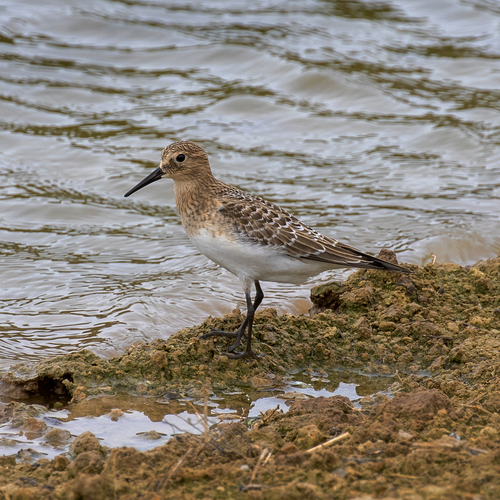
Baird's Sandpiper
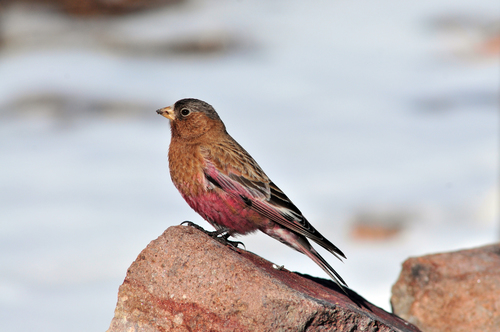
Brown-capped Rosy-Finch
In short
Baird's Sandpiper and Brown-capped Rosy-Finch are distinct in both appearance and habitat. Baird's Sandpiper is a small shorebird with long wings and a relatively plain plumage, while the Brown-capped Rosy-Finch is a larger, mountain-dwelling finch with a distinctive rosy hue. Observing their habitat and plumage can quickly help differentiate these species.
Identification tips
- Habitat: Check the location; Baird's Sandpiper is found in wetlands, while Brown-capped Rosy-Finch is in alpine areas. 2. Plumage: Look for the rosy coloration on the finch, absent in the sandpiper. 3. Size and Shape: Note the smaller, more streamlined shape of the sandpiper versus the bulkier finch. 4. Behavior: Observe feeding behavior; sandpipers probe, finches peck at seeds.
Size
Baird's Sandpiper is smaller and more slender compared to the bulkier Brown-capped Rosy-Finch.
Plumage
Baird's Sandpiper has a more uniform brownish-gray plumage with a slightly scalloped appearance, especially on the back, and lacks any rosy coloration. In contrast, the Brown-capped Rosy-Finch has a distinctive brown cap and rosy-pink tones on the body, particularly on the wings and belly.
Behaviour
Baird's Sandpiper is often seen foraging on mudflats or shorelines, probing for invertebrates, while the Brown-capped Rosy-Finch is more likely to be observed feeding on seeds and insects in alpine environments.
Habitat
Baird's Sandpiper is typically found in open, wetland habitats such as mudflats and tundra during migration. Brown-capped Rosy-Finch inhabits high-altitude alpine areas, often nesting on cliffs.
Voice
Vocalizations are not a primary distinguishing feature in the field for these species, as they occupy different habitats and their calls are not often compared directly.
Baird's Sandpiper · Brown-capped Rosy-Finch · My Tricky Birds