
Baird's Sandpiper vs Little Stint
Calidris bairdii versus Calidris minuta
Play a quiz with Baird's Sandpiper and Little Stint
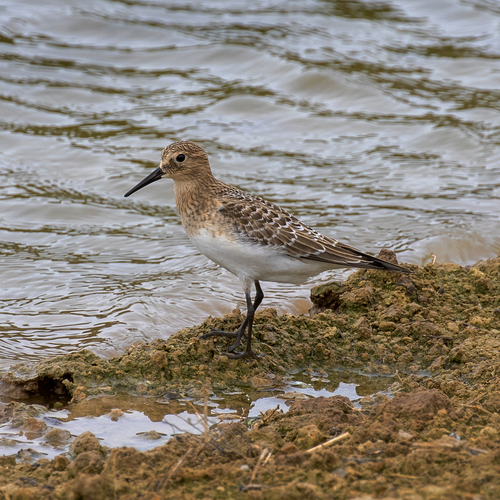
Baird's Sandpiper
Little Stint
In short
Baird's Sandpiper and Little Stint are small, similar-looking shorebirds, but they can be distinguished by structural differences and subtle plumage cues. Baird's Sandpiper has a longer primary projection and a more elongated body shape, while Little Stint is more compact with a shorter bill.
Identification tips
1. Primary Projection: Baird's Sandpiper exhibits a longer primary projection beyond the tail, giving it a more streamlined appearance. 2. Bill Shape: Little Stint has a shorter, slightly drooped bill compared to the straighter bill of Baird's Sandpiper. 3. Plumage Tone: Look for the buffy wash on the breast of Baird's Sandpiper versus the more rufous tones in Little Stint during breeding. 4. Structure: Baird's Sandpiper appears more elongated, while Little Stint is more compact. 5. Habitat Context: Consider the geographic location and typical habitats; Baird's Sandpiper is more likely in North America, while Little Stint is Eurasian.
Size
Baird's Sandpiper is slightly larger and more elongated than the Little Stint.
Plumage
Baird's Sandpiper has a more uniform brownish-gray plumage with a buffy wash on the breast, while Little Stint often shows a more contrasting plumage with a rufous tinge, especially in breeding plumage.
Behaviour
Both species forage in similar manners, but Baird's Sandpiper may appear more deliberate in its movements compared to the more frenetic Little Stint.
Habitat
Baird's Sandpiper is typically found in North American tundra during breeding and migrates through grasslands and mudflats, whereas Little Stint breeds in Eurasian tundra and migrates across a wider range of habitats including wetlands and coastal areas.
Voice
Vocalizations are not a primary distinguishing feature in the field; both species have similar high-pitched calls.