
Birdr

Baird's Sandpiper vs White-rumped Sandpiper

Calidris bairdii versus Calidris fuscicollis

Play a quiz with Baird's Sandpiper and White-rumped Sandpiper
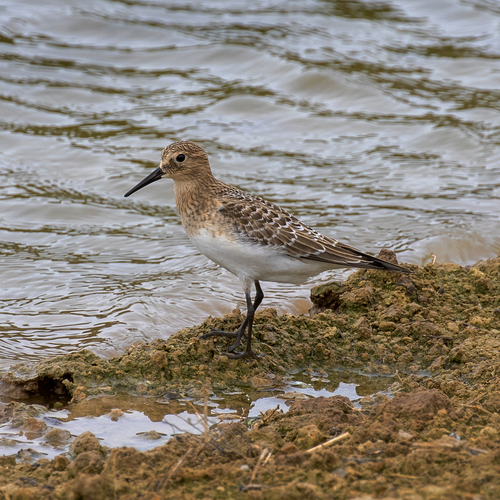
Baird's Sandpiper (Calidris bairdii) Baird's Sandpiper
White-rumped Sandpiper (Calidris fuscicollis) White-rumped Sandpiper

Media

Loading…

In short

Baird's Sandpiper and White-rumped Sandpiper are both small, long-winged shorebirds, but the White-rumped Sandpiper is distinguished by its white rump patch visible in flight. Baird's Sandpiper lacks this feature, making it a key identifier in the field.

Identification tips

Size

Both species are similar in size, but the White-rumped Sandpiper may appear slightly larger due to its longer wings and tail.

Plumage

Baird's Sandpiper has a more uniform brownish-gray plumage, while the White-rumped Sandpiper has a distinctive white rump patch and often shows a more contrasting pattern with a paler belly.

Behaviour

Both species forage in similar habitats, but the White-rumped Sandpiper often forages in small groups and may defend feeding territories.

Habitat

Both species breed in Arctic tundra, but the White-rumped Sandpiper is more likely to be found near marshy ponds. During migration, both species can be found in similar wetland habitats.

Voice

The White-rumped Sandpiper has a distinct call that can be a useful field mark, especially when birds are in flight or mixed flocks.

Submit a better description

Use the same sections as the comparison. Your text is published immediately.

Baird's Sandpiper and White-rumped Sandpiper are both small, long-winged shorebirds, but the White-rumped Sandpiper is distinguished by its white rump patch visible in flight. Baird's Sandpiper lacks this feature, making it a key identifier in the field.

  • Look for the white rump patch on the White-rumped Sandpiper in flight.
  • Note the overall plumage: Baird's is more uniformly brownish-gray.
  • Listen for the distinct call of the White-rumped Sandpiper.
  • Observe behavior: White-rumped Sandpipers may defend feeding territories more actively.

Both species are similar in size, but the White-rumped Sandpiper may appear slightly larger due to its longer wings and tail.

Baird's Sandpiper has a more uniform brownish-gray plumage, while the White-rumped Sandpiper has a distinctive white rump patch and often shows a more contrasting pattern with a paler belly.

Both species forage in similar habitats, but the White-rumped Sandpiper often forages in small groups and may defend feeding territories.

Both species breed in Arctic tundra, but the White-rumped Sandpiper is more likely to be found near marshy ponds. During migration, both species can be found in similar wetland habitats.

The White-rumped Sandpiper has a distinct call that can be a useful field mark, especially when birds are in flight or mixed flocks.

Discard your changes?

You have unsaved edits. If you leave now, those changes will be lost.

Baird's Sandpiper · White-rumped Sandpiper · My Tricky Birds