Birdr

Bamboo Woodpecker vs Olive-backed Woodpecker

Gecinulus viridis versus Gecinulus rafflesii

Play a quiz with Bamboo Woodpecker and Olive-backed Woodpecker
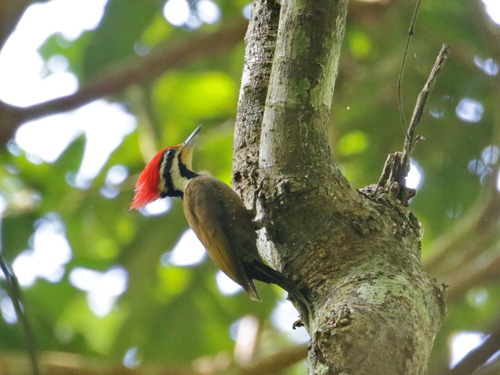
Bamboo Woodpecker (Gecinulus viridis) Bamboo Woodpecker
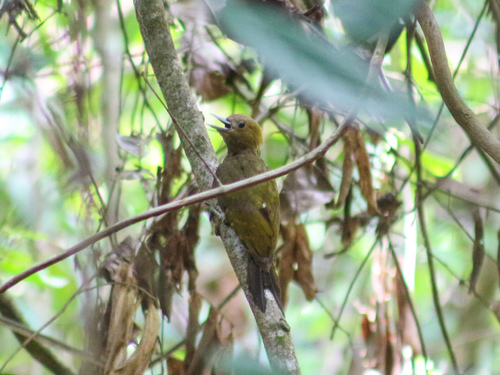
Olive-backed Woodpecker (Gecinulus rafflesii) Olive-backed Woodpecker

Media

Loading…

In short

The Bamboo Woodpecker and Olive-backed Woodpecker are similar in appearance but can be distinguished by their habitat preferences and some subtle plumage differences. The Bamboo Woodpecker is more associated with bamboo forests, while the Olive-backed Woodpecker is found in a wider range of forested habitats. Observers should note the back color and habitat to differentiate these species.

Identification tips

Size

Both species are similar in size, typical of medium-sized woodpeckers, making size an unreliable distinguishing feature.

Plumage

The Bamboo Woodpecker generally has a more uniform greenish plumage, while the Olive-backed Woodpecker has an olive-toned back with a slightly more contrasting head and neck. These differences can be subtle and may require good lighting to discern.

Behaviour

Both species exhibit typical woodpecker behavior, such as climbing tree trunks and branches. There are no significant behavioral differences noted that aid in identification.

Habitat

The Bamboo Woodpecker is more often found in bamboo forests, whereas the Olive-backed Woodpecker occupies a broader range of forested habitats, including lowland and montane forests.

Voice

Vocalizations are not well-documented for differentiation, but both species have typical woodpecker calls. Observers should rely more on visual cues.

Submit a better description

Use the same sections as the comparison. Your text is published immediately.

The Bamboo Woodpecker and Olive-backed Woodpecker are similar in appearance but can be distinguished by their habitat preferences and some subtle plumage differences. The Bamboo Woodpecker is more associated with bamboo forests, while the Olive-backed Woodpecker is found in a wider range of forested habitats. Observers should note the back color and habitat to differentiate these species.

  • Check habitat: Bamboo Woodpecker is more likely in bamboo-dominated areas.
  • Observe back color: Olive-backed Woodpecker has a more olive-toned back.
  • Lighting conditions: Good lighting is essential to discern subtle plumage differences.
  • Consider location: Be aware of the typical range and habitat of each species.

Both species are similar in size, typical of medium-sized woodpeckers, making size an unreliable distinguishing feature.

The Bamboo Woodpecker generally has a more uniform greenish plumage, while the Olive-backed Woodpecker has an olive-toned back with a slightly more contrasting head and neck. These differences can be subtle and may require good lighting to discern.

Both species exhibit typical woodpecker behavior, such as climbing tree trunks and branches. There are no significant behavioral differences noted that aid in identification.

The Bamboo Woodpecker is more often found in bamboo forests, whereas the Olive-backed Woodpecker occupies a broader range of forested habitats, including lowland and montane forests.

Vocalizations are not well-documented for differentiation, but both species have typical woodpecker calls. Observers should rely more on visual cues.

Discard your changes?

You have unsaved edits. If you leave now, those changes will be lost.

Bamboo Woodpecker · Olive-backed Woodpecker · My Tricky Birds