Birdr

Bananaquit vs Lesser Antillean Bullfinch

Coereba flaveola versus Loxigilla noctis

Play a quiz with Bananaquit and Lesser Antillean Bullfinch
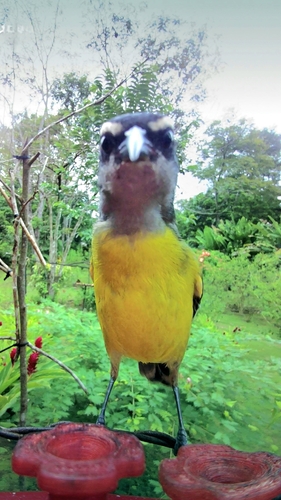
Bananaquit (Coereba flaveola) Bananaquit
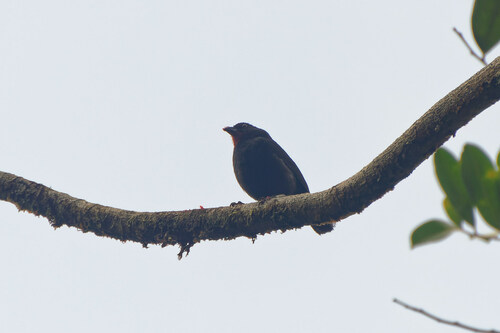
Lesser Antillean Bullfinch (Loxigilla noctis) Lesser Antillean Bullfinch

Media

Loading…

In short

The Bananaquit and Lesser Antillean Bullfinch can be distinguished by their plumage and feeding behavior. The Bananaquit has a distinctive white eyebrow and bright yellow underparts, while the male Lesser Antillean Bullfinch is black with a reddish throat and lores. Both species are active feeders, but the Bananaquit is more often seen clinging to flowers for nectar.

Identification tips

  1. Look for the white eyebrow and yellow underparts of the Bananaquit. 2. Note the reddish throat and lores in male Lesser Antillean Bullfinches. 3. Observe feeding behavior: Bananaquits often cling to flowers, while bullfinches forage more broadly. 4. Consider habitat: Bananaquits are more likely in flowering trees, while bullfinches are versatile across various environments.

Size

Both species are small passerines, but the Bananaquit generally appears more delicate due to its slender, down-curved bill.

Plumage

The Bananaquit has black upperparts, bright yellow underparts, and a conspicuous white eyebrow. In contrast, the male Lesser Antillean Bullfinch is black with a reddish throat and lores, while the female is warm gray with reddish brown wings, tail, and undertail coverts.

Behaviour

Bananaquits are bold and active feeders, often seen clinging to flowers for nectar. Lesser Antillean Bullfinches are also active but are more often seen foraging on the ground or in shrubs.

Habitat

Bananaquits are found in a variety of habitats from scrubland to tropical forest edges. Lesser Antillean Bullfinches inhabit a range of environments from dry forests to rainforests and mangroves.

Voice

The Lesser Antillean Bullfinch has a fast, clear warbling song, while the Bananaquit's vocalizations are less distinctive and not mentioned in the sources.

Submit a better description

Use the same sections as the comparison. Your text is published immediately.

The Bananaquit and Lesser Antillean Bullfinch can be distinguished by their plumage and feeding behavior. The Bananaquit has a distinctive white eyebrow and bright yellow underparts, while the male Lesser Antillean Bullfinch is black with a reddish throat and lores. Both species are active feeders, but the Bananaquit is more often seen clinging to flowers for nectar.

  1. Look for the white eyebrow and yellow underparts of the Bananaquit. 2. Note the reddish throat and lores in male Lesser Antillean Bullfinches. 3. Observe feeding behavior: Bananaquits often cling to flowers, while bullfinches forage more broadly. 4. Consider habitat: Bananaquits are more likely in flowering trees, while bullfinches are versatile across various environments.

Both species are small passerines, but the Bananaquit generally appears more delicate due to its slender, down-curved bill.

The Bananaquit has black upperparts, bright yellow underparts, and a conspicuous white eyebrow. In contrast, the male Lesser Antillean Bullfinch is black with a reddish throat and lores, while the female is warm gray with reddish brown wings, tail, and undertail coverts.

Bananaquits are bold and active feeders, often seen clinging to flowers for nectar. Lesser Antillean Bullfinches are also active but are more often seen foraging on the ground or in shrubs.

Bananaquits are found in a variety of habitats from scrubland to tropical forest edges. Lesser Antillean Bullfinches inhabit a range of environments from dry forests to rainforests and mangroves.

The Lesser Antillean Bullfinch has a fast, clear warbling song, while the Bananaquit's vocalizations are less distinctive and not mentioned in the sources.

Discard your changes?

You have unsaved edits. If you leave now, those changes will be lost.

Bananaquit · Lesser Antillean Bullfinch · My Tricky Birds