Birdr

Band-backed Wren vs Rufous-naped Wren

Campylorhynchus zonatus versus Campylorhynchus rufinucha

Play a quiz with Band-backed Wren and Rufous-naped Wren
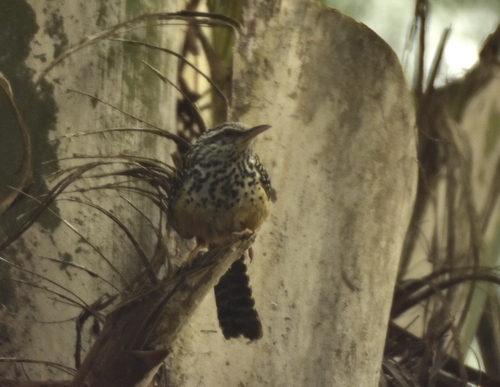
Band-backed Wren (Campylorhynchus zonatus) Band-backed Wren
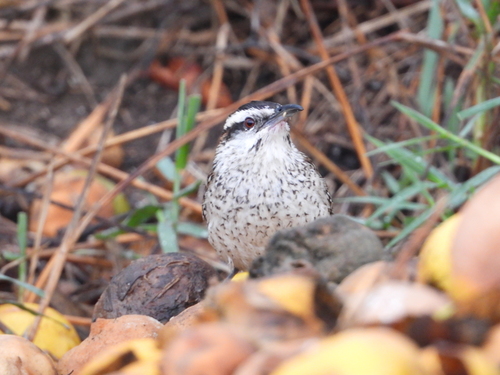
Rufous-naped Wren (Campylorhynchus rufinucha) Rufous-naped Wren

Media

Loading…

In short

The Band-backed Wren and Rufous-naped Wren are both large, social wrens with similar structural features, but they can be distinguished by their plumage patterns. The Band-backed Wren has a more distinct banded back, while the Rufous-naped Wren features a rufous crown and nape. Both species inhabit similar environments, making visual identification crucial.

Identification tips

  1. Look for the banded back on the Band-backed Wren. 2. Note the rufous crown and nape on the Rufous-naped Wren. 3. Observe group behavior and habitat, but rely on plumage for identification. 4. Vocalizations are similar; focus on visual cues.

Size

Both species are similar in size, typical of large wrens.

Plumage

The Band-backed Wren has a distinctive black-and-white banded back and a white head. In contrast, the Rufous-naped Wren has a rufous crown and nape, with a less pronounced banding on the back.

Behaviour

Both species are social and often found in groups, displaying similar foraging behaviors.

Habitat

Both species inhabit semi-open country and dense forests, ranging from sea level to at least 3000 m, often overlapping in range.

Voice

Their vocalizations are similar and not the most reliable for differentiation in the field.

Submit a better description

Use the same sections as the comparison. Your text is published immediately.

The Band-backed Wren and Rufous-naped Wren are both large, social wrens with similar structural features, but they can be distinguished by their plumage patterns. The Band-backed Wren has a more distinct banded back, while the Rufous-naped Wren features a rufous crown and nape. Both species inhabit similar environments, making visual identification crucial.

  1. Look for the banded back on the Band-backed Wren. 2. Note the rufous crown and nape on the Rufous-naped Wren. 3. Observe group behavior and habitat, but rely on plumage for identification. 4. Vocalizations are similar; focus on visual cues.

Both species are similar in size, typical of large wrens.

The Band-backed Wren has a distinctive black-and-white banded back and a white head. In contrast, the Rufous-naped Wren has a rufous crown and nape, with a less pronounced banding on the back.

Both species are social and often found in groups, displaying similar foraging behaviors.

Both species inhabit semi-open country and dense forests, ranging from sea level to at least 3000 m, often overlapping in range.

Their vocalizations are similar and not the most reliable for differentiation in the field.

Discard your changes?

You have unsaved edits. If you leave now, those changes will be lost.

Band-backed Wren · Rufous-naped Wren · My Tricky Birds