Birdr

Band-tailed Earthcreeper vs Chaco Earthcreeper

Ochetorhynchus phoenicurus versus Tarphonomus certhioides

Play a quiz with Band-tailed Earthcreeper and Chaco Earthcreeper
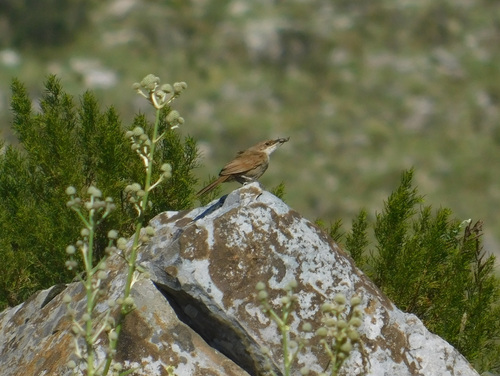
Band-tailed Earthcreeper (Ochetorhynchus phoenicurus) Band-tailed Earthcreeper
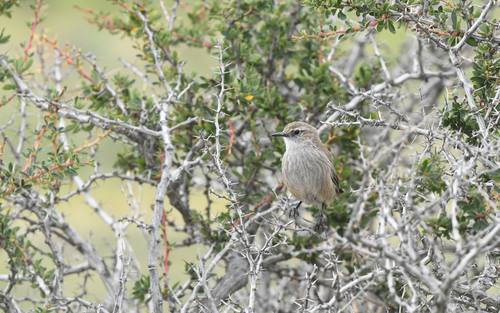
Chaco Earthcreeper (Tarphonomus certhioides) Chaco Earthcreeper

Media

Loading…

In short

The Band-tailed Earthcreeper and Chaco Earthcreeper can be distinguished by their bill shape and tail behavior. The Band-tailed Earthcreeper has a longer, more curved bill and often cocks its tail, while the Chaco Earthcreeper has a shorter, straighter bill and seldom cocks its tail.

Identification tips

  1. Look for the bill shape: Band-tailed has a longer, more curved bill; Chaco has a shorter, straighter bill. 2. Observe tail behavior: Band-tailed often cocks its tail; Chaco seldom does. 3. Note plumage differences: Chaco has a white throat and rufous forehead; Band-tailed has a banded tail. 4. Consider habitat: Band-tailed prefers rocky areas; Chaco is found in dry, open areas or light woodlands. 5. Listen for vocal differences: Chaco's calls are slow and ringing; Band-tailed's are more trilled.

Size

Both species are similar in size, typical of earthcreepers, with no significant size difference noted.

Plumage

The Band-tailed Earthcreeper has a more uniform coloration with a distinctive banded tail, while the Chaco Earthcreeper is relatively darker with a contrasting white throat, rufous forehead, and a dark belly. In the southern range, the Chaco Earthcreeper also shows a buffy supercilium.

Behaviour

The Band-tailed Earthcreeper often cocks its tail, a behavior not commonly seen in the Chaco Earthcreeper, which forages on the ground and in shrubs.

Habitat

The Band-tailed Earthcreeper is typically found in rocky areas and open habitats, whereas the Chaco Earthcreeper prefers dry, open areas or light woodlands, often with ground bromeliads in the north of its range.

Voice

The Chaco Earthcreeper's vocalizations consist of slow, ringing notes, contrasting with the more trilled and strident calls of the Band-tailed Earthcreeper.

Submit a better description

Use the same sections as the comparison. Your text is published immediately.

The Band-tailed Earthcreeper and Chaco Earthcreeper can be distinguished by their bill shape and tail behavior. The Band-tailed Earthcreeper has a longer, more curved bill and often cocks its tail, while the Chaco Earthcreeper has a shorter, straighter bill and seldom cocks its tail.

  1. Look for the bill shape: Band-tailed has a longer, more curved bill; Chaco has a shorter, straighter bill. 2. Observe tail behavior: Band-tailed often cocks its tail; Chaco seldom does. 3. Note plumage differences: Chaco has a white throat and rufous forehead; Band-tailed has a banded tail. 4. Consider habitat: Band-tailed prefers rocky areas; Chaco is found in dry, open areas or light woodlands. 5. Listen for vocal differences: Chaco's calls are slow and ringing; Band-tailed's are more trilled.

Both species are similar in size, typical of earthcreepers, with no significant size difference noted.

The Band-tailed Earthcreeper has a more uniform coloration with a distinctive banded tail, while the Chaco Earthcreeper is relatively darker with a contrasting white throat, rufous forehead, and a dark belly. In the southern range, the Chaco Earthcreeper also shows a buffy supercilium.

The Band-tailed Earthcreeper often cocks its tail, a behavior not commonly seen in the Chaco Earthcreeper, which forages on the ground and in shrubs.

The Band-tailed Earthcreeper is typically found in rocky areas and open habitats, whereas the Chaco Earthcreeper prefers dry, open areas or light woodlands, often with ground bromeliads in the north of its range.

The Chaco Earthcreeper's vocalizations consist of slow, ringing notes, contrasting with the more trilled and strident calls of the Band-tailed Earthcreeper.

Discard your changes?

You have unsaved edits. If you leave now, those changes will be lost.

Band-tailed Earthcreeper · Chaco Earthcreeper · My Tricky Birds