Birdr

Band-tailed Pigeon vs Rufous Turtle Dove

Patagioenas fasciata versus Streptopelia orientalis

Play a quiz with Band-tailed Pigeon and Rufous Turtle Dove
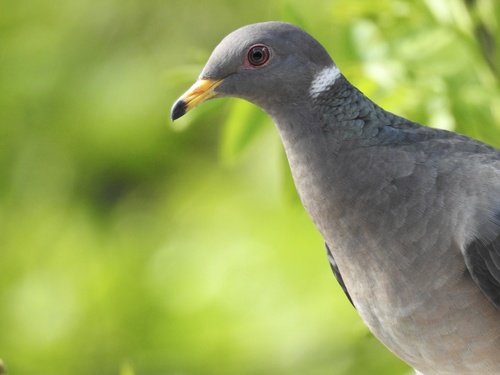
Band-tailed Pigeon (Patagioenas fasciata) Band-tailed Pigeon
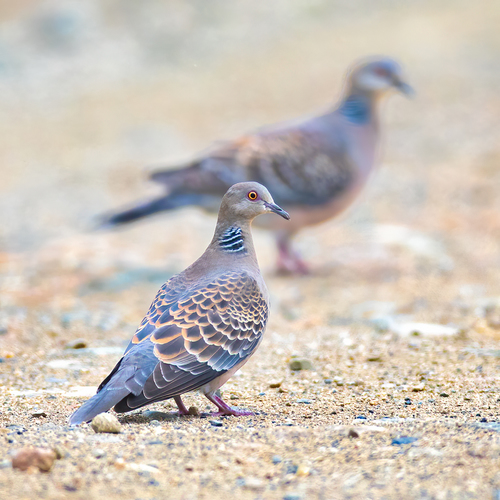
Rufous Turtle Dove (Streptopelia orientalis) Rufous Turtle Dove

Media

Loading…

In short

The Band-tailed Pigeon and Rufous Turtle Dove can be distinguished by their distinct plumage and structural features. The Band-tailed Pigeon has a characteristic white neck crescent and a generally plainer appearance, while the Rufous Turtle Dove features a more patterned plumage with rufous tones. Both species belong to the Columbidae family but differ notably in their habitats and vocalizations.

Identification tips

  1. Look for the white neck crescent on Band-tailed Pigeons. 2. Note the rufous tones and scaly neck pattern on Rufous Turtle Doves. 3. Compare size: Band-tailed Pigeons are larger. 4. Listen for vocal differences: Band-tailed Pigeons have a low-pitched coo, while Rufous Turtle Doves have a more melodious call. 5. Consider habitat: Band-tailed Pigeons prefer montane and coastal forests, whereas Rufous Turtle Doves are found in open woodlands.

Size

The Band-tailed Pigeon is generally larger and bulkier than the Rufous Turtle Dove.

Plumage

Band-tailed Pigeons have a plain grayish body with a distinctive white neck crescent and a pale band on the tail. Rufous Turtle Doves exhibit a more patterned appearance with rufous tones on the wings and a scaly pattern on the neck.

Behaviour

Band-tailed Pigeons are generalists, often found in both urban and forested areas, while Rufous Turtle Doves are more typically associated with open woodlands and agricultural areas.

Habitat

Band-tailed Pigeons inhabit montane forests and coastal regions, while Rufous Turtle Doves are found in open woodlands and agricultural landscapes, primarily in Asia.

Voice

Band-tailed Pigeons have a distinctive, low-pitched cooing, while Rufous Turtle Doves produce a more melodious and rhythmic cooing sound.

Submit a better description

Use the same sections as the comparison. Your text is published immediately.

The Band-tailed Pigeon and Rufous Turtle Dove can be distinguished by their distinct plumage and structural features. The Band-tailed Pigeon has a characteristic white neck crescent and a generally plainer appearance, while the Rufous Turtle Dove features a more patterned plumage with rufous tones. Both species belong to the Columbidae family but differ notably in their habitats and vocalizations.

  1. Look for the white neck crescent on Band-tailed Pigeons. 2. Note the rufous tones and scaly neck pattern on Rufous Turtle Doves. 3. Compare size: Band-tailed Pigeons are larger. 4. Listen for vocal differences: Band-tailed Pigeons have a low-pitched coo, while Rufous Turtle Doves have a more melodious call. 5. Consider habitat: Band-tailed Pigeons prefer montane and coastal forests, whereas Rufous Turtle Doves are found in open woodlands.

The Band-tailed Pigeon is generally larger and bulkier than the Rufous Turtle Dove.

Band-tailed Pigeons have a plain grayish body with a distinctive white neck crescent and a pale band on the tail. Rufous Turtle Doves exhibit a more patterned appearance with rufous tones on the wings and a scaly pattern on the neck.

Band-tailed Pigeons are generalists, often found in both urban and forested areas, while Rufous Turtle Doves are more typically associated with open woodlands and agricultural areas.

Band-tailed Pigeons inhabit montane forests and coastal regions, while Rufous Turtle Doves are found in open woodlands and agricultural landscapes, primarily in Asia.

Band-tailed Pigeons have a distinctive, low-pitched cooing, while Rufous Turtle Doves produce a more melodious and rhythmic cooing sound.

Discard your changes?

You have unsaved edits. If you leave now, those changes will be lost.

Band-tailed Pigeon · Rufous Turtle Dove · My Tricky Birds