Birdr

Band-winged Nightjar vs Little Nightjar

Systellura longirostris versus Setopagis parvula

Play a quiz with Band-winged Nightjar and Little Nightjar
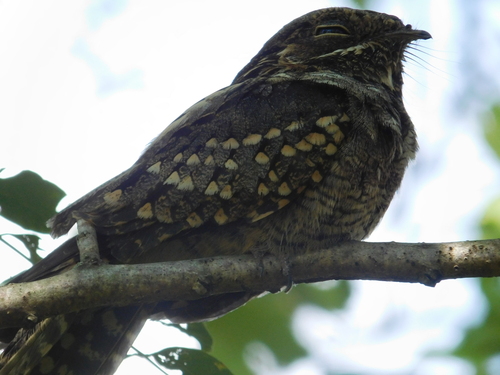
Band-winged Nightjar (Systellura longirostris) Band-winged Nightjar
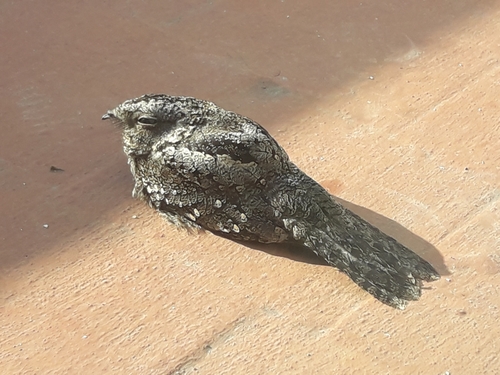
Little Nightjar (Setopagis parvula) Little Nightjar

Media

Loading…

In short

The Band-winged Nightjar and Little Nightjar can be distinguished by their tail shape and plumage details. The Band-winged Nightjar has a long, square tail with a rufous hindcollar, while the Little Nightjar features a broad tawny collar and white tips on its tail feathers.

Identification tips

  1. Look for the tail shape: Band-winged Nightjar has a long, square tail. 2. Check for the hindcollar: Band-winged has a rufous collar, Little has a tawny collar. 3. Observe the tail tips: Little Nightjar has white tips on all but the central rectrices. 4. Listen for vocalizations: Band-winged Nightjar has a distinctive two-part whistle.

Size

Both species are similar in size, typical of nightjars, with no significant size difference noted.

Plumage

The Band-winged Nightjar has a mottled gray and brown plumage with a distinctive rufous hindcollar. In contrast, the Little Nightjar is generally grayish brown with a broad tawny collar, a white throat patch, and white tips on all but the central tail feathers.

Behaviour

Both species roost on the ground during the day and have erratic flight patterns when flushed. The Band-winged Nightjar typically lands back on the ground quickly, often disappearing due to its cryptic plumage.

Habitat

The Band-winged Nightjar is found in a variety of habitats, while the Little Nightjar inhabits open woodland in the lowlands of central and eastern South America.

Voice

The Band-winged Nightjar is known for a loud, slurred, two-part whistle. Specific vocalizations for the Little Nightjar are not detailed here.

Submit a better description

Use the same sections as the comparison. Your text is published immediately.

The Band-winged Nightjar and Little Nightjar can be distinguished by their tail shape and plumage details. The Band-winged Nightjar has a long, square tail with a rufous hindcollar, while the Little Nightjar features a broad tawny collar and white tips on its tail feathers.

  1. Look for the tail shape: Band-winged Nightjar has a long, square tail. 2. Check for the hindcollar: Band-winged has a rufous collar, Little has a tawny collar. 3. Observe the tail tips: Little Nightjar has white tips on all but the central rectrices. 4. Listen for vocalizations: Band-winged Nightjar has a distinctive two-part whistle.

Both species are similar in size, typical of nightjars, with no significant size difference noted.

The Band-winged Nightjar has a mottled gray and brown plumage with a distinctive rufous hindcollar. In contrast, the Little Nightjar is generally grayish brown with a broad tawny collar, a white throat patch, and white tips on all but the central tail feathers.

Both species roost on the ground during the day and have erratic flight patterns when flushed. The Band-winged Nightjar typically lands back on the ground quickly, often disappearing due to its cryptic plumage.

The Band-winged Nightjar is found in a variety of habitats, while the Little Nightjar inhabits open woodland in the lowlands of central and eastern South America.

The Band-winged Nightjar is known for a loud, slurred, two-part whistle. Specific vocalizations for the Little Nightjar are not detailed here.

Discard your changes?

You have unsaved edits. If you leave now, those changes will be lost.

Band-winged Nightjar · Little Nightjar · My Tricky Birds