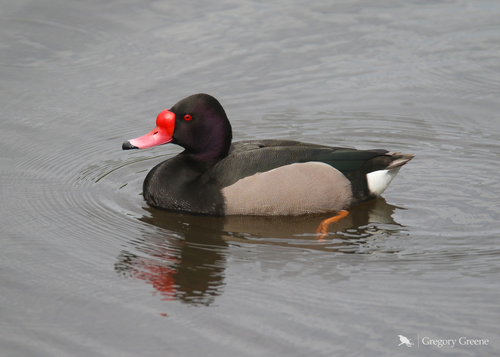
Bar-headed Goose vs Rosy-billed Pochard
Anser indicus versus Netta peposaca
Play a quiz with Bar-headed Goose and Rosy-billed Pochard
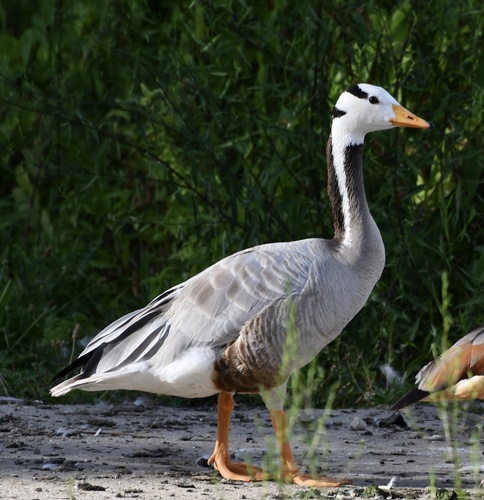
Bar-headed Goose
Rosy-billed Pochard
In short
The Bar-headed Goose and Rosy-billed Pochard are both waterfowl but differ greatly in appearance and habitat preference. The Bar-headed Goose is known for its distinctive black bars on a white head, while the Rosy-billed Pochard features a striking red bill and dark plumage. These differences are key for identification in the field.
Identification tips
Look for the head pattern: Bar-headed Geese have distinctive black bars on a white head. Check the bill color: Rosy-billed Pochards have a bright red bill, especially in males. Observe the habitat: Bar-headed Geese are more likely in open, high-altitude areas, whereas Rosy-billed Pochards prefer vegetated freshwater bodies.
Size
The Bar-headed Goose is larger and more robust compared to the medium-sized Rosy-billed Pochard.
Plumage
Bar-headed Goose has a pale gray body with two black bars on a white head, whereas the Rosy-billed Pochard has a dark body with a glossy black head and a bright red bill, especially noticeable in males.
Behaviour
Bar-headed Geese are primarily grazers and are often seen walking on land, while Rosy-billed Pochards are diving ducks, frequently seen diving in water for food.
Habitat
Bar-headed Geese are typically found in high-altitude lakes and wetlands, often in open areas. In contrast, Rosy-billed Pochards prefer freshwater lakes and ponds with ample emergent vegetation.
Voice
Vocalizations are not a primary distinguishing feature between these species in the field.