Birdr

Bar-tailed Godwit vs Black-tailed Godwit

Limosa lapponica versus Limosa limosa

Play a quiz with Bar-tailed Godwit and Black-tailed Godwit
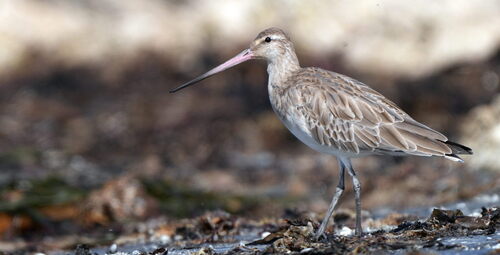
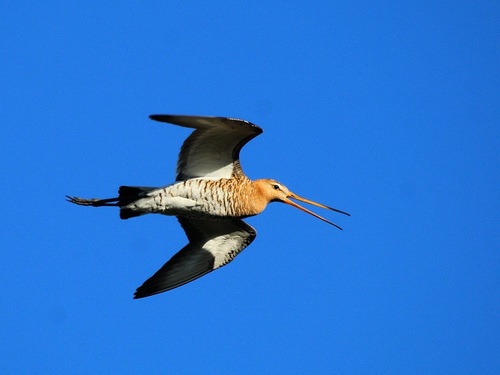
Bar-tailed Godwit (Limosa lapponica) Bar-tailed Godwit
Black-tailed Godwit (Limosa limosa) Black-tailed Godwit

Media

Loading…

In short

The most reliable field mark to separate Bar-tailed and Black-tailed Godwits is the bold black-and-white wingbar and white rump of Black-tailed Godwit, visible in all ages and especially obvious in flight. Bar-tailed Godwit lacks this pattern, showing plainer wings and a barred tail instead. On the ground, Black-tailed Godwit stands taller with longer legs and a longer, straighter bill, while Bar-tailed Godwit is shorter-legged with a slightly upturned bill. Breeding plumage differs: Bar-tailed shows unbroken brick-red underparts, while Black-tailed has a more orange wash limited to the head, neck, and chest. Non-breeding and juvenile birds are trickier, but the wing and tail patterns in flight remain the best clues.

Identification tips

  1. In flight, look for the wing pattern: Black-tailed Godwit of any age shows a bold white wingbar and a white rump with a black tail band; Bar-tailed Godwit lacks these, showing plainer wings and a barred tail. This is the single most reliable mark, especially for immatures and non-breeding birds.
  2. Tail pattern: Bar-tailed Godwit has a brown-and-white barred tail; Black-tailed Godwit has a white tail with a solid black terminal band. This is visible in flight and sometimes when preening or stretching on the ground.
  3. Leg length and stance: Black-tailed Godwit stands taller and has longer legs, which extend well beyond the tail in flight and make the bird look more upright on the ground. Bar-tailed Godwit is shorter-legged and appears more compact.
  4. Bill shape: Bar-tailed Godwit’s bill is slightly upturned and two-toned (pink at base, black at tip); Black-tailed Godwit’s bill is longer, straighter, and also two-toned but less obviously upturned. Bill length is variable and overlaps, but the upturn is a helpful clue.
  5. Breeding plumage: Bar-tailed Godwit (especially males) shows unbroken brick-red underparts and dark upperparts; Black-tailed Godwit males have a more limited orange wash on the head, neck, and chest, not extending as far down the belly. Females of both are duller, but the difference in extent and shade of color remains useful.
  6. Non-breeding plumage: Bar-tailed Godwit is plain grey-brown above with streaked back and whitish below; Black-tailed Godwit is more uniform brown-grey above and below, lacking the streaked back. This is subtle and best used in combination with other marks.
  7. Juvenile plumage: Juvenile Bar-tailed Godwit is buffier and more streaked on the flanks and breast; juvenile Black-tailed Godwit has a pale orange wash to the neck and breast, but is otherwise plain.
  8. Feeding posture: Black-tailed Godwit often feeds in deeper water due to longer legs, sometimes wading belly-deep, while Bar-tailed Godwit tends to feed in shallower water or on exposed mud.
  9. Habitat context: In winter, Bar-tailed Godwit is more strictly coastal, especially on open tidal flats; Black-tailed Godwit may be found on both tidal and freshwater wetlands, sometimes inland.
  10. Display flight: If observed, Bar-tailed Godwit’s display flight is more ordered and less erratic than Black-tailed Godwit’s, which may show a tumbling phase.
  11. Size impression: Black-tailed Godwit is slightly longer and stands taller, but both species overlap in mass and overall size; use structure and posture more than size alone.
  12. Sexual dimorphism: Both species show brighter males in breeding plumage, but the difference in color extent (brick-red vs. orange wash) is more helpful than sexing the birds.
  13. Bill color in season: In breeding, both species have a pink or orange base to the bill, but Bar-tailed’s is more distinctly pink; in winter, both bills are paler at the base.
  14. Leg color: Bar-tailed Godwit’s legs are blue-grey; Black-tailed Godwit’s are dark grey, brown, or black. This can be subtle and variable, so use with caution.
  15. Pitfalls: In poor light or at distance, structure and bill shape can be misleading; always try to see the wing and tail pattern in flight for confirmation, especially with immatures or non-breeding birds.

Size

Both species are large waders and overlap in size, but Bar-tailed Godwit averages heavier (body mass ~333.5g vs. 289.5g for Black-tailed [wikidata]). Black-tailed Godwit is slightly longer (bill-to-tail 42 cm vs. 37–41 cm for Bar-tailed) and has a similar wingspan (70–82 cm Black-tailed, 70–80 cm Bar-tailed). In the field, Black-tailed Godwit often appears taller and more elongated due to its longer legs and neck, while Bar-tailed is more compact and shorter-legged.

Plumage

Juvenile and non-breeding Black-tailed Godwits show a distinctive black-and-white wingbar and a white rump in flight, which Bar-tailed Godwits lack at all ages. Bar-tailed Godwit’s tail is barred brown and white, while Black-tailed’s is white with a bold black terminal band. On the ground, Bar-tailed Godwit in breeding plumage is brick red below and dark above, with females duller and more cinnamon; Black-tailed Godwit breeding males are orange on the head, neck, and chest, with the color not extending as far down the belly as in Bar-tailed. Non-breeding Bar-tailed Godwit is plain grey-brown above with streaked back and whitish below; Black-tailed Godwit is more uniformly brown-grey above and below, lacking the streaked back. Juvenile Bar-tailed is buffier and more streaked than juvenile Black-tailed, which has a pale orange wash to the neck and breast.

Behaviour

Both species are strongly migratory and often found in similar coastal habitats, but their display flights differ: Bar-tailed Godwit’s ceremonial flight is more ordered and less erratic than Black-tailed’s, which may show a tumbling flight after ascending. Bar-tailed Godwit’s territorial defense is mostly on the ground and less aggressive overall. In mixed flocks, Black-tailed Godwit may appear more upright and active due to its longer legs and neck.

Habitat

Both species use coastal mudflats and estuaries, but Bar-tailed Godwit is more strictly coastal, especially in winter, and breeds on Arctic tundra. Black-tailed Godwit breeds in wet grasslands and marshes and winters in a wider range of wetlands, sometimes inland. In the non-breeding season, Bar-tailed is more likely to be found on open tidal flats, while Black-tailed may use both tidal and freshwater habitats.

Submit a better description

Use the same sections as the comparison. Your text is published immediately.

The most reliable field mark to separate Bar-tailed and Black-tailed Godwits is the bold black-and-white wingbar and white rump of Black-tailed Godwit, visible in all ages and especially obvious in flight. Bar-tailed Godwit lacks this pattern, showing plainer wings and a barred tail instead. On the ground, Black-tailed Godwit stands taller with longer legs and a longer, straighter bill, while Bar-tailed Godwit is shorter-legged with a slightly upturned bill. Breeding plumage differs: Bar-tailed shows unbroken brick-red underparts, while Black-tailed has a more orange wash limited to the head, neck, and chest. Non-breeding and juvenile birds are trickier, but the wing and tail patterns in flight remain the best clues.

  1. In flight, look for the wing pattern: Black-tailed Godwit of any age shows a bold white wingbar and a white rump with a black tail band; Bar-tailed Godwit lacks these, showing plainer wings and a barred tail. This is the single most reliable mark, especially for immatures and non-breeding birds.
  2. Tail pattern: Bar-tailed Godwit has a brown-and-white barred tail; Black-tailed Godwit has a white tail with a solid black terminal band. This is visible in flight and sometimes when preening or stretching on the ground.
  3. Leg length and stance: Black-tailed Godwit stands taller and has longer legs, which extend well beyond the tail in flight and make the bird look more upright on the ground. Bar-tailed Godwit is shorter-legged and appears more compact.
  4. Bill shape: Bar-tailed Godwit’s bill is slightly upturned and two-toned (pink at base, black at tip); Black-tailed Godwit’s bill is longer, straighter, and also two-toned but less obviously upturned. Bill length is variable and overlaps, but the upturn is a helpful clue.
  5. Breeding plumage: Bar-tailed Godwit (especially males) shows unbroken brick-red underparts and dark upperparts; Black-tailed Godwit males have a more limited orange wash on the head, neck, and chest, not extending as far down the belly. Females of both are duller, but the difference in extent and shade of color remains useful.
  6. Non-breeding plumage: Bar-tailed Godwit is plain grey-brown above with streaked back and whitish below; Black-tailed Godwit is more uniform brown-grey above and below, lacking the streaked back. This is subtle and best used in combination with other marks.
  7. Juvenile plumage: Juvenile Bar-tailed Godwit is buffier and more streaked on the flanks and breast; juvenile Black-tailed Godwit has a pale orange wash to the neck and breast, but is otherwise plain.
  8. Feeding posture: Black-tailed Godwit often feeds in deeper water due to longer legs, sometimes wading belly-deep, while Bar-tailed Godwit tends to feed in shallower water or on exposed mud.
  9. Habitat context: In winter, Bar-tailed Godwit is more strictly coastal, especially on open tidal flats; Black-tailed Godwit may be found on both tidal and freshwater wetlands, sometimes inland.
  10. Display flight: If observed, Bar-tailed Godwit’s display flight is more ordered and less erratic than Black-tailed Godwit’s, which may show a tumbling phase.
  11. Size impression: Black-tailed Godwit is slightly longer and stands taller, but both species overlap in mass and overall size; use structure and posture more than size alone.
  12. Sexual dimorphism: Both species show brighter males in breeding plumage, but the difference in color extent (brick-red vs. orange wash) is more helpful than sexing the birds.
  13. Bill color in season: In breeding, both species have a pink or orange base to the bill, but Bar-tailed’s is more distinctly pink; in winter, both bills are paler at the base.
  14. Leg color: Bar-tailed Godwit’s legs are blue-grey; Black-tailed Godwit’s are dark grey, brown, or black. This can be subtle and variable, so use with caution.
  15. Pitfalls: In poor light or at distance, structure and bill shape can be misleading; always try to see the wing and tail pattern in flight for confirmation, especially with immatures or non-breeding birds.

Both species are large waders and overlap in size, but Bar-tailed Godwit averages heavier (body mass ~333.5g vs. 289.5g for Black-tailed [wikidata]). Black-tailed Godwit is slightly longer (bill-to-tail 42 cm vs. 37–41 cm for Bar-tailed) and has a similar wingspan (70–82 cm Black-tailed, 70–80 cm Bar-tailed). In the field, Black-tailed Godwit often appears taller and more elongated due to its longer legs and neck, while Bar-tailed is more compact and shorter-legged.

Juvenile and non-breeding Black-tailed Godwits show a distinctive black-and-white wingbar and a white rump in flight, which Bar-tailed Godwits lack at all ages. Bar-tailed Godwit’s tail is barred brown and white, while Black-tailed’s is white with a bold black terminal band. On the ground, Bar-tailed Godwit in breeding plumage is brick red below and dark above, with females duller and more cinnamon; Black-tailed Godwit breeding males are orange on the head, neck, and chest, with the color not extending as far down the belly as in Bar-tailed. Non-breeding Bar-tailed Godwit is plain grey-brown above with streaked back and whitish below; Black-tailed Godwit is more uniformly brown-grey above and below, lacking the streaked back. Juvenile Bar-tailed is buffier and more streaked than juvenile Black-tailed, which has a pale orange wash to the neck and breast.

Both species are strongly migratory and often found in similar coastal habitats, but their display flights differ: Bar-tailed Godwit’s ceremonial flight is more ordered and less erratic than Black-tailed’s, which may show a tumbling flight after ascending. Bar-tailed Godwit’s territorial defense is mostly on the ground and less aggressive overall. In mixed flocks, Black-tailed Godwit may appear more upright and active due to its longer legs and neck.

Both species use coastal mudflats and estuaries, but Bar-tailed Godwit is more strictly coastal, especially in winter, and breeds on Arctic tundra. Black-tailed Godwit breeds in wet grasslands and marshes and winters in a wider range of wetlands, sometimes inland. In the non-breeding season, Bar-tailed is more likely to be found on open tidal flats, while Black-tailed may use both tidal and freshwater habitats.

Discard your changes?

You have unsaved edits. If you leave now, those changes will be lost.

Bar-tailed Godwit · Black-tailed Godwit · My Tricky Birds