Birdr

Bare-faced Ibis vs Buff-necked Ibis

Phimosus infuscatus versus Theristicus caudatus

Play a quiz with Bare-faced Ibis and Buff-necked Ibis
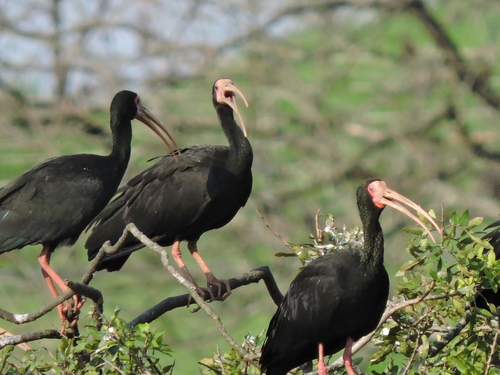
Bare-faced Ibis (Phimosus infuscatus) Bare-faced Ibis
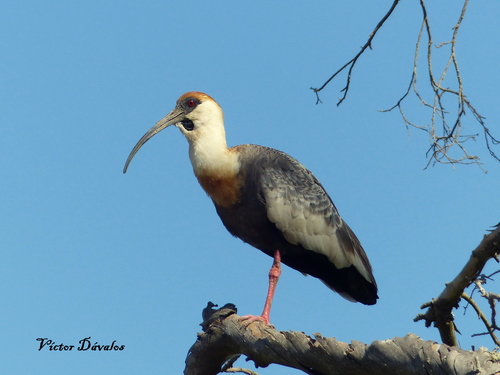
Buff-necked Ibis (Theristicus caudatus) Buff-necked Ibis

Media

Loading…

In short

The Bare-faced Ibis (Phimosus infuscatus) and Buff-necked Ibis (Theristicus caudatus) are both ibises but can be distinguished by their head and neck coloration. The Bare-faced Ibis has a distinctive bare, dark face, while the Buff-necked Ibis features a bright buffy head and neck. Both species inhabit open areas but differ in their preference for proximity to water.

Identification tips

  1. Look for the bare, dark face of the Bare-faced Ibis versus the buffy head and neck of the Buff-necked Ibis. 2. Observe habitat: Bare-faced Ibis prefers wetlands, while Buff-necked Ibis is often in drier, open areas. 3. Note the plumage: Buff-necked Ibis has a grey back and black underparts, contrasting with the darker overall plumage of the Bare-faced Ibis.

Size

Both species are similar in size, typical of ibises, but the Buff-necked Ibis may appear slightly bulkier due to its robust build.

Plumage

The Bare-faced Ibis has a dark, bare face and generally darker plumage. In contrast, the Buff-necked Ibis is notable for its bright buffy head and neck, grey back, and black underparts.

Behaviour

Both species forage in open areas, but the Buff-necked Ibis is often found far from water, unlike the Bare-faced Ibis which prefers wetter habitats.

Habitat

The Bare-faced Ibis is typically found in wetland areas, while the Buff-necked Ibis can be found in savannas, ranchlands, and open forests, often far from water.

Submit a better description

Use the same sections as the comparison. Your text is published immediately.

The Bare-faced Ibis (Phimosus infuscatus) and Buff-necked Ibis (Theristicus caudatus) are both ibises but can be distinguished by their head and neck coloration. The Bare-faced Ibis has a distinctive bare, dark face, while the Buff-necked Ibis features a bright buffy head and neck. Both species inhabit open areas but differ in their preference for proximity to water.

  1. Look for the bare, dark face of the Bare-faced Ibis versus the buffy head and neck of the Buff-necked Ibis. 2. Observe habitat: Bare-faced Ibis prefers wetlands, while Buff-necked Ibis is often in drier, open areas. 3. Note the plumage: Buff-necked Ibis has a grey back and black underparts, contrasting with the darker overall plumage of the Bare-faced Ibis.

Both species are similar in size, typical of ibises, but the Buff-necked Ibis may appear slightly bulkier due to its robust build.

The Bare-faced Ibis has a dark, bare face and generally darker plumage. In contrast, the Buff-necked Ibis is notable for its bright buffy head and neck, grey back, and black underparts.

Both species forage in open areas, but the Buff-necked Ibis is often found far from water, unlike the Bare-faced Ibis which prefers wetter habitats.

The Bare-faced Ibis is typically found in wetland areas, while the Buff-necked Ibis can be found in savannas, ranchlands, and open forests, often far from water.

Discard your changes?

You have unsaved edits. If you leave now, those changes will be lost.

Bare-faced Ibis · Buff-necked Ibis · My Tricky Birds