Birdr

Bare-necked Umbrellabird vs Capuchinbird

Cephalopterus glabricollis versus Perissocephalus tricolor

Play a quiz with Bare-necked Umbrellabird and Capuchinbird
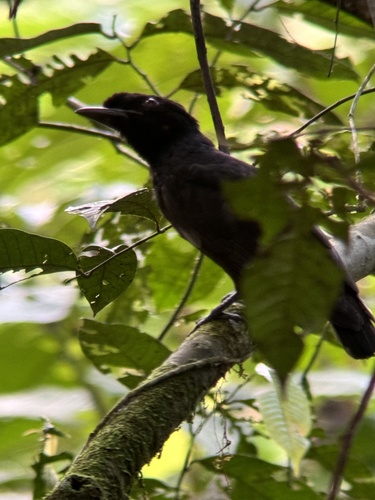
Bare-necked Umbrellabird (Cephalopterus glabricollis) Bare-necked Umbrellabird
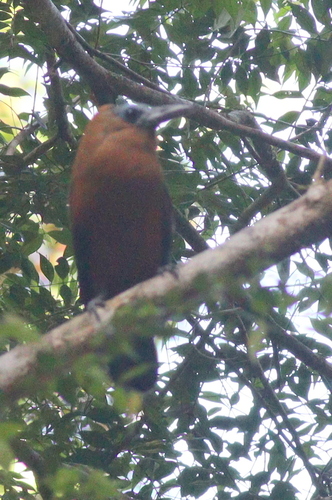
Capuchinbird (Perissocephalus tricolor) Capuchinbird

Media

Loading…

In short

The Bare-necked Umbrellabird and Capuchinbird are both large, striking members of the cotinga family, but they can be distinguished by their unique head and neck features. The Bare-necked Umbrellabird has a distinctive bare, red throat patch, while the Capuchinbird is known for its bald head and rufous plumage.

Identification tips

  1. Look for the bare, red throat patch on the Bare-necked Umbrellabird. 2. Note the bald head and rufous plumage of the Capuchinbird. 3. Listen for the mooing calls of the Capuchinbird, especially during display. 4. Consider the habitat: Central American forests for the Bare-necked Umbrellabird, northeastern South American forests for the Capuchinbird.

Size

Both species are large, but the Capuchinbird is slightly more robust with a stockier build.

Plumage

The Bare-necked Umbrellabird is mostly black with a prominent bare, red throat patch. In contrast, the Capuchinbird has a bald head and is covered in rufous-brown plumage, lacking the red throat patch.

Behaviour

Both species are relatively secretive and often found in the canopy, but the Capuchinbird is known for its unique display behavior involving wing flapping and head bobbing.

Habitat

The Bare-necked Umbrellabird is typically found in humid forests of Central America, while the Capuchinbird inhabits tropical forests in northeastern South America.

Voice

The Capuchinbird is famous for its low, cow-like mooing calls, which are quite distinct from any sounds made by the Bare-necked Umbrellabird.

Submit a better description

Use the same sections as the comparison. Your text is published immediately.

The Bare-necked Umbrellabird and Capuchinbird are both large, striking members of the cotinga family, but they can be distinguished by their unique head and neck features. The Bare-necked Umbrellabird has a distinctive bare, red throat patch, while the Capuchinbird is known for its bald head and rufous plumage.

  1. Look for the bare, red throat patch on the Bare-necked Umbrellabird. 2. Note the bald head and rufous plumage of the Capuchinbird. 3. Listen for the mooing calls of the Capuchinbird, especially during display. 4. Consider the habitat: Central American forests for the Bare-necked Umbrellabird, northeastern South American forests for the Capuchinbird.

Both species are large, but the Capuchinbird is slightly more robust with a stockier build.

The Bare-necked Umbrellabird is mostly black with a prominent bare, red throat patch. In contrast, the Capuchinbird has a bald head and is covered in rufous-brown plumage, lacking the red throat patch.

Both species are relatively secretive and often found in the canopy, but the Capuchinbird is known for its unique display behavior involving wing flapping and head bobbing.

The Bare-necked Umbrellabird is typically found in humid forests of Central America, while the Capuchinbird inhabits tropical forests in northeastern South America.

The Capuchinbird is famous for its low, cow-like mooing calls, which are quite distinct from any sounds made by the Bare-necked Umbrellabird.

Discard your changes?

You have unsaved edits. If you leave now, those changes will be lost.

Bare-necked Umbrellabird · Capuchinbird · My Tricky Birds