Birdr

Barred Becard vs White-winged Becard

Pachyramphus versicolor versus Pachyramphus polychopterus

Play a quiz with Barred Becard and White-winged Becard
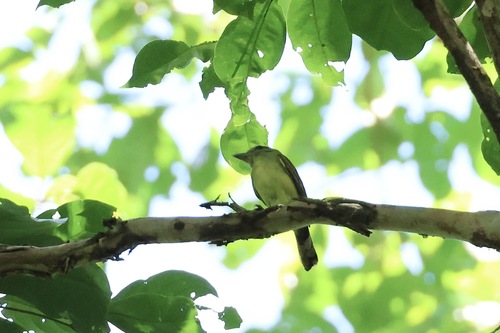
Barred Becard (Pachyramphus versicolor) Barred Becard
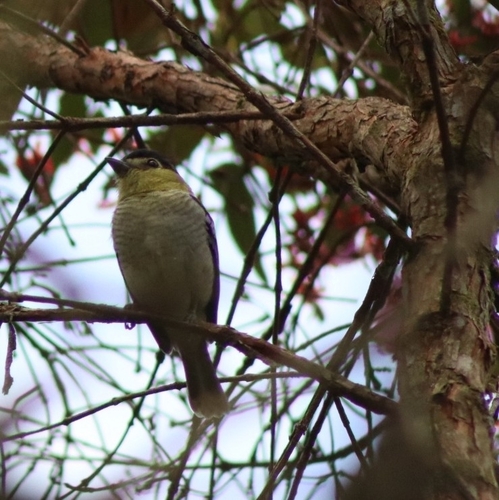
White-winged Becard (Pachyramphus polychopterus) White-winged Becard

Media

Loading…

In short

The Barred Becard and White-winged Becard can be distinguished by their wing markings and habitat preferences. The White-winged Becard has distinctive white wing patches, while the Barred Becard lacks these and has a more barred appearance. Both species are found in forested areas, but the White-winged Becard is more widespread geographically.

Identification tips

Size

Both species are similar in size, typical of the Pachyramphus genus.

Plumage

The White-winged Becard has prominent white wing patches, especially noticeable in males, whereas the Barred Becard lacks these patches and has a more barred pattern on its body. Females of both species can be more challenging to differentiate, but the white wing patches of the White-winged Becard remain a key feature.

Behaviour

Both species can be found in mixed-species foraging flocks, often in the middle to upper forest strata.

Habitat

The White-winged Becard is found across much of Central America and the northern two-thirds of South America, predominantly east of the Andes, in various forested habitats. The Barred Becard is less geographically widespread.

Submit a better description

Use the same sections as the comparison. Your text is published immediately.

The Barred Becard and White-winged Becard can be distinguished by their wing markings and habitat preferences. The White-winged Becard has distinctive white wing patches, while the Barred Becard lacks these and has a more barred appearance. Both species are found in forested areas, but the White-winged Becard is more widespread geographically.

  • Look for white wing patches on the White-winged Becard, particularly in males.
  • Observe the barred pattern on the Barred Becard, which lacks the white wing patches.
  • Consider the geographic location: if you are east of the Andes or in Central America, the White-winged Becard is more likely.
  • Both species are often seen in mixed-species flocks; pay attention to the company they keep.

Both species are similar in size, typical of the Pachyramphus genus.

The White-winged Becard has prominent white wing patches, especially noticeable in males, whereas the Barred Becard lacks these patches and has a more barred pattern on its body. Females of both species can be more challenging to differentiate, but the white wing patches of the White-winged Becard remain a key feature.

Both species can be found in mixed-species foraging flocks, often in the middle to upper forest strata.

The White-winged Becard is found across much of Central America and the northern two-thirds of South America, predominantly east of the Andes, in various forested habitats. The Barred Becard is less geographically widespread.

Discard your changes?

You have unsaved edits. If you leave now, those changes will be lost.

Barred Becard · White-winged Becard · My Tricky Birds