Motmot

Barred Hawk vs White Hawk

Morphnarchus princeps versus Pseudastur albicollis

Play a quiz with Barred Hawk and White Hawk
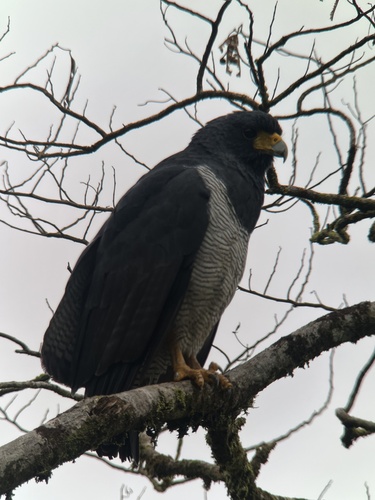
Barred Hawk (Morphnarchus princeps) Barred Hawk
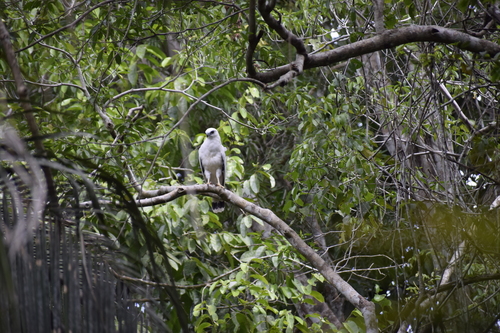
White Hawk (Pseudastur albicollis) White Hawk

Media

Loading…

In short

The most reliable field mark to separate Barred Hawk from White Hawk is the underparts pattern: Barred Hawk shows bold black barring across the white belly and underwing coverts, while White Hawk is almost entirely white below (adults), with only some black on the outer primaries and a single broad tail band. Immature White Hawks, however, can show dark streaking and spotting below, so age must be considered. Structurally, Barred Hawk appears bulkier with a heavy, snout-like bill and shorter tail, while White Hawk is slightly smaller, with a more compact, all-white look below and black upperwings. Both species have broad wings and short tails, but Barred Hawk's darker, more barred appearance and heavy-headed look are distinctive in most conditions. Watch especially for immatures in flight, as confusion is most likely then.

Identification tips

  1. Underparts pattern is key: Barred Hawk of all ages shows bold, even black barring across the white belly and underwing coverts; White Hawk adults are pure white below, with only some black on the outer primaries and a broad tail band. Immature White Hawks may show dark streaks or spots below, but never the even barring of Barred Hawk.
  2. Upperwing and tail in flight: Barred Hawk from above is black with a single white tail bar; White Hawk adults have black upperwings and a short tail with a broad white band. Some White Hawk subspecies have more black on the wings and tail, but always appear mainly white from below.
  3. Head and bill shape: Barred Hawk has a heavy, snout-like bill and a bulky, heavy-headed appearance, especially noticeable when perched. White Hawk has a more typical raptor head and bill, less protruding.
  4. Size and structure: Barred Hawk is larger and heavier, with a wingspan 2.2 times its body length, very broad wings, and a short tail. White Hawk is slightly smaller, with very broad wings and a short tail, but appears more compact and less bulky overall.
  5. Plumage pitfalls (immatures): Immature White Hawks can show dark streaking and spotting below, but the pattern is patchy or streaked, not evenly barred as in Barred Hawk. Always check for the evenness and extent of barring.
  6. Breast and throat: Barred Hawk has a black throat and breast contrasting with the barred belly; White Hawk is white on the throat and breast (adults), with only some subspecies showing faint black streaks on the crown or collar.
  7. Tail pattern: Both species have a single broad tail band, but in Barred Hawk, the tail is otherwise black; in White Hawk, the tail is white with a broad black subterminal band (or, in some subspecies, the black extends to the base).
  8. Voice: Listen for Barred Hawk's noisy, high-pitched screams and whistles when soaring; White Hawk is usually quieter, with a plaintive 'kerwee' call.
  9. Habitat context: Barred Hawk is more strictly tied to dense, humid forest interiors, while White Hawk can be found in a wider range of lowland forests and sometimes edges.
  10. Behavioral cues: Barred Hawk may appear more labored and heavy in flight due to its build; White Hawk is more buoyant and agile, often seen soaring high or performing display flights.
  11. Sexual dimorphism: Both species show females larger than males, but this is subtle in the field.
  12. Subspecies variation (White Hawk): Some White Hawk subspecies have more black on the wings and tail, but all remain mainly white below; always check underparts pattern first.
  13. Association with mammals: White Hawk may follow monkeys and coatis to catch prey flushed by them; Barred Hawk is not known for this behavior.
  14. Perched view: Barred Hawk's heavy head and bill, and dark upperparts with barred underparts, contrast with White Hawk's clean white plumage and black upperwings.
  15. Range overlap: Both can occur in Central and northern South America; always use multiple field marks, especially underparts pattern and structural features, to confirm ID.

Size

Barred Hawk is slightly larger and heavier than White Hawk. Adult Barred Hawk measures 51–61 cm in length with a wingspan of 112–124 cm and weighs about 1 kg, with females larger than males. White Hawk is 46–56 cm long, with very broad wings and a short tail, weighing 650–840 g depending on sex. Both appear as large, broad-winged raptors, but Barred Hawk is the bulkier of the two, especially in the field when perched or soaring.

Plumage

Immature White Hawks have extensive black spotting above and dark-streaked whitish underparts, which can cause confusion with Barred Hawk, especially in flight. However, Barred Hawk of all ages shows bold black barring across the white belly and underwing coverts, contrasting with a black throat, breast, and wing quills. From above, Barred Hawk is black with a single white tail bar, while White Hawk adults are white below with black upperwings and a short tail with a broad white band. Subspecies of White Hawk vary in the amount of black on the wings and tail, but all look mainly white from below. Barred Hawk's underparts are always barred, never pure white, and its upperparts are dark grey to black. The snout-like bill and heavy head of Barred Hawk are also distinctive. In summary: Barred Hawk = barred underparts, black above; White Hawk adult = white underparts, black upperwings, single broad tail band; immature White Hawk = white with dark streaks/spots below, but never the even barring of Barred Hawk.

Behaviour

Both species are often seen soaring above forest canopy, but Barred Hawk is noted for being noisy when soaring, emitting high-pitched screams and whistles. White Hawk is also frequently seen soaring and is known for its spectacular aerial courtship display. Both perch in forested areas and hunt from perches, but White Hawk is noted for associating with monkey and coati foraging parties to snatch prey. Barred Hawk's heavier build and shorter tail may make its flight appear more labored and less buoyant than the slightly lighter White Hawk.

Habitat

Barred Hawk is found in humid forests from Costa Rica to Peru, typically in dense, thick-canopied forests where its short tail and broad wings aid maneuverability. White Hawk has a broader range, from southern Mexico through Central and South America, including the entire Amazon basin, and is found in lowland forests and woodlands, sometimes in more open or edge habitats than Barred Hawk. Both prefer forested environments, but Barred Hawk is more strictly associated with dense, humid forest interiors.

Voice

Barred Hawk is usually noisy when soaring, giving high-pitched screaming or whistling calls, including hoarse 'whees', 'yips', 'dits', and 'weeps.' White Hawk's call is described as a plaintive 'kerwee.' In practice, Barred Hawk is more likely to be heard calling repeatedly while soaring, while White Hawk is generally quieter, except during display flights.

Submit a better description

Use the same sections as the comparison. Your text is published immediately.

The most reliable field mark to separate Barred Hawk from White Hawk is the underparts pattern: Barred Hawk shows bold black barring across the white belly and underwing coverts, while White Hawk is almost entirely white below (adults), with only some black on the outer primaries and a single broad tail band. Immature White Hawks, however, can show dark streaking and spotting below, so age must be considered. Structurally, Barred Hawk appears bulkier with a heavy, snout-like bill and shorter tail, while White Hawk is slightly smaller, with a more compact, all-white look below and black upperwings. Both species have broad wings and short tails, but Barred Hawk's darker, more barred appearance and heavy-headed look are distinctive in most conditions. Watch especially for immatures in flight, as confusion is most likely then.

  1. Underparts pattern is key: Barred Hawk of all ages shows bold, even black barring across the white belly and underwing coverts; White Hawk adults are pure white below, with only some black on the outer primaries and a broad tail band. Immature White Hawks may show dark streaks or spots below, but never the even barring of Barred Hawk.
  2. Upperwing and tail in flight: Barred Hawk from above is black with a single white tail bar; White Hawk adults have black upperwings and a short tail with a broad white band. Some White Hawk subspecies have more black on the wings and tail, but always appear mainly white from below.
  3. Head and bill shape: Barred Hawk has a heavy, snout-like bill and a bulky, heavy-headed appearance, especially noticeable when perched. White Hawk has a more typical raptor head and bill, less protruding.
  4. Size and structure: Barred Hawk is larger and heavier, with a wingspan 2.2 times its body length, very broad wings, and a short tail. White Hawk is slightly smaller, with very broad wings and a short tail, but appears more compact and less bulky overall.
  5. Plumage pitfalls (immatures): Immature White Hawks can show dark streaking and spotting below, but the pattern is patchy or streaked, not evenly barred as in Barred Hawk. Always check for the evenness and extent of barring.
  6. Breast and throat: Barred Hawk has a black throat and breast contrasting with the barred belly; White Hawk is white on the throat and breast (adults), with only some subspecies showing faint black streaks on the crown or collar.
  7. Tail pattern: Both species have a single broad tail band, but in Barred Hawk, the tail is otherwise black; in White Hawk, the tail is white with a broad black subterminal band (or, in some subspecies, the black extends to the base).
  8. Voice: Listen for Barred Hawk's noisy, high-pitched screams and whistles when soaring; White Hawk is usually quieter, with a plaintive 'kerwee' call.
  9. Habitat context: Barred Hawk is more strictly tied to dense, humid forest interiors, while White Hawk can be found in a wider range of lowland forests and sometimes edges.
  10. Behavioral cues: Barred Hawk may appear more labored and heavy in flight due to its build; White Hawk is more buoyant and agile, often seen soaring high or performing display flights.
  11. Sexual dimorphism: Both species show females larger than males, but this is subtle in the field.
  12. Subspecies variation (White Hawk): Some White Hawk subspecies have more black on the wings and tail, but all remain mainly white below; always check underparts pattern first.
  13. Association with mammals: White Hawk may follow monkeys and coatis to catch prey flushed by them; Barred Hawk is not known for this behavior.
  14. Perched view: Barred Hawk's heavy head and bill, and dark upperparts with barred underparts, contrast with White Hawk's clean white plumage and black upperwings.
  15. Range overlap: Both can occur in Central and northern South America; always use multiple field marks, especially underparts pattern and structural features, to confirm ID.

Barred Hawk is slightly larger and heavier than White Hawk. Adult Barred Hawk measures 51–61 cm in length with a wingspan of 112–124 cm and weighs about 1 kg, with females larger than males. White Hawk is 46–56 cm long, with very broad wings and a short tail, weighing 650–840 g depending on sex. Both appear as large, broad-winged raptors, but Barred Hawk is the bulkier of the two, especially in the field when perched or soaring.

Immature White Hawks have extensive black spotting above and dark-streaked whitish underparts, which can cause confusion with Barred Hawk, especially in flight. However, Barred Hawk of all ages shows bold black barring across the white belly and underwing coverts, contrasting with a black throat, breast, and wing quills. From above, Barred Hawk is black with a single white tail bar, while White Hawk adults are white below with black upperwings and a short tail with a broad white band. Subspecies of White Hawk vary in the amount of black on the wings and tail, but all look mainly white from below. Barred Hawk's underparts are always barred, never pure white, and its upperparts are dark grey to black. The snout-like bill and heavy head of Barred Hawk are also distinctive. In summary: Barred Hawk = barred underparts, black above; White Hawk adult = white underparts, black upperwings, single broad tail band; immature White Hawk = white with dark streaks/spots below, but never the even barring of Barred Hawk.

Both species are often seen soaring above forest canopy, but Barred Hawk is noted for being noisy when soaring, emitting high-pitched screams and whistles. White Hawk is also frequently seen soaring and is known for its spectacular aerial courtship display. Both perch in forested areas and hunt from perches, but White Hawk is noted for associating with monkey and coati foraging parties to snatch prey. Barred Hawk's heavier build and shorter tail may make its flight appear more labored and less buoyant than the slightly lighter White Hawk.

Barred Hawk is found in humid forests from Costa Rica to Peru, typically in dense, thick-canopied forests where its short tail and broad wings aid maneuverability. White Hawk has a broader range, from southern Mexico through Central and South America, including the entire Amazon basin, and is found in lowland forests and woodlands, sometimes in more open or edge habitats than Barred Hawk. Both prefer forested environments, but Barred Hawk is more strictly associated with dense, humid forest interiors.

Barred Hawk is usually noisy when soaring, giving high-pitched screaming or whistling calls, including hoarse 'whees', 'yips', 'dits', and 'weeps.' White Hawk's call is described as a plaintive 'kerwee.' In practice, Barred Hawk is more likely to be heard calling repeatedly while soaring, while White Hawk is generally quieter, except during display flights.

Discard your changes?

You have unsaved edits. If you leave now, those changes will be lost.

Barred Hawk · White Hawk · My Tricky Birds