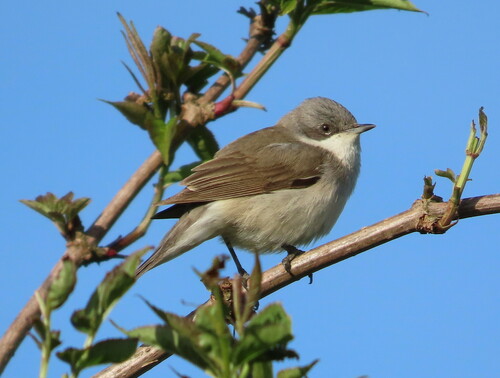
Barred Warbler vs Lesser Whitethroat
Curruca nisoria versus Curruca curruca
Play a quiz with Barred Warbler and Lesser Whitethroat
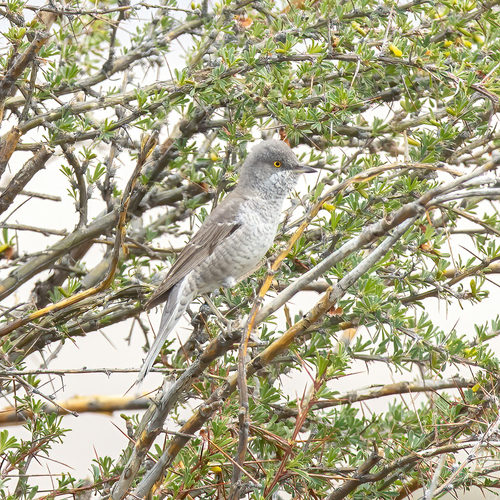
Barred Warbler
Lesser Whitethroat
In short
The Lesser Whitethroat (Curruca curruca) and the Barred Warbler (Curruca nisoria) are both small, closely related birds that share some ecological preferences but differ significantly in size, plumage, vocalizations, and habitat. While the Lesser Whitethroat is generally smaller and has a more subdued color palette, the Barred Warbler is larger and distinctly marked, making them identifiable in the field.
Identification tips
- Birds of the World Similar-Species Diagnostics:
-
"Lesser Whitethroat (Curruca curruca) is smaller, with a more uniform grayish coloration, and is less boldly patterned than the Barred Warbler (Curruca nisoria), which is larger and has distinct barring on the breast and sides." (Source: Birds of the World)
-
AI Field Diagnostics:
- Size: Look for the size difference; the Barred Warbler appears bulkier and larger compared to the Lesser Whitethroat.
- Plumage: Pay attention to the barring; the Barred Warbler's streaked breast is a key feature, whereas the Lesser Whitethroat's plumage is more uniform and less striking. The white throat of the Lesser Whitethroat is also a distinguishing characteristic against the Barred Warbler’s more patterned appearance.
- Behavior: Observe their foraging behavior; if you see a bird more often out in the open or perched conspicuously, it is likely a Barred Warbler. The Lesser Whitethroat tends to hide more among the foliage.
- Vocalization: Listen for their calls; the Lesser Whitethroat's song is harsher and scratchier, while the Barred Warbler's song is distinctively mellower and more melodic.
- Habitat: Note the habitat; a Lesser Whitethroat will often be around dense bushes and hedges, while Barred Warblers are more likely found in open, scrubby areas.
Identifying these two species relies heavily on careful observation of size, plumage patterns, and vocalizations, so utilizing these field tips will greatly enhance your birdwatching experience.
Size
- Lesser Whitethroat: Typically measures about 12-13 cm in length with a wingspan of 20-23 cm. It has a lightweight and slender build.
- Barred Warbler: Larger than the Lesser Whitethroat, measuring around 14-16 cm in length and having a wingspan of 23-26 cm. It has a more robust and heavier body.
Plumage
- Lesser Whitethroat: Characterized by a grayish-brown upper body and a white throat that is often less pronounced than other warblers. The underparts are pale, and it has a subtle, buffy wash on the flanks.
- Barred Warbler: Features distinctive streaking on its breast and a more contrasting appearance with a brownish-gray back and pale underparts. It has bold, dark barring on its sides, which is a key identification feature.
Behaviour
- Lesser Whitethroat: Typically more elusive, often foraging low in bushes and scrub. It displays a quick, agile flight style and is known for its tendency to flit between cover.
- Barred Warbler: More conspicuous and can often be seen perched out in the open. It forages both on the ground and in low vegetation and has a relatively slower, more direct flight style.
Habitat
- Lesser Whitethroat: Prefers scrub habitats, hedgerows, and wood edges often in warmer climates. They can be found in a variety of open habitats but are particularly fond of areas with dense undergrowth.
- Barred Warbler: Often found in more open habitats like grasslands, heathlands, and scrubby areas. They prefer locations that offer a mix of low shrubs and grasses, often in more arid or steppe-like environments.
Voice
- Lesser Whitethroat: Known for its distinctive, sharp, and scratchy song often described as a series of harsh, rapid notes. Their calls are also quite varied, including a soft "tchup" sound.
- Barred Warbler: Has a more melodious, varied song with a series of clear, fluting notes, often described as being more pleasant and musical compared to the Lesser Whitethroat. Its calls may include a harsh, raspy sound as well.