Birdr

Bat-like Spinetail vs African Swift

Neafrapus boehmi versus Apus barbatus

Play a quiz with Bat-like Spinetail and African Swift
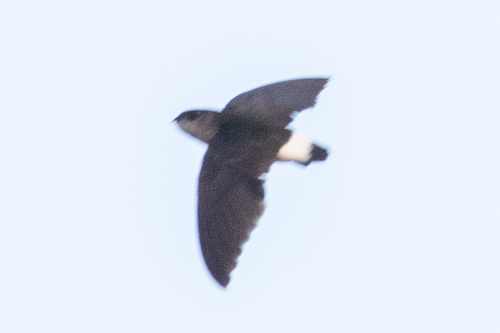
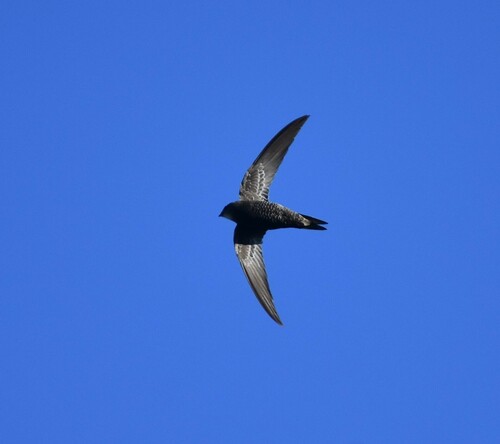
Bat-like Spinetail (Neafrapus boehmi) Bat-like Spinetail
African Swift (Apus barbatus) African Swift

Media

Loading…

In short

The Bat-like Spinetail (Neafrapus boehmi) and the African Swift (Apus barbatus) are both members of the swift family but differ notably in structure and behavior. The Bat-like Spinetail has a distinctive bat-like flight pattern and shorter, more rounded wings compared to the longer, more pointed wings of the African Swift. These differences are key in distinguishing them in the field.

Identification tips

Look for the Bat-like Spinetail's shorter, rounded wings and erratic flight pattern. In contrast, the African Swift's longer, pointed wings and more direct flight are indicative. Consider habitat: lowland forests suggest Bat-like Spinetail, while highlands suggest African Swift.

Size

The Bat-like Spinetail is generally smaller and more compact than the African Swift, which has a more elongated body and wings.

Plumage

Both species have dark plumage, but the African Swift may appear slightly paler due to its larger size and longer wings, which can catch more light.

Behaviour

The Bat-like Spinetail exhibits a unique, erratic flight pattern reminiscent of a bat, while the African Swift has a more direct and faster flight typical of swifts.

Habitat

The Bat-like Spinetail is often found in lowland forests, whereas the African Swift is more commonly associated with moist highlands and can be seen in mixed colonies with other swifts.

Voice

Vocalizations are not well-documented for the Bat-like Spinetail, while the African Swift is known for its high-pitched calls, though these may not be easily distinguishable in the field.

Submit a better description

Use the same sections as the comparison. Your text is published immediately.

The Bat-like Spinetail (Neafrapus boehmi) and the African Swift (Apus barbatus) are both members of the swift family but differ notably in structure and behavior. The Bat-like Spinetail has a distinctive bat-like flight pattern and shorter, more rounded wings compared to the longer, more pointed wings of the African Swift. These differences are key in distinguishing them in the field.

Look for the Bat-like Spinetail's shorter, rounded wings and erratic flight pattern. In contrast, the African Swift's longer, pointed wings and more direct flight are indicative. Consider habitat: lowland forests suggest Bat-like Spinetail, while highlands suggest African Swift.

The Bat-like Spinetail is generally smaller and more compact than the African Swift, which has a more elongated body and wings.

Both species have dark plumage, but the African Swift may appear slightly paler due to its larger size and longer wings, which can catch more light.

The Bat-like Spinetail exhibits a unique, erratic flight pattern reminiscent of a bat, while the African Swift has a more direct and faster flight typical of swifts.

The Bat-like Spinetail is often found in lowland forests, whereas the African Swift is more commonly associated with moist highlands and can be seen in mixed colonies with other swifts.

Vocalizations are not well-documented for the Bat-like Spinetail, while the African Swift is known for its high-pitched calls, though these may not be easily distinguishable in the field.

Discard your changes?

You have unsaved edits. If you leave now, those changes will be lost.

Bat-like Spinetail · African Swift · My Tricky Birds