Birdr

Bat-like Spinetail vs Common Swift

Neafrapus boehmi versus Apus apus

Play a quiz with Bat-like Spinetail and Common Swift
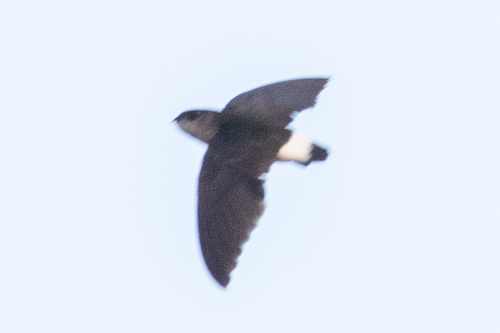
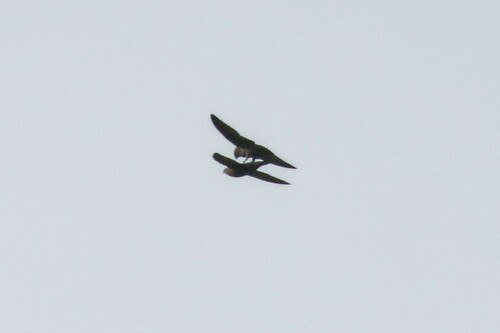
Bat-like Spinetail (Neafrapus boehmi) Bat-like Spinetail
Common Swift (Apus apus) Common Swift

Media

Loading…

In short

The Bat-like Spinetail and Common Swift are both members of the swift family, but they differ in structure and plumage. The Bat-like Spinetail is smaller and has a more compact body, while the Common Swift is larger with a distinctive forked tail and pointed wings. Observing their flight patterns and habitats can also help in distinguishing them.

Identification tips

Look for the forked tail and pointed wings of the Common Swift, especially in flight. The uniform dark plumage of the Bat-like Spinetail is a key difference. Consider the habitat: forested areas suggest Bat-like Spinetail, while open and varied habitats may indicate Common Swift. Note the flight behavior; Common Swifts are almost always airborne.

Size

The Bat-like Spinetail is generally smaller and more compact compared to the larger Common Swift, which has a wingspan of 42–48 cm.

Plumage

The Bat-like Spinetail has a more uniform dark plumage, while the Common Swift displays a black-brown mantle with a small off-white throat patch, and its plumage can show more contrast between paler and darker tracts.

Behaviour

Common Swifts are known for their almost continuous flight, spending more than 99% of their non-breeding period airborne. The Bat-like Spinetail's flight behavior is less documented but is expected to be similar due to its swift family traits.

Habitat

The Bat-like Spinetail is typically found in forested areas, while the Common Swift occupies a wide range of habitats, including arid steppe, desert, and temperate zones, often at higher elevations.

Submit a better description

Use the same sections as the comparison. Your text is published immediately.

The Bat-like Spinetail and Common Swift are both members of the swift family, but they differ in structure and plumage. The Bat-like Spinetail is smaller and has a more compact body, while the Common Swift is larger with a distinctive forked tail and pointed wings. Observing their flight patterns and habitats can also help in distinguishing them.

Look for the forked tail and pointed wings of the Common Swift, especially in flight. The uniform dark plumage of the Bat-like Spinetail is a key difference. Consider the habitat: forested areas suggest Bat-like Spinetail, while open and varied habitats may indicate Common Swift. Note the flight behavior; Common Swifts are almost always airborne.

The Bat-like Spinetail is generally smaller and more compact compared to the larger Common Swift, which has a wingspan of 42–48 cm.

The Bat-like Spinetail has a more uniform dark plumage, while the Common Swift displays a black-brown mantle with a small off-white throat patch, and its plumage can show more contrast between paler and darker tracts.

Common Swifts are known for their almost continuous flight, spending more than 99% of their non-breeding period airborne. The Bat-like Spinetail's flight behavior is less documented but is expected to be similar due to its swift family traits.

The Bat-like Spinetail is typically found in forested areas, while the Common Swift occupies a wide range of habitats, including arid steppe, desert, and temperate zones, often at higher elevations.

Discard your changes?

You have unsaved edits. If you leave now, those changes will be lost.

Bat-like Spinetail · Common Swift · My Tricky Birds