Birdr

Bay-capped Wren-Spinetail vs Rufous Cacholote

Spartonoica maluroides versus Pseudoseisura unirufa

Play a quiz with Bay-capped Wren-Spinetail and Rufous Cacholote
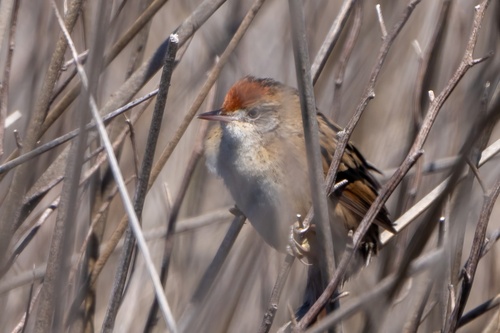
Bay-capped Wren-Spinetail (Spartonoica maluroides) Bay-capped Wren-Spinetail
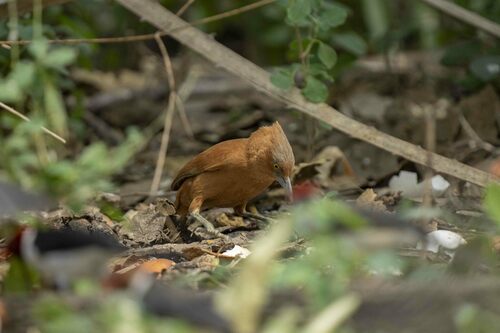
Rufous Cacholote (Pseudoseisura unirufa) Rufous Cacholote

Media

Loading…

In short

The Bay-capped Wren-Spinetail and Rufous Cacholote are both members of the Furnariidae family but differ notably in structure and habitat preference. The Wren-Spinetail is smaller and more slender, while the Cacholote is robust with a heavier bill. Look for these structural differences first before considering plumage.

Identification tips

  1. Check size and structure: Wren-Spinetail is smaller and more slender. 2. Observe habitat: Wren-Spinetail in marshes, Cacholote in dry woodlands. 3. Listen for calls: Wren-Spinetail has a melodic song, Cacholote has harsh calls. 4. Look for plumage details: Bay cap on Wren-Spinetail vs. uniform rufous on Cacholote.

Size

The Bay-capped Wren-Spinetail is smaller and more slender compared to the larger, bulkier Rufous Cacholote.

Plumage

The Bay-capped Wren-Spinetail has a distinctive bay-colored cap and a more uniform brown body, whereas the Rufous Cacholote is overall rufous with less contrast between head and body.

Behaviour

Wren-Spinetails are more likely to be seen flitting through marsh vegetation, while Cacholotes are often found in pairs or small groups, moving slowly and deliberately.

Habitat

Bay-capped Wren-Spinetails prefer marshy areas with dense reeds, whereas Rufous Cacholotes are found in drier, open woodlands and scrub.

Voice

The vocalizations of these species are distinct, with the Wren-Spinetail having a more complex, melodic song compared to the Cacholote's harsher, repetitive calls.

Submit a better description

Use the same sections as the comparison. Your text is published immediately.

The Bay-capped Wren-Spinetail and Rufous Cacholote are both members of the Furnariidae family but differ notably in structure and habitat preference. The Wren-Spinetail is smaller and more slender, while the Cacholote is robust with a heavier bill. Look for these structural differences first before considering plumage.

  1. Check size and structure: Wren-Spinetail is smaller and more slender. 2. Observe habitat: Wren-Spinetail in marshes, Cacholote in dry woodlands. 3. Listen for calls: Wren-Spinetail has a melodic song, Cacholote has harsh calls. 4. Look for plumage details: Bay cap on Wren-Spinetail vs. uniform rufous on Cacholote.

The Bay-capped Wren-Spinetail is smaller and more slender compared to the larger, bulkier Rufous Cacholote.

The Bay-capped Wren-Spinetail has a distinctive bay-colored cap and a more uniform brown body, whereas the Rufous Cacholote is overall rufous with less contrast between head and body.

Wren-Spinetails are more likely to be seen flitting through marsh vegetation, while Cacholotes are often found in pairs or small groups, moving slowly and deliberately.

Bay-capped Wren-Spinetails prefer marshy areas with dense reeds, whereas Rufous Cacholotes are found in drier, open woodlands and scrub.

The vocalizations of these species are distinct, with the Wren-Spinetail having a more complex, melodic song compared to the Cacholote's harsher, repetitive calls.

Discard your changes?

You have unsaved edits. If you leave now, those changes will be lost.

Bay-capped Wren-Spinetail · Rufous Cacholote · My Tricky Birds