Birdr

Bay-capped Wren-Spinetail vs White-throated Cacholote

Spartonoica maluroides versus Pseudoseisura gutturalis

Play a quiz with Bay-capped Wren-Spinetail and White-throated Cacholote
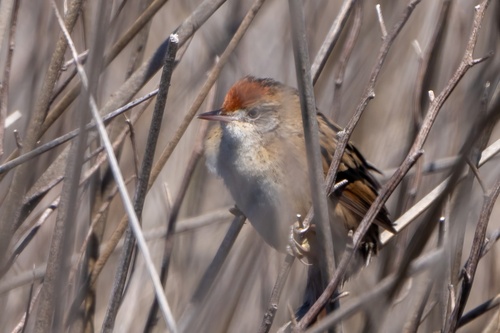
Bay-capped Wren-Spinetail (Spartonoica maluroides) Bay-capped Wren-Spinetail
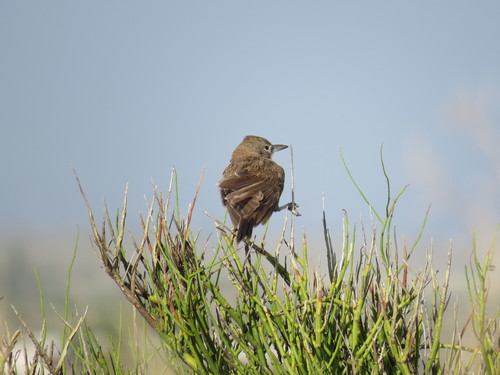
White-throated Cacholote (Pseudoseisura gutturalis) White-throated Cacholote

Media

Loading…

In short

The Bay-capped Wren-Spinetail and the White-throated Cacholote can be distinguished by their habitat preferences and vocalizations. The Wren-Spinetail is more likely to be found in marshy areas, while the Cacholote prefers dry, scrubby environments. Their calls are also distinct, with the Cacholote having a harsher, more varied repertoire.

Identification tips

Look for the bay-colored cap on the Wren-Spinetail and its preference for marshy habitats. The Cacholote's white throat and dry, open habitat are key identifiers. Listen for the harsh, varied calls of the Cacholote to confirm identification.

Size

The White-throated Cacholote is generally larger and more robust than the Bay-capped Wren-Spinetail.

Plumage

The Bay-capped Wren-Spinetail has a distinctive bay-colored cap, which contrasts with its otherwise plain plumage. The White-throated Cacholote lacks this cap and has a more uniform brown plumage with a noticeable white throat.

Behaviour

The Wren-Spinetail is often seen skulking low in dense marsh vegetation, while the Cacholote is more conspicuous, often perching prominently in open areas.

Habitat

Bay-capped Wren-Spinetail prefers marshy, wetland areas, whereas the White-throated Cacholote is found in dry, scrubby habitats.

Voice

The White-throated Cacholote has a varied and harsh vocalization, unlike the more subdued calls of the Bay-capped Wren-Spinetail.

Submit a better description

Use the same sections as the comparison. Your text is published immediately.

The Bay-capped Wren-Spinetail and the White-throated Cacholote can be distinguished by their habitat preferences and vocalizations. The Wren-Spinetail is more likely to be found in marshy areas, while the Cacholote prefers dry, scrubby environments. Their calls are also distinct, with the Cacholote having a harsher, more varied repertoire.

Look for the bay-colored cap on the Wren-Spinetail and its preference for marshy habitats. The Cacholote's white throat and dry, open habitat are key identifiers. Listen for the harsh, varied calls of the Cacholote to confirm identification.

The White-throated Cacholote is generally larger and more robust than the Bay-capped Wren-Spinetail.

The Bay-capped Wren-Spinetail has a distinctive bay-colored cap, which contrasts with its otherwise plain plumage. The White-throated Cacholote lacks this cap and has a more uniform brown plumage with a noticeable white throat.

The Wren-Spinetail is often seen skulking low in dense marsh vegetation, while the Cacholote is more conspicuous, often perching prominently in open areas.

Bay-capped Wren-Spinetail prefers marshy, wetland areas, whereas the White-throated Cacholote is found in dry, scrubby habitats.

The White-throated Cacholote has a varied and harsh vocalization, unlike the more subdued calls of the Bay-capped Wren-Spinetail.

Discard your changes?

You have unsaved edits. If you leave now, those changes will be lost.

Bay-capped Wren-Spinetail · White-throated Cacholote · My Tricky Birds