Bay Woodpecker vs Rufous Woodpecker
Blythipicus pyrrhotis versus Micropternus brachyurus
Play a quiz with Bay Woodpecker and Rufous Woodpecker
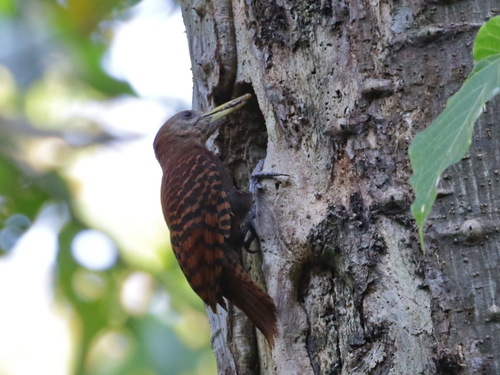
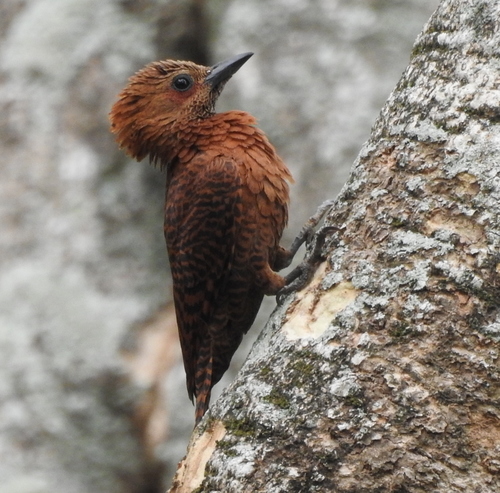
Bay Woodpecker
Rufous Woodpecker
In short
The Bay Woodpecker and Rufous Woodpecker are both medium-sized woodpeckers with rufous tones, but they can be distinguished by their head patterns and habitat preferences. The Bay Woodpecker has a more uniform rufous coloration, while the Rufous Woodpecker shows a more contrasting head pattern with a paler throat.
Identification tips
- Head pattern: Look for the more uniform rufous head of the Bay Woodpecker versus the contrasting head and paler throat of the Rufous Woodpecker. 2. Habitat: Consider the habitat; Bay Woodpecker prefers dense forests, while Rufous Woodpecker is more adaptable. 3. Plumage details: Check for any faint barring on the Rufous Woodpecker's underparts. 4. Calls: Listen for differences in vocalizations, though specifics may be subtle.
Size
Both species are similar in size, with no significant difference in overall body length or structure.
Plumage
The Bay Woodpecker has a more uniform rufous coloration across its body, while the Rufous Woodpecker typically shows a paler throat and a more contrasting head pattern. The Rufous Woodpecker may also have faint barring on its underparts.
Behaviour
Both species exhibit typical woodpecker behavior, such as drumming and foraging on tree trunks. There are no significant behavioral differences noted.
Habitat
The Bay Woodpecker is often found in dense, humid forests, while the Rufous Woodpecker is more adaptable and can be found in a variety of wooded habitats, including gardens and plantations.
Voice
Both species have distinct calls, but specific vocal differences are not well-documented. Observers should note any differences in call patterns or frequencies.