Birdr

Beach Thick-knee vs Indian Thick-knee

Esacus magnirostris versus Burhinus indicus

Play a quiz with Beach Thick-knee and Indian Thick-knee

Beach Thick-knee (Esacus magnirostris) Beach Thick-knee
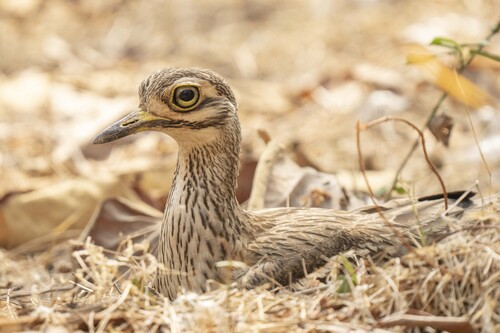
Indian Thick-knee (Burhinus indicus) Indian Thick-knee

Media

Loading…

In short

The Beach Thick-knee is larger and has a notably heavier bill compared to the Indian Thick-knee. Beach Thick-knees are typically found in coastal areas, while Indian Thick-knees inhabit more inland environments. These habitat preferences are a reliable way to distinguish them in the field.

Identification tips

  1. Location: Check if you are in a coastal area (Beach Thick-knee) or inland (Indian Thick-knee). 2. Size and Structure: Look for the larger size and heavier bill of the Beach Thick-knee. 3. Flight: Note the more pronounced white wing bar of the Beach Thick-knee in flight. 4. Group Size: Beach Thick-knee is often solitary or in pairs, while Indian Thick-knee may be in small groups.

Size

Beach Thick-knee is larger and more robust with a heavier bill, while Indian Thick-knee is smaller and more slender.

Plumage

Both species have cryptic plumage with similar brown and buff tones, but the Beach Thick-knee has a more pronounced white wing bar visible in flight.

Behaviour

Beach Thick-knee is often seen alone or in pairs, typically near the water's edge. Indian Thick-knee is more likely to be found in small groups and can be seen further inland.

Habitat

Beach Thick-knee is almost exclusively coastal, preferring sandy beaches and mudflats. Indian Thick-knee is found in dry, open habitats such as grasslands and scrublands, often away from water.

Voice

Both species have similar calls, but the Beach Thick-knee's call is described as deeper and more resonant.

Submit a better description

Use the same sections as the comparison. Your text is published immediately.

The Beach Thick-knee is larger and has a notably heavier bill compared to the Indian Thick-knee. Beach Thick-knees are typically found in coastal areas, while Indian Thick-knees inhabit more inland environments. These habitat preferences are a reliable way to distinguish them in the field.

  1. Location: Check if you are in a coastal area (Beach Thick-knee) or inland (Indian Thick-knee). 2. Size and Structure: Look for the larger size and heavier bill of the Beach Thick-knee. 3. Flight: Note the more pronounced white wing bar of the Beach Thick-knee in flight. 4. Group Size: Beach Thick-knee is often solitary or in pairs, while Indian Thick-knee may be in small groups.

Beach Thick-knee is larger and more robust with a heavier bill, while Indian Thick-knee is smaller and more slender.

Both species have cryptic plumage with similar brown and buff tones, but the Beach Thick-knee has a more pronounced white wing bar visible in flight.

Beach Thick-knee is often seen alone or in pairs, typically near the water's edge. Indian Thick-knee is more likely to be found in small groups and can be seen further inland.

Beach Thick-knee is almost exclusively coastal, preferring sandy beaches and mudflats. Indian Thick-knee is found in dry, open habitats such as grasslands and scrublands, often away from water.

Both species have similar calls, but the Beach Thick-knee's call is described as deeper and more resonant.

Discard your changes?

You have unsaved edits. If you leave now, those changes will be lost.

Beach Thick-knee · Indian Thick-knee · My Tricky Birds