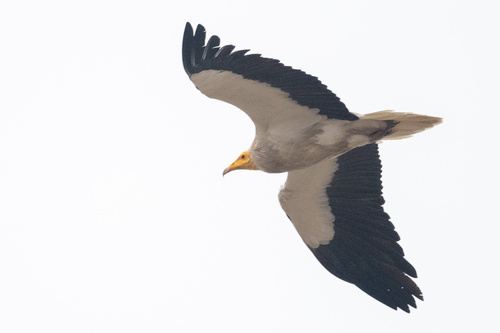
Bearded Vulture vs Egyptian Vulture
Gypaetus barbatus versus Neophron percnopterus
Play a quiz with Bearded Vulture and Egyptian Vulture
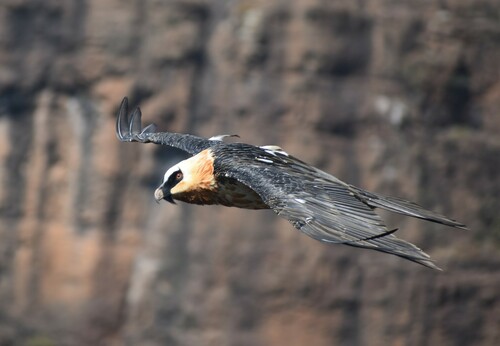
Bearded Vulture
Egyptian Vulture
In short
The Bearded Vulture and Egyptian Vulture can be distinguished primarily by size and plumage. The Bearded Vulture is much larger with a distinctive wedge-shaped tail and predominantly dark plumage, while the Egyptian Vulture is smaller, with a more contrasting black and white appearance and a yellow face.
Identification tips
- Size and shape: Look for the much larger size and wedge-shaped tail of the Bearded Vulture.
- Plumage: Note the dark body and pale head of the Bearded Vulture versus the white body and black wings of the Egyptian Vulture.
- Face color: The Egyptian Vulture has a distinctive yellow face, absent in the Bearded Vulture.
- Habitat: Consider the habitat; Bearded Vultures prefer high altitudes, while Egyptian Vultures are more often found in lower, open areas.
Size
The Bearded Vulture is significantly larger, with a wingspan reaching up to 2.8 meters, compared to the Egyptian Vulture's wingspan of about 1.7 meters.
Plumage
Bearded Vultures have a mostly dark body with a pale head and a distinctive black 'beard' under the chin. In contrast, Egyptian Vultures are predominantly white with black flight feathers and a striking yellow face.
Behaviour
Bearded Vultures are known for their unique bone-dropping behavior to access marrow, while Egyptian Vultures are more opportunistic feeders, often seen scavenging at dumps or following livestock.
Habitat
Bearded Vultures are typically found in mountainous regions, often above the treeline, whereas Egyptian Vultures are more adaptable, inhabiting open and semi-arid areas, including lowlands and human-altered landscapes.
Voice
Both species are generally silent, but the Bearded Vulture may produce a few whistling notes, while the Egyptian Vulture's calls are rarely heard and not a reliable field mark.