Birdr

Bearded Vulture vs European Honey-buzzard

Gypaetus barbatus versus Pernis apivorus

Play a quiz with Bearded Vulture and European Honey-buzzard
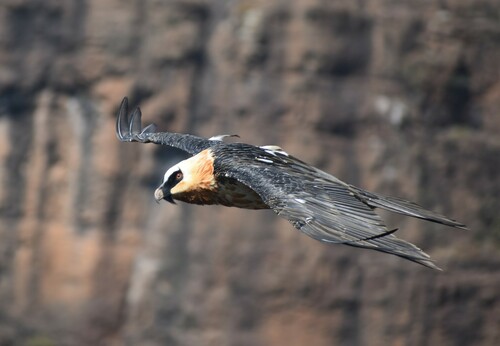
Bearded Vulture (Gypaetus barbatus) Bearded Vulture
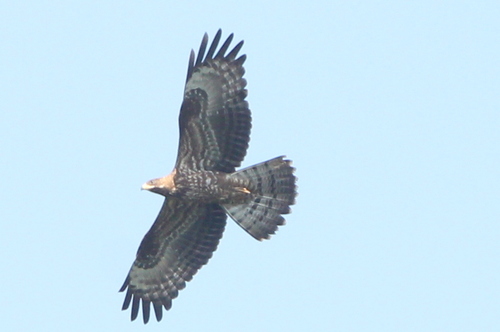
European Honey-buzzard (Pernis apivorus) European Honey-buzzard

Media

Loading…

In short

The Bearded Vulture and European Honey-buzzard are both large raptors, but they differ significantly in appearance and behavior. The Bearded Vulture is unmistakable with its long, wedge-shaped tail and distinctive facial 'beard', while the European Honey-buzzard has a more typical raptor silhouette with a shorter tail and lacks the beard. Observing their flight patterns and habitats can also aid in identification.

Identification tips

  1. Look for the long, wedge-shaped tail and black facial beard of the Bearded Vulture. 2. Note the larger size and mountainous habitat preference of the Bearded Vulture. 3. Observe the soaring flight and wooded habitat of the European Honey-buzzard. 4. Check for the barred tail and lack of facial beard in the Honey-buzzard.

Size

The Bearded Vulture is considerably larger than the European Honey-buzzard, with a wingspan that can exceed 2.5 meters, compared to the Honey-buzzard's wingspan of around 1.3–1.5 meters.

Plumage

The Bearded Vulture has a striking appearance with a pale body, dark wings, and a distinctive black facial 'beard'. In contrast, the European Honey-buzzard has a more muted brown plumage with a barred tail and lacks any facial 'beard'.

Behaviour

Bearded Vultures are known for their unique behavior of dropping bones from heights to crack them open, while European Honey-buzzards are more likely to be seen gliding or soaring as they hunt for insects and larvae.

Habitat

Bearded Vultures are typically found in mountainous regions, often above the tree line, whereas European Honey-buzzards prefer wooded areas and are often seen in mixed or deciduous forests.

Voice

Vocalizations are not a primary distinguishing feature between these species, as Bearded Vultures are generally silent and Honey-buzzards have a soft, mewing call that is not often heard.

Submit a better description

Use the same sections as the comparison. Your text is published immediately.

The Bearded Vulture and European Honey-buzzard are both large raptors, but they differ significantly in appearance and behavior. The Bearded Vulture is unmistakable with its long, wedge-shaped tail and distinctive facial 'beard', while the European Honey-buzzard has a more typical raptor silhouette with a shorter tail and lacks the beard. Observing their flight patterns and habitats can also aid in identification.

  1. Look for the long, wedge-shaped tail and black facial beard of the Bearded Vulture. 2. Note the larger size and mountainous habitat preference of the Bearded Vulture. 3. Observe the soaring flight and wooded habitat of the European Honey-buzzard. 4. Check for the barred tail and lack of facial beard in the Honey-buzzard.

The Bearded Vulture is considerably larger than the European Honey-buzzard, with a wingspan that can exceed 2.5 meters, compared to the Honey-buzzard's wingspan of around 1.3–1.5 meters.

The Bearded Vulture has a striking appearance with a pale body, dark wings, and a distinctive black facial 'beard'. In contrast, the European Honey-buzzard has a more muted brown plumage with a barred tail and lacks any facial 'beard'.

Bearded Vultures are known for their unique behavior of dropping bones from heights to crack them open, while European Honey-buzzards are more likely to be seen gliding or soaring as they hunt for insects and larvae.

Bearded Vultures are typically found in mountainous regions, often above the tree line, whereas European Honey-buzzards prefer wooded areas and are often seen in mixed or deciduous forests.

Vocalizations are not a primary distinguishing feature between these species, as Bearded Vultures are generally silent and Honey-buzzards have a soft, mewing call that is not often heard.

Discard your changes?

You have unsaved edits. If you leave now, those changes will be lost.

Bearded Vulture · European Honey-buzzard · My Tricky Birds