Birdr

Bennett's Woodpecker vs Knysna Woodpecker

Campethera bennettii versus Campethera notata

Play a quiz with Bennett's Woodpecker and Knysna Woodpecker
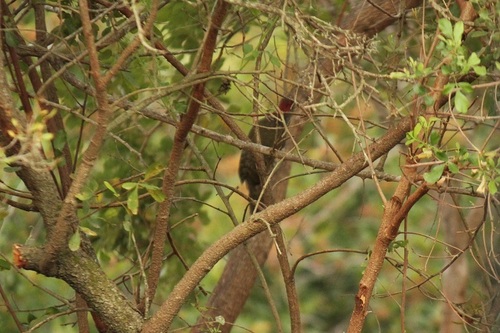
Bennett's Woodpecker (Campethera bennettii) Bennett's Woodpecker
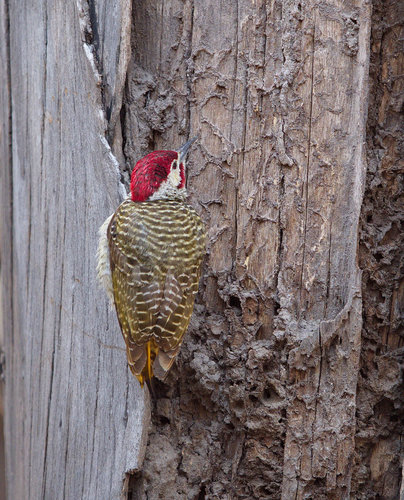
Knysna Woodpecker (Campethera notata) Knysna Woodpecker

Media

Loading…

In short

Bennett's Woodpecker and Knysna Woodpecker are similar in size and structure, but they can be distinguished by their plumage and vocalizations. Bennett's Woodpecker typically has a more vibrant plumage with a distinctive red crown in males, while Knysna Woodpecker is more subdued in coloration. Their calls also differ, aiding in identification.

Identification tips

  1. Check the crown color: Bennett's males have a bright red crown, while Knysna lacks this feature. 2. Observe the habitat: Bennett's is more likely in open woodlands, Knysna in dense forests. 3. Listen for calls: Familiarize yourself with their distinct vocalizations to aid in identification.

Size

Both species are similar in size, typical of medium-sized woodpeckers.

Plumage

Bennett's Woodpecker males have a bright red crown, while females have a red nape and crown. Knysna Woodpecker is generally more subdued in color, lacking the bright red crown, and has a more uniform olive-brown appearance.

Behaviour

Both species exhibit typical woodpecker behavior, such as drumming and foraging on tree trunks, but specific behavioral differences are not well-documented.

Habitat

Bennett's Woodpecker is often found in open woodlands and savannas, whereas Knysna Woodpecker prefers dense forests and thickets, making habitat a useful clue.

Voice

Bennett's Woodpecker has a distinctive call that differs from the Knysna Woodpecker, though specific descriptions of their calls are not detailed here.

Submit a better description

Use the same sections as the comparison. Your text is published immediately.

Bennett's Woodpecker and Knysna Woodpecker are similar in size and structure, but they can be distinguished by their plumage and vocalizations. Bennett's Woodpecker typically has a more vibrant plumage with a distinctive red crown in males, while Knysna Woodpecker is more subdued in coloration. Their calls also differ, aiding in identification.

  1. Check the crown color: Bennett's males have a bright red crown, while Knysna lacks this feature. 2. Observe the habitat: Bennett's is more likely in open woodlands, Knysna in dense forests. 3. Listen for calls: Familiarize yourself with their distinct vocalizations to aid in identification.

Both species are similar in size, typical of medium-sized woodpeckers.

Bennett's Woodpecker males have a bright red crown, while females have a red nape and crown. Knysna Woodpecker is generally more subdued in color, lacking the bright red crown, and has a more uniform olive-brown appearance.

Both species exhibit typical woodpecker behavior, such as drumming and foraging on tree trunks, but specific behavioral differences are not well-documented.

Bennett's Woodpecker is often found in open woodlands and savannas, whereas Knysna Woodpecker prefers dense forests and thickets, making habitat a useful clue.

Bennett's Woodpecker has a distinctive call that differs from the Knysna Woodpecker, though specific descriptions of their calls are not detailed here.

Discard your changes?

You have unsaved edits. If you leave now, those changes will be lost.

Bennett's Woodpecker · Knysna Woodpecker · My Tricky Birds