Birdr

Bicknell's Thrush vs Wood Thrush

Catharus bicknelli versus Hylocichla mustelina

Play a quiz with Bicknell's Thrush and Wood Thrush
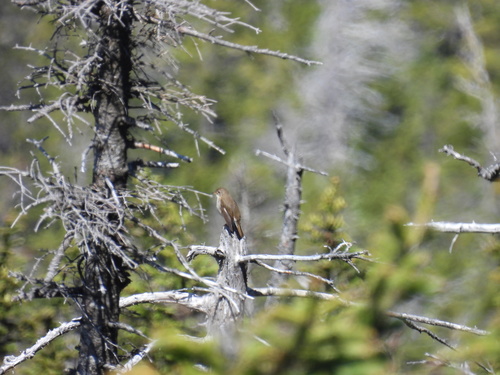
Bicknell's Thrush (Catharus bicknelli) Bicknell's Thrush
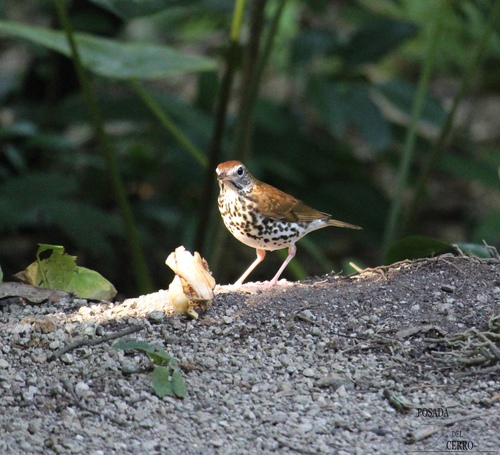
Wood Thrush (Hylocichla mustelina) Wood Thrush

Media

Loading…

In short

Bicknell's Thrush and Wood Thrush can be distinguished by habitat and vocalizations. Bicknell's Thrush prefers high-elevation spruce-fir forests, while Wood Thrush is found in deciduous woodlands. The Wood Thrush's flutelike song is distinctive and more melodious than the Bicknell's Thrush.

Identification tips

  1. Habitat: Check the forest type; spruce-fir suggests Bicknell's, deciduous suggests Wood Thrush. 2. Song: Listen for the Wood Thrush's flutelike song. 3. Plumage: Note the rufous tone on the Wood Thrush's back and head.

Size

Both species are similar in size, typical of medium-sized thrushes.

Plumage

Both have brown upperparts and spotted underparts, but Wood Thrush has a more pronounced rufous tone on the back and head.

Behaviour

Bicknell's Thrush is more reclusive and active at dawn and dusk, while Wood Thrush is more often seen and heard during the day.

Habitat

Bicknell's Thrush inhabits high-elevation spruce-fir forests, while Wood Thrush prefers lowland deciduous woodlands.

Voice

Wood Thrush has a flutelike, ethereal song, often described as more musical than the simpler calls of Bicknell's Thrush.

Submit a better description

Use the same sections as the comparison. Your text is published immediately.

Bicknell's Thrush and Wood Thrush can be distinguished by habitat and vocalizations. Bicknell's Thrush prefers high-elevation spruce-fir forests, while Wood Thrush is found in deciduous woodlands. The Wood Thrush's flutelike song is distinctive and more melodious than the Bicknell's Thrush.

  1. Habitat: Check the forest type; spruce-fir suggests Bicknell's, deciduous suggests Wood Thrush. 2. Song: Listen for the Wood Thrush's flutelike song. 3. Plumage: Note the rufous tone on the Wood Thrush's back and head.

Both species are similar in size, typical of medium-sized thrushes.

Both have brown upperparts and spotted underparts, but Wood Thrush has a more pronounced rufous tone on the back and head.

Bicknell's Thrush is more reclusive and active at dawn and dusk, while Wood Thrush is more often seen and heard during the day.

Bicknell's Thrush inhabits high-elevation spruce-fir forests, while Wood Thrush prefers lowland deciduous woodlands.

Wood Thrush has a flutelike, ethereal song, often described as more musical than the simpler calls of Bicknell's Thrush.

Discard your changes?

You have unsaved edits. If you leave now, those changes will be lost.

Bicknell's Thrush · Wood Thrush · My Tricky Birds