
Bimaculated Lark vs Calandra Lark
Melanocorypha bimaculata versus Melanocorypha calandra
Play a quiz with Bimaculated Lark and Calandra Lark
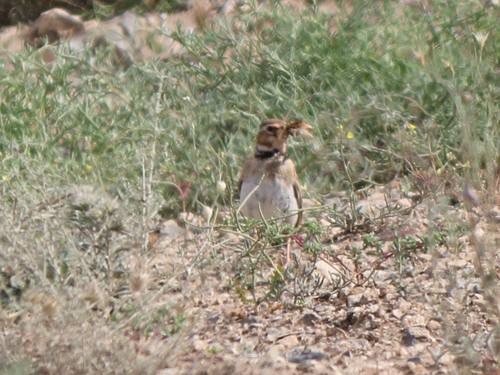 Bimaculated Lark
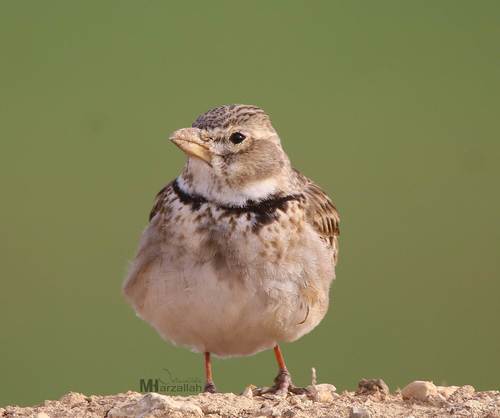 Calandra Lark
In short
The most reliable way to separate Bimaculated Lark from Calandra Lark in the field is by their tail and underwing patterns in flight: Bimaculated shows a short tail with a white tip but no white edges and grey-brown underwings, while Calandra has a short tail with distinct white edges and darker underwings. Both species have similar overall structure and can overlap in range in Turkey and adjacent regions, so careful attention to flight views is essential. Size is not a strong separator, as both are large larks with only minor weight differences. Perched birds are much harder to distinguish, so prioritize flight views for confident identification.
Identification tips
- Tail pattern in flight: Bimaculated Lark shows a short tail with a white tip but no white edges; Calandra Lark has a short tail with prominent white edges. This is the single most useful field mark when the bird is flying.
- Underwing color: Bimaculated Lark has grey-brown underwings, while Calandra Lark's underwings are darker. This is best seen when the bird is overhead or banking in flight.
- Perched birds: Both species are very similar when perched; tail pattern may be visible if the tail is fanned or the bird is preening, but often is not. Do not rely on overall color or structure when perched.
- Flight structure: Both species have short, broad wings and a short tail in flight. There is no reliable difference in flight shape or jizz between the two.
- Age and seasonal variation: No distinctive juvenile or immature upperwing patterns are described for either species, so the tail and underwing marks are reliable across all ages and seasons.
- Geographic context: If you are west of Turkey (e.g., Mediterranean Europe), Calandra Lark is much more likely; east of Turkey into Central Asia, Bimaculated Lark predominates. In Turkey and nearby regions, both can occur—use plumage marks.
- Size: Calandra Lark averages slightly heavier, but this is not a practical field mark.
- Plumage pitfalls: Do not confuse the white tip on Bimaculated's tail for white edges—look for the presence or absence of white along the sides of the tail.
- Underwing pitfalls: Lighting can affect the perceived color of the underwing; compare only in good light and with direct views.
- Voice: No distinguishing vocal differences are provided in the sources; do not rely on song or call for separation.
- Sexual dimorphism: No sex-specific field marks are described; both sexes are similar in both species.
- Structural features: Bill size, wing length, and other structural features are not described as differing between the two; do not use these for separation.
- Habitat: Both species use similar open habitats; do not rely on habitat alone for identification in areas of overlap.
- Mixed flocks: In mixed flocks, use flight views to pick out individuals by tail and underwing pattern.
- Distant birds: At long range, separation is very difficult unless the tail pattern is visible in flight.
Size
Calandra Lark is slightly heavier on average (59.0g vs 54.0g for Bimaculated Lark), but this difference is subtle and not easily judged in the field. Both are robust, large larks with similar proportions, so size alone is not a reliable field mark when seen singly or at a distance.
Plumage
The key plumage difference—especially visible in flight and applicable to all ages—is in the tail and underwing patterns. Bimaculated Lark shows a short tail with a white tip but lacks white edges; its underwings are grey-brown. In contrast, Calandra Lark has a short tail with clear white edges and underwings that are darker overall. These differences are most apparent when the bird is flying or flushed, and are consistent across age classes. No age-specific upperwing panel or immature pattern is described for either species, so these marks are reliable for both adults and immatures. Perched, both species are very similar in overall color and structure, making separation difficult without a clear view of the tail or wings.
Behaviour
Both species are ground-dwelling larks, typically found in open country and often seen in flight or running on the ground. Their flight is strong and direct with broad wings and short tails. There is no noted behavioral difference that reliably separates the two in the field.
Habitat
Habitat preferences are broadly similar: both species breed in warm temperate open country. However, Bimaculated Lark is found further east (from Turkey into Central Asia), while Calandra Lark is more western (Mediterranean, Turkey, northern Iran, southern Russia). In areas of overlap (notably Turkey and adjacent regions), both may occur together, so habitat alone is not diagnostic.