Birdr

Black-backed Forktail vs Slaty-backed Forktail

Enicurus immaculatus versus Enicurus schistaceus

Play a quiz with Black-backed Forktail and Slaty-backed Forktail
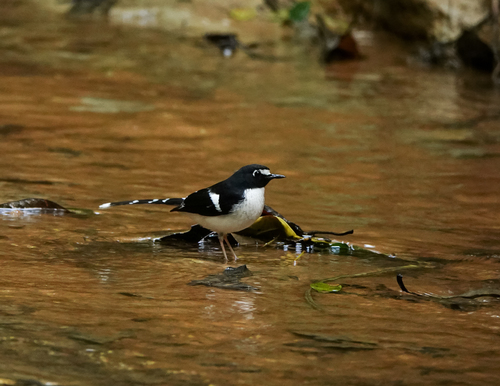
Black-backed Forktail (Enicurus immaculatus) Black-backed Forktail
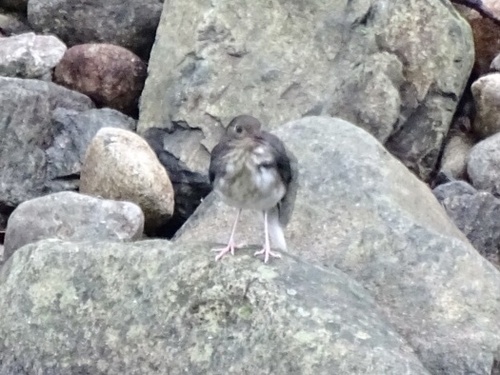
Slaty-backed Forktail (Enicurus schistaceus) Slaty-backed Forktail

Media

Loading…

In short

The Black-backed Forktail and Slaty-backed Forktail can be distinguished by their back coloration: the Black-backed Forktail has a solid black back, while the Slaty-backed Forktail has a slate-gray back. Both species share a similar structure and tail pattern, making back color the most reliable field mark.

Identification tips

  1. Focus on the back color: Black-backed Forktail has a black back, Slaty-backed Forktail has a slate-gray back. 2. Observe the tail: both have a similar white-tipped, forked tail. 3. Note the habitat: both are found near streams, so rely on plumage for identification.

Size

Both species are similar in size, typical of forktails, with no significant differences noted.

Plumage

The Black-backed Forktail has a solid black back, whereas the Slaty-backed Forktail features a slate-gray back. Both have white underparts and a distinctive white-tipped, forked tail. Their wing patterns are similar, with white bars.

Behaviour

Both species exhibit similar behavior, often seen near streams and displaying characteristic tail-flicking.

Habitat

Both species inhabit forested streams and rivers, often in hilly or mountainous regions. There is no significant habitat preference difference noted between the two.

Voice

Vocalizations are not well-documented for either species, and there are no notable differences in their calls.

Submit a better description

Use the same sections as the comparison. Your text is published immediately.

The Black-backed Forktail and Slaty-backed Forktail can be distinguished by their back coloration: the Black-backed Forktail has a solid black back, while the Slaty-backed Forktail has a slate-gray back. Both species share a similar structure and tail pattern, making back color the most reliable field mark.

  1. Focus on the back color: Black-backed Forktail has a black back, Slaty-backed Forktail has a slate-gray back. 2. Observe the tail: both have a similar white-tipped, forked tail. 3. Note the habitat: both are found near streams, so rely on plumage for identification.

Both species are similar in size, typical of forktails, with no significant differences noted.

The Black-backed Forktail has a solid black back, whereas the Slaty-backed Forktail features a slate-gray back. Both have white underparts and a distinctive white-tipped, forked tail. Their wing patterns are similar, with white bars.

Both species exhibit similar behavior, often seen near streams and displaying characteristic tail-flicking.

Both species inhabit forested streams and rivers, often in hilly or mountainous regions. There is no significant habitat preference difference noted between the two.

Vocalizations are not well-documented for either species, and there are no notable differences in their calls.

Discard your changes?

You have unsaved edits. If you leave now, those changes will be lost.

Black-backed Forktail · Slaty-backed Forktail · My Tricky Birds