Black-backed Grosbeak vs Blackish-blue Seedeater
Pheucticus aureoventris versus Amaurospiza moesta
Play a quiz with Black-backed Grosbeak and Blackish-blue Seedeater
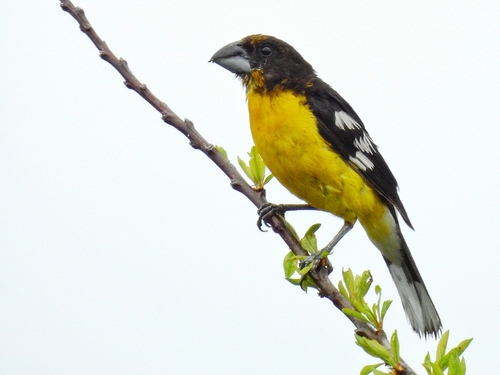
Black-backed Grosbeak
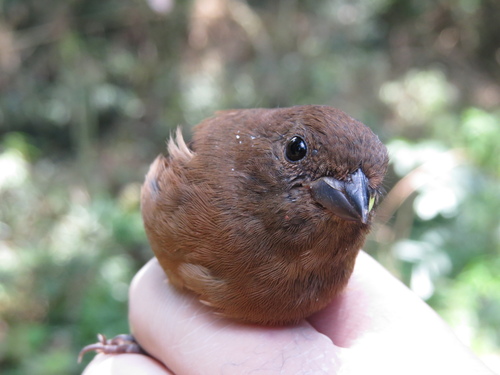
Blackish-blue Seedeater
In short
To distinguish the Black-backed Grosbeak from the Blackish-blue Seedeater, focus on the male's plumage: the grosbeak has a striking yellow underbelly and black back, while the seedeater is slaty blue to blackish. Both species belong to the Cardinalidae family, but their habitats and behaviors differ significantly.
Identification tips
1. Look for the yellow underbelly and black back of the Black-backed Grosbeak. 2. Note the slaty blue to blackish plumage of the male Blackish-blue Seedeater. 3. Consider habitat: seedeaters are often near bamboo in specific South American regions. 4. Observe behavior: seedeaters may appear during bamboo seeding events.
Size
Both species are similar in size, typical of grosbeaks and seedeaters, but exact measurements are not specified.
Plumage
Male Black-backed Grosbeaks have a yellow underbelly and black back, while male Blackish-blue Seedeaters are slaty blue, becoming blackish on the face and breast. Female seedeaters are tawny-brown, unlike the grosbeak.
Behaviour
Blackish-blue Seedeaters are often seen in pairs during bamboo seeding events, whereas Black-backed Grosbeaks do not have this specific behavior noted.
Habitat
Black-backed Grosbeaks are found in a variety of habitats, while Blackish-blue Seedeaters are generally confined to southeast Brazil, northeast Argentina, and eastern Paraguay, often near bamboo.
Voice
Vocalizations are not detailed in the notes, so distinguishing by song or call is uncertain.
Black-backed Grosbeak · Blackish-blue Seedeater · My Tricky Birds