Birdr

Black-backed Oriole vs Scott's Oriole

Icterus abeillei versus Icterus parisorum

Play a quiz with Black-backed Oriole and Scott's Oriole
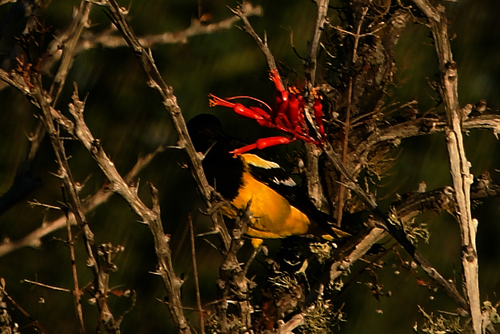
Black-backed Oriole (Icterus abeillei) Black-backed Oriole
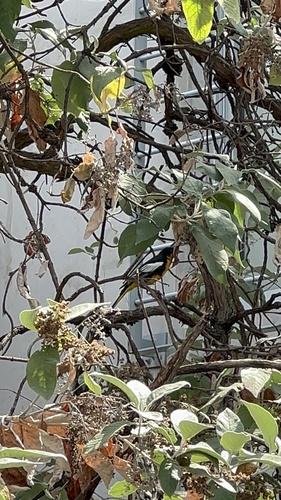
Scott's Oriole (Icterus parisorum) Scott's Oriole

Media

Loading…

In short

The Black-backed Oriole and Scott's Oriole can be distinguished by their plumage and habitat preferences. The Black-backed Oriole has a mostly black face and rump, while Scott's Oriole is characterized by a more limited amount of black on the head. Habitat preferences also differ, with the Black-backed Oriole found in central Mexico and Scott's Oriole in desert regions of the southwestern United States.

Identification tips

  1. Look for the black face and rump in Black-backed Orioles. 2. Note the limited black on the head of Scott's Orioles. 3. Consider the location: central Mexico for Black-backed Oriole, southwestern U.S. deserts for Scott's Oriole. 4. Observe flocking behavior: Black-backed may be seen with Bullock's Orioles.

Size

Both species are similar in size, typical of medium-sized orioles.

Plumage

The Black-backed Oriole has a mostly black face, black rump, and black uppertail coverts, with orange underparts. In contrast, Scott's Oriole displays a variable, but limited amount of black feathering on the head, with more yellow on the underparts.

Behaviour

Black-backed Orioles often forage in small flocks, sometimes with Bullock's Orioles, while Scott's Orioles are known to wander outside their usual range.

Habitat

Black-backed Orioles are typically found in central Mexico, whereas Scott's Orioles inhabit desert regions of the southwestern United States.

Submit a better description

Use the same sections as the comparison. Your text is published immediately.

The Black-backed Oriole and Scott's Oriole can be distinguished by their plumage and habitat preferences. The Black-backed Oriole has a mostly black face and rump, while Scott's Oriole is characterized by a more limited amount of black on the head. Habitat preferences also differ, with the Black-backed Oriole found in central Mexico and Scott's Oriole in desert regions of the southwestern United States.

  1. Look for the black face and rump in Black-backed Orioles. 2. Note the limited black on the head of Scott's Orioles. 3. Consider the location: central Mexico for Black-backed Oriole, southwestern U.S. deserts for Scott's Oriole. 4. Observe flocking behavior: Black-backed may be seen with Bullock's Orioles.

Both species are similar in size, typical of medium-sized orioles.

The Black-backed Oriole has a mostly black face, black rump, and black uppertail coverts, with orange underparts. In contrast, Scott's Oriole displays a variable, but limited amount of black feathering on the head, with more yellow on the underparts.

Black-backed Orioles often forage in small flocks, sometimes with Bullock's Orioles, while Scott's Orioles are known to wander outside their usual range.

Black-backed Orioles are typically found in central Mexico, whereas Scott's Orioles inhabit desert regions of the southwestern United States.

Discard your changes?

You have unsaved edits. If you leave now, those changes will be lost.

Black-backed Oriole · Scott's Oriole · My Tricky Birds