
Birdr

Black-banded Woodcreeper vs White-throated Woodcreeper

Dendrocolaptes picumnus versus Xiphocolaptes albicollis

Play a quiz with Black-banded Woodcreeper and White-throated Woodcreeper
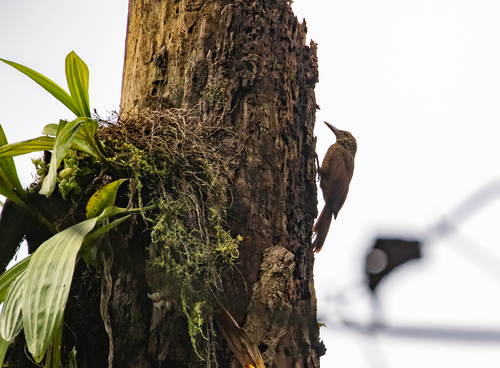
Black-banded Woodcreeper (Dendrocolaptes picumnus) Black-banded Woodcreeper
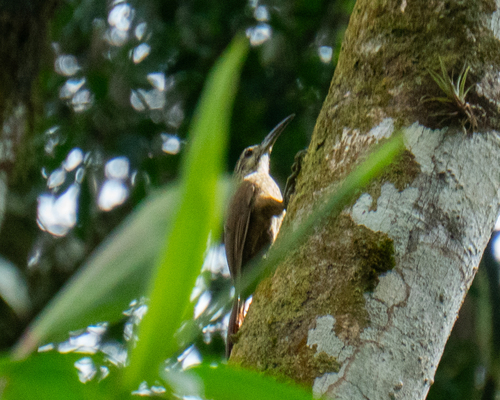
White-throated Woodcreeper (Xiphocolaptes albicollis) White-throated Woodcreeper

Media

Loading…

In short

The Black-banded Woodcreeper and White-throated Woodcreeper are both large woodcreepers, but they can be distinguished by their throat coloration and bill structure. The Black-banded Woodcreeper has a more uniformly dark throat with subtle barring, while the White-throated Woodcreeper features a distinctive white throat. Both species are often found in similar forest habitats, but their vocalizations and foraging behaviors can also aid in identification.

Identification tips

  1. Look for the white throat on the White-throated Woodcreeper, which is absent in the Black-banded Woodcreeper. 2. Observe the bill structure: the White-throated Woodcreeper has a longer and slightly more curved bill. 3. Note the foraging behavior: Black-banded Woodcreeper often follows army ant swarms, while the White-throated Woodcreeper does not. 4. Listen for vocal differences if possible, as these can be a reliable distinguishing feature.

Size

Both species are large woodcreepers, but the White-throated Woodcreeper is generally bulkier with a slightly longer bill.

Plumage

The Black-banded Woodcreeper has a dark throat with fine barring and a more uniform brown body, whereas the White-throated Woodcreeper is characterized by its prominent white throat and more contrasting plumage.

Behaviour

The Black-banded Woodcreeper frequently attends army ant swarms, especially in Amazonia, while the White-throated Woodcreeper is less associated with ant swarms and more often seen foraging on tree trunks and branches.

Habitat

Both species inhabit tropical and subtropical forests, but the Black-banded Woodcreeper ranges from lowland rainforests to montane forests up to 3,000 m, while the White-throated Woodcreeper is more commonly found in lowland and foothill forests.

Voice

The vocalizations of these species differ, but specific details are not well-documented here. Listening for differences in calls can be helpful if recordings are available.

Submit a better description

Use the same sections as the comparison. Your text is published immediately.

The Black-banded Woodcreeper and White-throated Woodcreeper are both large woodcreepers, but they can be distinguished by their throat coloration and bill structure. The Black-banded Woodcreeper has a more uniformly dark throat with subtle barring, while the White-throated Woodcreeper features a distinctive white throat. Both species are often found in similar forest habitats, but their vocalizations and foraging behaviors can also aid in identification.

  1. Look for the white throat on the White-throated Woodcreeper, which is absent in the Black-banded Woodcreeper. 2. Observe the bill structure: the White-throated Woodcreeper has a longer and slightly more curved bill. 3. Note the foraging behavior: Black-banded Woodcreeper often follows army ant swarms, while the White-throated Woodcreeper does not. 4. Listen for vocal differences if possible, as these can be a reliable distinguishing feature.

Both species are large woodcreepers, but the White-throated Woodcreeper is generally bulkier with a slightly longer bill.

The Black-banded Woodcreeper has a dark throat with fine barring and a more uniform brown body, whereas the White-throated Woodcreeper is characterized by its prominent white throat and more contrasting plumage.

The Black-banded Woodcreeper frequently attends army ant swarms, especially in Amazonia, while the White-throated Woodcreeper is less associated with ant swarms and more often seen foraging on tree trunks and branches.

Both species inhabit tropical and subtropical forests, but the Black-banded Woodcreeper ranges from lowland rainforests to montane forests up to 3,000 m, while the White-throated Woodcreeper is more commonly found in lowland and foothill forests.

The vocalizations of these species differ, but specific details are not well-documented here. Listening for differences in calls can be helpful if recordings are available.

Discard your changes?

You have unsaved edits. If you leave now, those changes will be lost.

Black-banded Woodcreeper · White-throated Woodcreeper · My Tricky Birds