Birdr

Black-bellied Antwren vs Rusty-backed Antwren

Formicivora melanogaster versus Formicivora rufa

Play a quiz with Black-bellied Antwren and Rusty-backed Antwren
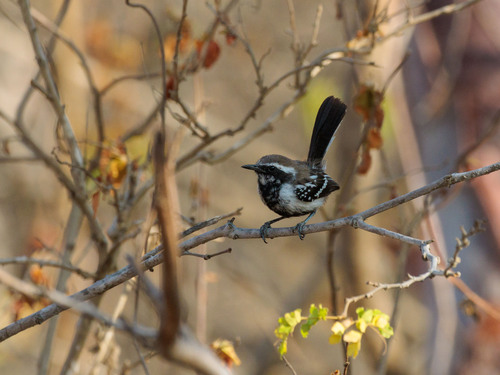
Black-bellied Antwren (Formicivora melanogaster) Black-bellied Antwren
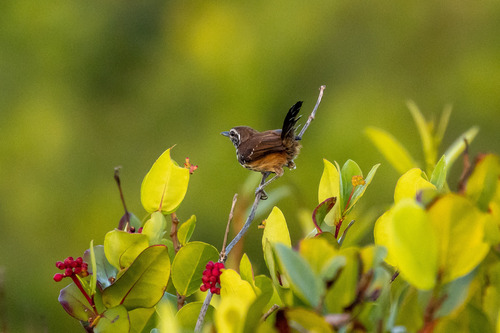
Rusty-backed Antwren (Formicivora rufa) Rusty-backed Antwren

Media

Loading…

In short

The Black-bellied Antwren and Rusty-backed Antwren can be distinguished by plumage and habitat preferences. Males of the Black-bellied Antwren are darker with less obvious white flanks, while the Rusty-backed Antwren is more rufescent above. Females of the Black-bellied Antwren have a broad white supercilium and paler underparts, contrasting with the Rusty-backed Antwren's white streaked with black underparts.

Identification tips

  1. Male plumage: Look for darker upperparts in Black-bellied Antwren males compared to the more rufescent Rusty-backed Antwren. 2. Female plumage: Identify Black-bellied Antwren females by their broad white supercilium and paler underparts. 3. Habitat: Note the habitat; Black-bellied Antwrens prefer taller caatinga and woodland, while Rusty-backed Antwrens are found in open cerrado habitats.

Plumage

Male Black-bellied Antwrens are darker with less obvious white flanks compared to the Rusty-backed Antwren, which is more rufescent above. Female Black-bellied Antwrens have a broad white supercilium and paler underparts, while female Rusty-backed Antwrens are white streaked with black below.

Behaviour

Both species forage actively for arthropods and can be difficult to spot as they stay in the undergrowth.

Habitat

Black-bellied Antwrens are typically found in taller caatinga, tropical deciduous woodland, or second growth at the ecotone between caatinga and cerrado. Rusty-backed Antwrens occur broadly across cerrado and other open habitats in central Brazil, with isolated populations in savanna patches in eastern Amazonia and Andean foothills in Peru.

Submit a better description

Use the same sections as the comparison. Your text is published immediately.

The Black-bellied Antwren and Rusty-backed Antwren can be distinguished by plumage and habitat preferences. Males of the Black-bellied Antwren are darker with less obvious white flanks, while the Rusty-backed Antwren is more rufescent above. Females of the Black-bellied Antwren have a broad white supercilium and paler underparts, contrasting with the Rusty-backed Antwren's white streaked with black underparts.

  1. Male plumage: Look for darker upperparts in Black-bellied Antwren males compared to the more rufescent Rusty-backed Antwren. 2. Female plumage: Identify Black-bellied Antwren females by their broad white supercilium and paler underparts. 3. Habitat: Note the habitat; Black-bellied Antwrens prefer taller caatinga and woodland, while Rusty-backed Antwrens are found in open cerrado habitats.

Male Black-bellied Antwrens are darker with less obvious white flanks compared to the Rusty-backed Antwren, which is more rufescent above. Female Black-bellied Antwrens have a broad white supercilium and paler underparts, while female Rusty-backed Antwrens are white streaked with black below.

Both species forage actively for arthropods and can be difficult to spot as they stay in the undergrowth.

Black-bellied Antwrens are typically found in taller caatinga, tropical deciduous woodland, or second growth at the ecotone between caatinga and cerrado. Rusty-backed Antwrens occur broadly across cerrado and other open habitats in central Brazil, with isolated populations in savanna patches in eastern Amazonia and Andean foothills in Peru.

Discard your changes?

You have unsaved edits. If you leave now, those changes will be lost.

Black-bellied Antwren · Rusty-backed Antwren · My Tricky Birds