
Birdr

Black-bellied Hummingbird vs Blue-vented Hummingbird

Eupherusa nigriventris versus Saucerottia hoffmanni

Play a quiz with Black-bellied Hummingbird and Blue-vented Hummingbird
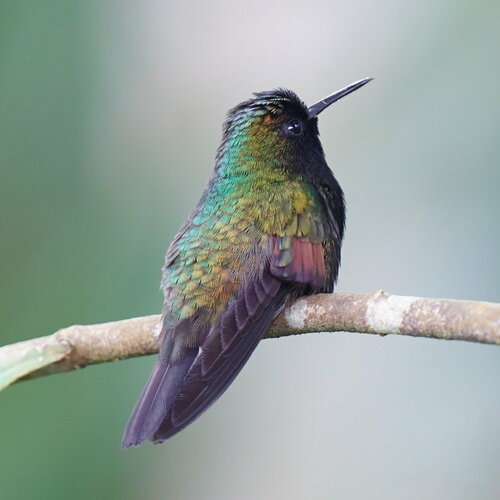
Black-bellied Hummingbird (Eupherusa nigriventris) Black-bellied Hummingbird
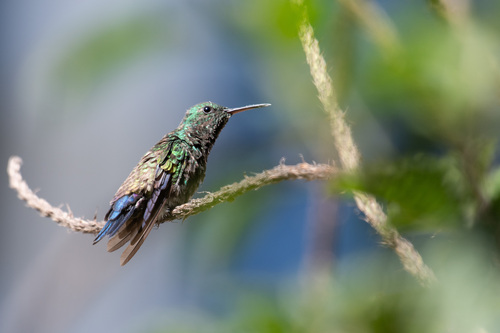
Blue-vented Hummingbird (Saucerottia hoffmanni) Blue-vented Hummingbird

Media

Loading…

In short

The Black-bellied Hummingbird and Blue-vented Hummingbird can be distinguished by their underparts: the Black-bellied has a distinctive black belly, while the Blue-vented shows shiny green underparts with blue undertail coverts. Both species are small and active, but their plumage differences are key identifiers.

Identification tips

  1. Look for the black belly on the Black-bellied Hummingbird. 2. Check for blue undertail coverts on the Blue-vented Hummingbird. 3. Observe the habitat: montane forests suggest Black-bellied, while low bushes and canopy areas suggest Blue-vented. 4. Listen for the wing buzzing of the Blue-vented Hummingbird.

Size

Both species are similar in size, typical of small hummingbirds.

Plumage

The Black-bellied Hummingbird features a black belly and a green back, whereas the Blue-vented Hummingbird has shiny green underparts with blue undertail coverts and a bronzy rump. Females of both species are duller, but the Black-bellied female retains a darker belly compared to the Blue-vented.

Behaviour

Both species are active and often seen moving quickly between flowers. The Blue-vented Hummingbird is noted for making a relatively loud buzzing sound with its wings.

Habitat

The Black-bellied Hummingbird is typically found in montane forests, while the Blue-vented Hummingbird frequents low bushes and shrubs or the canopy of small trees.

Submit a better description

Use the same sections as the comparison. Your text is published immediately.

The Black-bellied Hummingbird and Blue-vented Hummingbird can be distinguished by their underparts: the Black-bellied has a distinctive black belly, while the Blue-vented shows shiny green underparts with blue undertail coverts. Both species are small and active, but their plumage differences are key identifiers.

  1. Look for the black belly on the Black-bellied Hummingbird. 2. Check for blue undertail coverts on the Blue-vented Hummingbird. 3. Observe the habitat: montane forests suggest Black-bellied, while low bushes and canopy areas suggest Blue-vented. 4. Listen for the wing buzzing of the Blue-vented Hummingbird.

Both species are similar in size, typical of small hummingbirds.

The Black-bellied Hummingbird features a black belly and a green back, whereas the Blue-vented Hummingbird has shiny green underparts with blue undertail coverts and a bronzy rump. Females of both species are duller, but the Black-bellied female retains a darker belly compared to the Blue-vented.

Both species are active and often seen moving quickly between flowers. The Blue-vented Hummingbird is noted for making a relatively loud buzzing sound with its wings.

The Black-bellied Hummingbird is typically found in montane forests, while the Blue-vented Hummingbird frequents low bushes and shrubs or the canopy of small trees.

Discard your changes?

You have unsaved edits. If you leave now, those changes will be lost.

Black-bellied Hummingbird · Blue-vented Hummingbird · My Tricky Birds