Black-bellied Sandgrouse vs Hume's Lark
Pterocles orientalis versus Calandrella acutirostris
Play a quiz with Black-bellied Sandgrouse and Hume's Lark
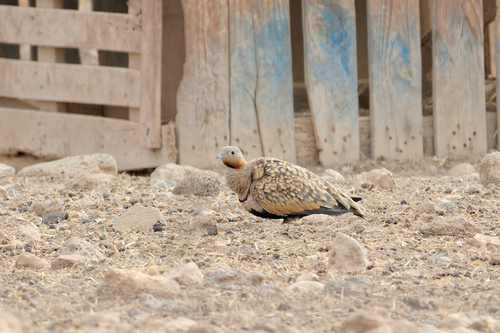
Black-bellied Sandgrouse
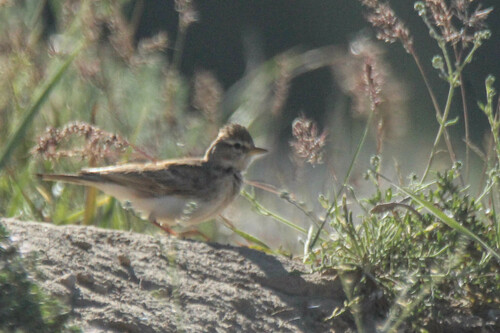
Hume's Lark
In short
Black-bellied Sandgrouse and Hume's Lark are unlikely to be confused in the field due to their distinct structural and behavioral differences. The sandgrouse is a stocky bird with a robust body and short legs, while the lark is more slender with a longer tail and legs. Their habitats also differ, with sandgrouse favoring open, arid environments and larks preferring grasslands and steppes.
Identification tips
- Structure: Look for the stocky build and short legs of the sandgrouse versus the slender, long-tailed lark. 2. Plumage: Note the black belly of the sandgrouse, absent in the lark. 3. Behavior: Observe flocking behavior in sandgrouse and more solitary habits in larks. 4. Habitat: Consider the environment; sandgrouse in deserts, larks in grasslands. 5. Vocalization: Listen for the cooing of sandgrouse versus the lark's melodic song.
Size
Black-bellied Sandgrouse is larger and more robust compared to the smaller, more delicate Hume's Lark.
Plumage
Black-bellied Sandgrouse has a distinctive black belly and a sandy-brown upper body, while Hume's Lark is more uniformly brown with streaking, lacking the contrasting belly.
Behaviour
Sandgrouse are often seen in flocks and are known for their strong, direct flight. Larks are more solitary or in small groups and exhibit a more undulating flight pattern.
Habitat
Black-bellied Sandgrouse inhabit open, arid regions such as deserts and semi-deserts. Hume's Lark prefers grasslands and steppes, often at higher elevations.
Voice
The vocalizations of Black-bellied Sandgrouse are typically a series of soft, cooing calls, while Hume's Lark produces a more varied and melodic song.