Birdr

Black-bellied Wren vs Black-and-yellow Silky-flycatcher

Pheugopedius fasciatoventris versus Phainoptila melanoxantha

Play a quiz with Black-bellied Wren and Black-and-yellow Silky-flycatcher
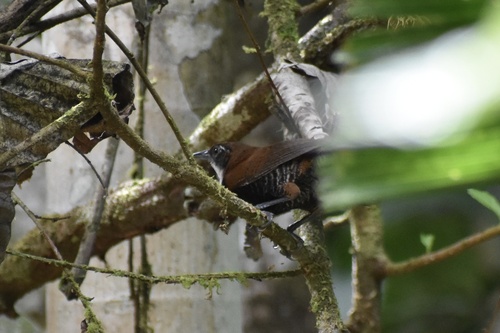
Black-bellied Wren (Pheugopedius fasciatoventris) Black-bellied Wren
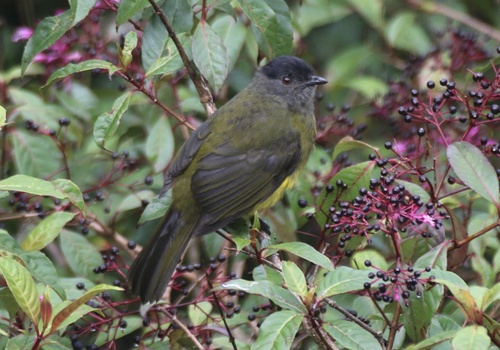
Black-and-yellow Silky-flycatcher (Phainoptila melanoxantha) Black-and-yellow Silky-flycatcher

Media

Loading…

In short

The Black-bellied Wren and the Black-and-yellow Silky-flycatcher are easily distinguished by their plumage and habitat preferences. The wren is a small, dark bird with a distinctive black belly and prefers dense undergrowth, while the silky-flycatcher has striking black and yellow plumage and is often found in open, high-elevation forests.

Identification tips

  1. Plumage: Look for the black belly of the wren versus the black and yellow of the silky-flycatcher. 2. Habitat: Consider the environment; wrens are in dense undergrowth, silky-flycatchers in open, high-elevation areas. 3. Size: Note the larger size of the silky-flycatcher. 4. Behavior: Observe the skulking behavior of the wren compared to the more visible perching of the silky-flycatcher.

Size

The Black-and-yellow Silky-flycatcher is generally larger than the Black-bellied Wren.

Plumage

The Black-bellied Wren has a black belly with a brownish back and wings, while the Black-and-yellow Silky-flycatcher features a striking combination of black and bright yellow plumage.

Behaviour

The Black-bellied Wren is more often seen skulking in dense undergrowth, whereas the Black-and-yellow Silky-flycatcher is more likely to be observed perched conspicuously in open areas.

Habitat

Black-bellied Wrens are typically found in lowland forests and dense thickets, while Black-and-yellow Silky-flycatchers prefer high-elevation forests and open areas.

Voice

The Black-bellied Wren is known for its rich, slow songs and duets, while the Black-and-yellow Silky-flycatcher's vocalizations are not as prominently noted.

Submit a better description

Use the same sections as the comparison. Your text is published immediately.

The Black-bellied Wren and the Black-and-yellow Silky-flycatcher are easily distinguished by their plumage and habitat preferences. The wren is a small, dark bird with a distinctive black belly and prefers dense undergrowth, while the silky-flycatcher has striking black and yellow plumage and is often found in open, high-elevation forests.

  1. Plumage: Look for the black belly of the wren versus the black and yellow of the silky-flycatcher. 2. Habitat: Consider the environment; wrens are in dense undergrowth, silky-flycatchers in open, high-elevation areas. 3. Size: Note the larger size of the silky-flycatcher. 4. Behavior: Observe the skulking behavior of the wren compared to the more visible perching of the silky-flycatcher.

The Black-and-yellow Silky-flycatcher is generally larger than the Black-bellied Wren.

The Black-bellied Wren has a black belly with a brownish back and wings, while the Black-and-yellow Silky-flycatcher features a striking combination of black and bright yellow plumage.

The Black-bellied Wren is more often seen skulking in dense undergrowth, whereas the Black-and-yellow Silky-flycatcher is more likely to be observed perched conspicuously in open areas.

Black-bellied Wrens are typically found in lowland forests and dense thickets, while Black-and-yellow Silky-flycatchers prefer high-elevation forests and open areas.

The Black-bellied Wren is known for its rich, slow songs and duets, while the Black-and-yellow Silky-flycatcher's vocalizations are not as prominently noted.

Discard your changes?

You have unsaved edits. If you leave now, those changes will be lost.

Black-bellied Wren · Black-and-yellow Silky-flycatcher · My Tricky Birds