Birdr

Black-capped Chickadee vs Mountain Chickadee

Poecile atricapillus versus Poecile gambeli

Play a quiz with Black-capped Chickadee and Mountain Chickadee
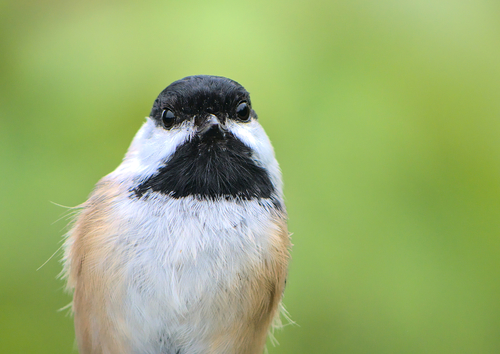
Black-capped Chickadee (Poecile atricapillus) Black-capped Chickadee
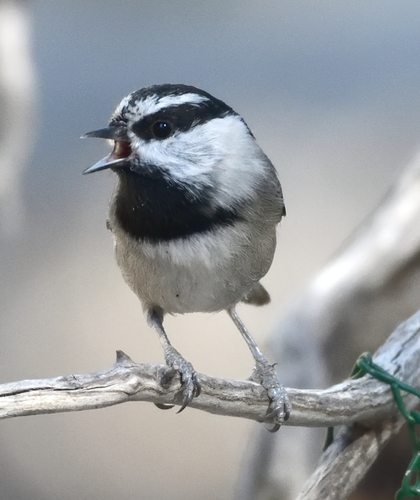
Mountain Chickadee (Poecile gambeli) Mountain Chickadee

Media

Loading…

In short

The Black-capped Chickadee and Mountain Chickadee can be distinguished by the presence of a distinct white supercilium on the Mountain Chickadee, which the Black-capped lacks. Both species have similar black caps and bibs, but their habitats and vocalizations differ significantly.

Identification tips

1. Look for the white supercilium: Mountain Chickadee has it, Black-capped does not. 2. Listen for vocal differences: Mountain Chickadee has a hoarser call and a 'fee-bee' song. 3. Consider habitat: Mountain Chickadees are in coniferous forests, Black-capped in mixed or deciduous forests. 4. Observe overall color tone: Mountain Chickadees may appear grayer.

Size

Both species are similar in size, small and compact, typical of chickadees.

Plumage

The Mountain Chickadee has a white supercilium (eyebrow) that is absent in the Black-capped Chickadee. Both have a black cap and bib with white cheeks, but the Black-capped Chickadee has a more uniform gray back, while the Mountain Chickadee may appear slightly grayer overall.

Behaviour

Both species exhibit similar behavior, often seen in small flocks, especially in winter, and are active foragers.

Habitat

Black-capped Chickadees are found in deciduous and mixed forests, often near water, while Mountain Chickadees prefer coniferous forests at higher elevations.

Voice

The Black-capped Chickadee's call is a clear 'chick-a-dee-dee-dee,' whereas the Mountain Chickadee's call is a hoarser 'chick-a-dee-dee' and includes a distinctive 'fee-bee' song.

Submit a better description

Use the same sections as the comparison. Your text is published immediately.

The Black-capped Chickadee and Mountain Chickadee can be distinguished by the presence of a distinct white supercilium on the Mountain Chickadee, which the Black-capped lacks. Both species have similar black caps and bibs, but their habitats and vocalizations differ significantly.

1. Look for the white supercilium: Mountain Chickadee has it, Black-capped does not. 2. Listen for vocal differences: Mountain Chickadee has a hoarser call and a 'fee-bee' song. 3. Consider habitat: Mountain Chickadees are in coniferous forests, Black-capped in mixed or deciduous forests. 4. Observe overall color tone: Mountain Chickadees may appear grayer.

Both species are similar in size, small and compact, typical of chickadees.

The Mountain Chickadee has a white supercilium (eyebrow) that is absent in the Black-capped Chickadee. Both have a black cap and bib with white cheeks, but the Black-capped Chickadee has a more uniform gray back, while the Mountain Chickadee may appear slightly grayer overall.

Both species exhibit similar behavior, often seen in small flocks, especially in winter, and are active foragers.

Black-capped Chickadees are found in deciduous and mixed forests, often near water, while Mountain Chickadees prefer coniferous forests at higher elevations.

The Black-capped Chickadee's call is a clear 'chick-a-dee-dee-dee,' whereas the Mountain Chickadee's call is a hoarser 'chick-a-dee-dee' and includes a distinctive 'fee-bee' song.

Discard your changes?

You have unsaved edits. If you leave now, those changes will be lost.

Black-capped Chickadee · Mountain Chickadee · My Tricky Birds