Birdr

Black-capped Pygmy-Tyrant vs Northern Bentbill

Myiornis atricapillus versus Oncostoma cinereigulare

Play a quiz with Black-capped Pygmy-Tyrant and Northern Bentbill
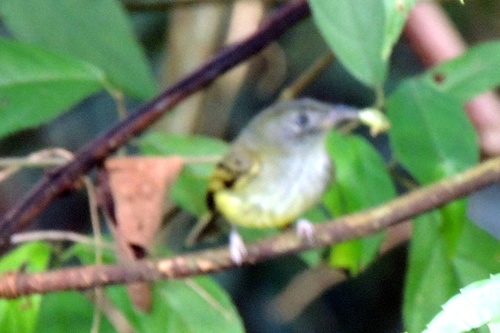
Black-capped Pygmy-Tyrant (Myiornis atricapillus) Black-capped Pygmy-Tyrant
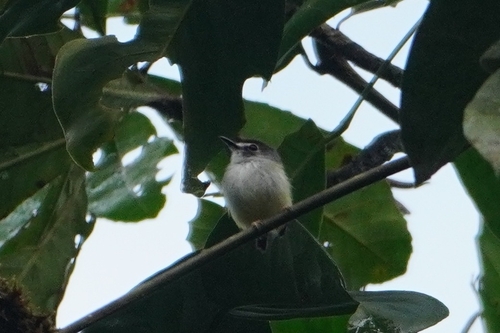
Northern Bentbill (Oncostoma cinereigulare) Northern Bentbill

Media

Loading…

In short

The Black-capped Pygmy-Tyrant and Northern Bentbill are both small tyrant flycatchers, but they can be distinguished by their bills and head markings. The Black-capped Pygmy-Tyrant male has a distinctive black crown, while the Northern Bentbill features a unique downcurved bill and pale iris.

Identification tips

  1. Look for the black crown on male Black-capped Pygmy-Tyrants. 2. Check for the distinctly downcurved bill and pale iris of the Northern Bentbill. 3. Consider habitat: Northern Bentbills are more likely at forest edges. 4. Listen for the Northern Bentbill's harsh, frog-like call.

Size

Both species are small, but the Northern Bentbill is slightly larger than the diminutive Black-capped Pygmy-Tyrant.

Plumage

Male Black-capped Pygmy-Tyrants have a black crown, while females have a gray head. The Northern Bentbill lacks a black crown but has a pale iris and a more uniformly colored head.

Behaviour

The Northern Bentbill forages in the under- and midstory of thickets and forest edges, while the Black-capped Pygmy-Tyrant's behavior is less well-documented but similar in habitat preference.

Habitat

Both species inhabit forested areas, but the Northern Bentbill is often found at forest edges and in relatively open forests, whereas the Black-capped Pygmy-Tyrant is associated with dense forest.

Voice

The Northern Bentbill has a harsh, frog-like call, which is a distinctive feature. The Black-capped Pygmy-Tyrant's vocalizations are less well-documented.

Submit a better description

Use the same sections as the comparison. Your text is published immediately.

The Black-capped Pygmy-Tyrant and Northern Bentbill are both small tyrant flycatchers, but they can be distinguished by their bills and head markings. The Black-capped Pygmy-Tyrant male has a distinctive black crown, while the Northern Bentbill features a unique downcurved bill and pale iris.

  1. Look for the black crown on male Black-capped Pygmy-Tyrants. 2. Check for the distinctly downcurved bill and pale iris of the Northern Bentbill. 3. Consider habitat: Northern Bentbills are more likely at forest edges. 4. Listen for the Northern Bentbill's harsh, frog-like call.

Both species are small, but the Northern Bentbill is slightly larger than the diminutive Black-capped Pygmy-Tyrant.

Male Black-capped Pygmy-Tyrants have a black crown, while females have a gray head. The Northern Bentbill lacks a black crown but has a pale iris and a more uniformly colored head.

The Northern Bentbill forages in the under- and midstory of thickets and forest edges, while the Black-capped Pygmy-Tyrant's behavior is less well-documented but similar in habitat preference.

Both species inhabit forested areas, but the Northern Bentbill is often found at forest edges and in relatively open forests, whereas the Black-capped Pygmy-Tyrant is associated with dense forest.

The Northern Bentbill has a harsh, frog-like call, which is a distinctive feature. The Black-capped Pygmy-Tyrant's vocalizations are less well-documented.

Discard your changes?

You have unsaved edits. If you leave now, those changes will be lost.

Black-capped Pygmy-Tyrant · Northern Bentbill · My Tricky Birds