
Birdr

Black-crowned Scimitar-Babbler vs White-browed Scimitar-Babbler

Pomatorhinus ferruginosus versus Pomatorhinus schisticeps

Play a quiz with Black-crowned Scimitar-Babbler and White-browed Scimitar-Babbler
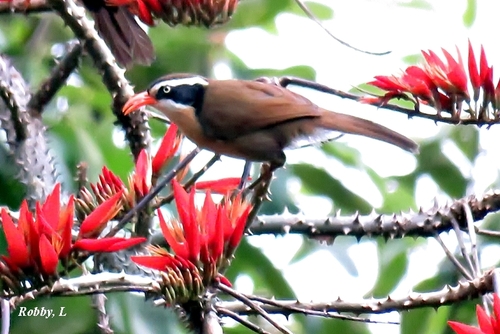
Black-crowned Scimitar-Babbler (Pomatorhinus ferruginosus) Black-crowned Scimitar-Babbler
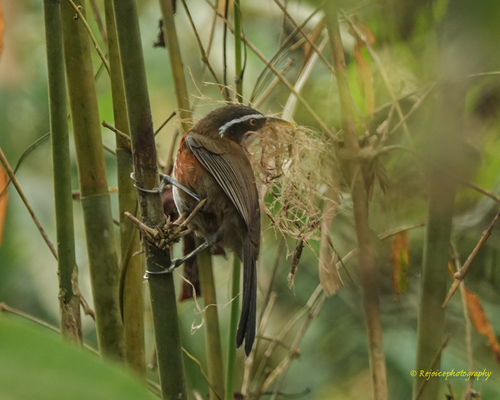
White-browed Scimitar-Babbler (Pomatorhinus schisticeps) White-browed Scimitar-Babbler

Media

Loading…

In short

The Black-crowned Scimitar-Babbler and White-browed Scimitar-Babbler are similar in structure, but can be distinguished by their head markings. The Black-crowned has a distinct black crown, while the White-browed features a prominent white supercilium. Both species inhabit similar environments, making visual identification crucial.

Identification tips

  1. Look for the black crown on the Black-crowned Scimitar-Babbler. 2. Identify the white supercilium on the White-browed Scimitar-Babbler. 3. Observe in good light to distinguish head markings. 4. Note that both species are often in dense undergrowth, so patience is required for clear views.

Size

Both species are similar in size, typical of scimitar-babblers, with no significant difference in overall body length or structure.

Plumage

The Black-crowned Scimitar-Babbler has a black crown and a contrasting white throat. In contrast, the White-browed Scimitar-Babbler features a white supercilium and lacks the black crown, making the head appear lighter overall.

Behaviour

Both species exhibit similar foraging behavior, often seen moving through dense undergrowth in small groups. They are skulking and can be difficult to observe clearly.

Habitat

Both species are found in similar habitats, including subtropical or tropical moist lowland forests and montane forests. They are often found in dense undergrowth.

Voice

Vocalizations are similar, with both species producing a variety of calls and songs. Specific differences in vocal patterns are not well documented, making auditory identification challenging.

Submit a better description

Use the same sections as the comparison. Your text is published immediately.

The Black-crowned Scimitar-Babbler and White-browed Scimitar-Babbler are similar in structure, but can be distinguished by their head markings. The Black-crowned has a distinct black crown, while the White-browed features a prominent white supercilium. Both species inhabit similar environments, making visual identification crucial.

  1. Look for the black crown on the Black-crowned Scimitar-Babbler. 2. Identify the white supercilium on the White-browed Scimitar-Babbler. 3. Observe in good light to distinguish head markings. 4. Note that both species are often in dense undergrowth, so patience is required for clear views.

Both species are similar in size, typical of scimitar-babblers, with no significant difference in overall body length or structure.

The Black-crowned Scimitar-Babbler has a black crown and a contrasting white throat. In contrast, the White-browed Scimitar-Babbler features a white supercilium and lacks the black crown, making the head appear lighter overall.

Both species exhibit similar foraging behavior, often seen moving through dense undergrowth in small groups. They are skulking and can be difficult to observe clearly.

Both species are found in similar habitats, including subtropical or tropical moist lowland forests and montane forests. They are often found in dense undergrowth.

Vocalizations are similar, with both species producing a variety of calls and songs. Specific differences in vocal patterns are not well documented, making auditory identification challenging.

Discard your changes?

You have unsaved edits. If you leave now, those changes will be lost.

Black-crowned Scimitar-Babbler · White-browed Scimitar-Babbler · My Tricky Birds