Birdr

Black-eared Barbet vs Blue-throated Barbet

Psilopogon duvaucelii versus Psilopogon asiaticus

Play a quiz with Black-eared Barbet and Blue-throated Barbet
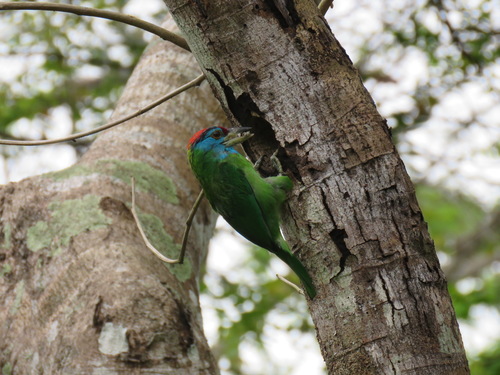
Black-eared Barbet (Psilopogon duvaucelii) Black-eared Barbet
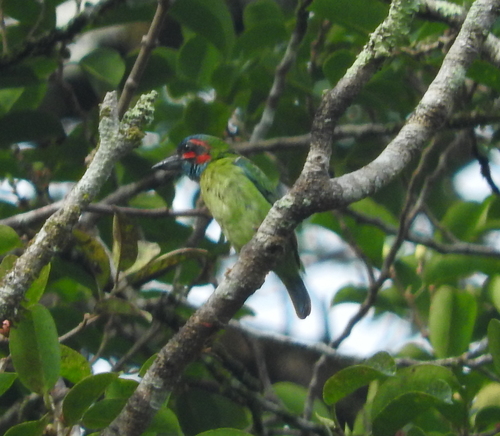
Blue-throated Barbet (Psilopogon asiaticus) Blue-throated Barbet

Media

Loading…

In short

The Black-eared Barbet and Blue-throated Barbet are both colorful, fruit-eating birds that can be challenging to distinguish due to their overlapping ranges and similar habits. Key differences lie in their facial markings and throat coloration, which are the most reliable field marks for identification.

Identification tips

  1. Look for the black ear patch on the Black-eared Barbet. 2. Note the bright blue throat and face on the Blue-throated Barbet. 3. Listen for the Blue-throated Barbet's monotonous call in its preferred habitats. 4. Observe the habitat: the Blue-throated Barbet may be found in more urban settings compared to the Black-eared Barbet.

Size

Both species are similar in size, typical of barbets, with no significant size difference to aid in identification.

Plumage

The Black-eared Barbet has a distinctive black patch around the ear, while the Blue-throated Barbet features a bright blue throat and face. The Blue-throated Barbet's green plumage blends well with foliage, making it harder to spot despite its vivid colors.

Behaviour

Both species are often found high in the canopy and are cavity nesters. They are frequently seen at fruiting trees, where they may congregate in numbers.

Habitat

The Black-eared Barbet is generally found in high canopy forests, while the Blue-throated Barbet is more adaptable, often seen in villages and urban areas. Both species prefer dense foliage.

Voice

The Blue-throated Barbet is known for its rapid, monotonous call that is often heard even when the bird is unseen. The Black-eared Barbet's vocalizations are similar to those of its mainland counterparts, but specific differences are not well-documented.

Submit a better description

Use the same sections as the comparison. Your text is published immediately.

The Black-eared Barbet and Blue-throated Barbet are both colorful, fruit-eating birds that can be challenging to distinguish due to their overlapping ranges and similar habits. Key differences lie in their facial markings and throat coloration, which are the most reliable field marks for identification.

  1. Look for the black ear patch on the Black-eared Barbet. 2. Note the bright blue throat and face on the Blue-throated Barbet. 3. Listen for the Blue-throated Barbet's monotonous call in its preferred habitats. 4. Observe the habitat: the Blue-throated Barbet may be found in more urban settings compared to the Black-eared Barbet.

Both species are similar in size, typical of barbets, with no significant size difference to aid in identification.

The Black-eared Barbet has a distinctive black patch around the ear, while the Blue-throated Barbet features a bright blue throat and face. The Blue-throated Barbet's green plumage blends well with foliage, making it harder to spot despite its vivid colors.

Both species are often found high in the canopy and are cavity nesters. They are frequently seen at fruiting trees, where they may congregate in numbers.

The Black-eared Barbet is generally found in high canopy forests, while the Blue-throated Barbet is more adaptable, often seen in villages and urban areas. Both species prefer dense foliage.

The Blue-throated Barbet is known for its rapid, monotonous call that is often heard even when the bird is unseen. The Black-eared Barbet's vocalizations are similar to those of its mainland counterparts, but specific differences are not well-documented.

Discard your changes?

You have unsaved edits. If you leave now, those changes will be lost.

Black-eared Barbet · Blue-throated Barbet · My Tricky Birds