Birdr

Black-eared Barbet vs Great Barbet

Psilopogon duvaucelii versus Psilopogon virens

Play a quiz with Black-eared Barbet and Great Barbet
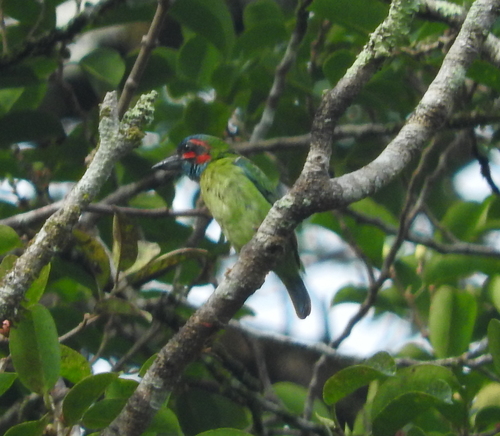
Black-eared Barbet (Psilopogon duvaucelii) Black-eared Barbet
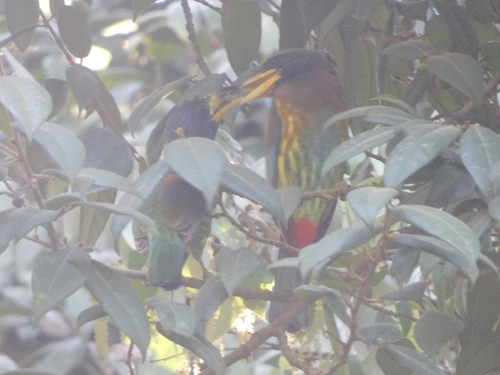
Great Barbet (Psilopogon virens) Great Barbet

Media

Loading…

In short

The Black-eared Barbet and Great Barbet can be distinguished by size and plumage. The Great Barbet is significantly larger and has a more colorful plumage with a prominent blue face and throat. In contrast, the Black-eared Barbet is smaller with a more subdued color palette and a distinctive black patch around the ear.

Identification tips

Size: Look for the larger size of the Great Barbet. Plumage: Note the blue face and throat of the Great Barbet versus the black ear patch of the Black-eared Barbet. Vocalization: Listen for the Great Barbet's loud, wailing calls. Habitat: Consider the location; the Great Barbet is more likely in Himalayan regions.

Size

The Great Barbet is much larger than the Black-eared Barbet, making size a reliable field mark when both species are seen together.

Plumage

The Great Barbet features a striking blue face and throat, with a mix of green, yellow, and red on its body. The Black-eared Barbet is smaller, with a black patch around the ear and a generally more muted coloration.

Behaviour

Both species are frugivorous and cavity-nesters, but the Great Barbet is more likely to be seen in larger groups near fruiting trees.

Habitat

The Great Barbet is commonly found in Himalayan landscapes, often in modified habitats. The Black-eared Barbet is typically found in high canopy forests across its range.

Voice

The Great Barbet is known for its loud, wailing calls that are a constant feature in its habitat. The Black-eared Barbet's calls are less prominent and not as distinctive.

Submit a better description

Use the same sections as the comparison. Your text is published immediately.

The Black-eared Barbet and Great Barbet can be distinguished by size and plumage. The Great Barbet is significantly larger and has a more colorful plumage with a prominent blue face and throat. In contrast, the Black-eared Barbet is smaller with a more subdued color palette and a distinctive black patch around the ear.

Size: Look for the larger size of the Great Barbet. Plumage: Note the blue face and throat of the Great Barbet versus the black ear patch of the Black-eared Barbet. Vocalization: Listen for the Great Barbet's loud, wailing calls. Habitat: Consider the location; the Great Barbet is more likely in Himalayan regions.

The Great Barbet is much larger than the Black-eared Barbet, making size a reliable field mark when both species are seen together.

The Great Barbet features a striking blue face and throat, with a mix of green, yellow, and red on its body. The Black-eared Barbet is smaller, with a black patch around the ear and a generally more muted coloration.

Both species are frugivorous and cavity-nesters, but the Great Barbet is more likely to be seen in larger groups near fruiting trees.

The Great Barbet is commonly found in Himalayan landscapes, often in modified habitats. The Black-eared Barbet is typically found in high canopy forests across its range.

The Great Barbet is known for its loud, wailing calls that are a constant feature in its habitat. The Black-eared Barbet's calls are less prominent and not as distinctive.

Discard your changes?

You have unsaved edits. If you leave now, those changes will be lost.

Black-eared Barbet · Great Barbet · My Tricky Birds